

Nicaragua constitutional reform aims to extend presidential terms and restrict opposition, reshaping elections and sovereignty amid regional criticism.
Related: Colombia’s President-Elect to Shutter 14 Embassies, Cut Ties with Cuba and Nicaragua
Facts on Nicaragua Constitutional Reform and Electoral Changes
Nicaragua constitutional reform has become the centerpiece of a major political shift in the country, as President Daniel Ortega and the National Assembly move to reshape the legal framework governing elections, citizenship, and the structure of the state. The reforms, announced in late July 2026 and expected to be approved in September, are presented by the government as necessary to guarantee peace, stability, and sovereignty.
Critics, however, argue that the changes consolidate power in the executive, restrict political participation, and further narrow the space for opposition. The debate over Nicaragua constitutional reform is now unfolding amid a national consultation process and growing attention from international organizations and regional governments.
Nicaragua constitutional reform and the Air Force anniversary
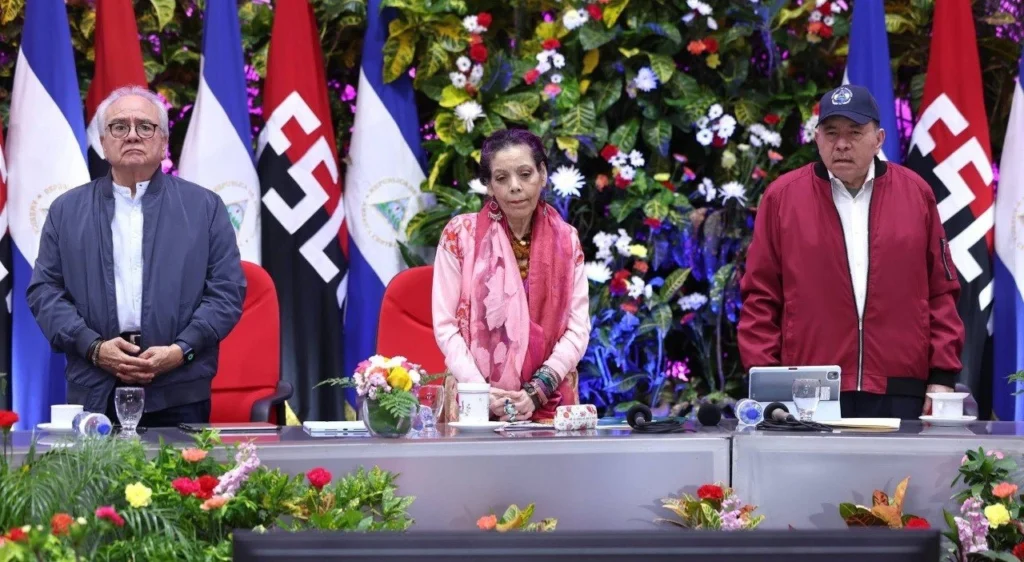
The latest push for Nicaragua constitutional reform was highlighted during the 47th anniversary of the Nicaraguan Air Force, celebrated in Managua. Speaking at the event, President Ortega said the reforms are not about imposing peace by force, but about ensuring through legislation that there is no room for destabilization.
He framed the changes as a way to “strengthen peace” and avoid the kind of civil conflicts that marked the 19th century, including the 1856 invasion by the U.S. filibuster William Walker. Ortega said that when there is peace in Nicaragua, the economy, education, and investment grow, and that is what the reforms are meant to defend.
The ceremony also honored Lieutenant Carlos Ulloa, a Nicaraguan air force hero who died fighting in defense of the Cuban Revolution at Playa Girón. The event recalled the clandestine origins of the air force, which included Sandinistas, Panamanians, and Costa Ricans who transported weapons to guerrilla columns during the struggle against the Somoza dictatorship.
Ortega used the occasion to reaffirm support for the military, saying the “people-president” stands with the institution and will continue to strengthen it. That message was widely seen as part of a broader effort to align the armed forces with the government’s political project.
What the reform includes and why it matters
The proposed Nicaragua constitutional reform covers several key areas. One of the most significant changes is the extension of the presidential term from six to seven years, with the possibility of renewal. The current co-presidency, held by Daniel Ortega and Rosario Murillo, would continue under the new framework.
Another major element is the exclusion of certain opposition figures from future elections. The draft reform targets individuals labeled as “traitors” or “coup plotters,” a category that includes many political opponents who have been stripped of citizenship or forced into exile.
The reform also abolishes the right to dual nationality for Nicaraguans by birth, meaning that anyone who acquires another citizenship will lose their Nicaraguan nationality. This provision has been criticized by human rights groups as a tool to punish dissent and restrict the rights of exiles.
In addition, the reforms further centralize power in the executive branch, subordinating the legislative, judicial, and electoral bodies to the presidency. The explicit prohibition of torture has been removed from the constitution, and the military and police are placed under even tighter control of the government.
According to government spokesmen, these changes are necessary to prevent foreign interference and ensure that Nicaragua never again holds elections that allow the opposition to “take over” power. The National Assembly is expected to approve the reforms in September after a national consultation process.
Geopolitical context
The Nicaragua constitutional reform is taking place in a regional environment where democratic institutions and electoral rules are increasingly contested. Neighboring countries and international bodies have expressed concern about the concentration of power and the narrowing of political space in Nicaragua.
The United States, the Organization of American States, and human rights organizations have warned that the reforms could further erode democratic safeguards and deepen the crisis of legitimacy facing the Ortega government. At the same time, allies in the region have supported the government’s narrative of sovereignty and anti-imperialism.
For Central America, the outcome matters because it affects migration flows, regional stability, and the balance of political forces. If the reforms are implemented as planned, Nicaragua could become an even more isolated case in the hemisphere, with a legal framework that entrenches the current leadership and limits the possibility of alternation.
What comes next
The next steps will be closely watched. The National Assembly will debate the reforms after the consultation process, and approval is widely expected given the Sandinista majority. Once adopted, the new rules will reshape the electoral calendar, the structure of the state, and the rights of citizens.
For supporters of the government, the Nicaragua constitutional reform is a necessary step to protect peace and sovereignty. For critics, it is a move that deepens authoritarianism and closes the door to meaningful political competition. The coming months will show how both narratives play out in practice.
Copresidente Ortega impulsa reformas para fortalecer la pa: “Nicaragua no quiere la guerra, quiere la paz. Seguiremos luchando por ella”, afirmó. La Asamblea Nacional trabaja en marcos legales para garantizar elecciones con autodeterminación. #Nicaragua #teleSUR pic.twitter.com/c26qTiODI3
— teleSUR TV (@teleSURtv) August 1, 2026
From teleSUR English via This RSS Feed.