

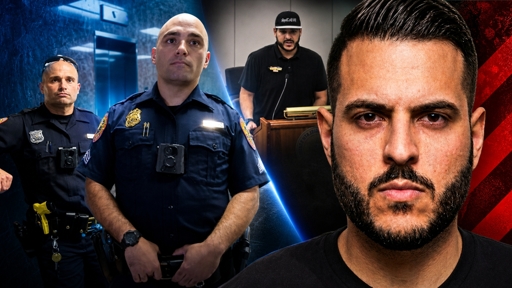
Police auditors, better known as “copwatchers,” have become both famous and notorious for using cell phone cameras and YouTube channels to monitor police activity, confront cops who are breaking the law, and fight for accountability and reform. But is copwatching a form of citizen journalism, or is it just provocation masquerading as accountability?
In this special Police Accountability Report livestream, (in)famous copwatcher Sean Paul Reyes, better known as Long Island Audit, joins hosts Taya Graham and Stephen Janis for a lively, candid debate about one of the most popular and controversial forms of police accountability today.
Credits:
- Pre-Production; Stephen Janis, Taya Graham
- Production: Stephen Janis, Taya Graham, David Hebden, Ryan Johnson, Maximillian Alvarez
Transcript
The following is a rushed transcript and may contain errors. It will be updated.
Taya Graham:
My name is Taya Graham and welcome to the Police Accountability Report livestream, the great American Copwatcher debate edition. Tonight, we are going to be exploring the controversy surrounding a popular Copwatcher, Long Island audit, specifically his encounter with Suffolk County Police Union officials that was the subject of our last episode. Now, a confrontation that started with Sean showing up at union headquarters to ask questions and then escalated when union officials stormed out of the building and put Sean Paul into handcuffs. Let’s just watch a few seconds of the encounter to set the scene.
Sean Paul Reyes (Long Island Audit):
Have you seen me leaving? I immediately began to leave. Lucivillo, would you like to come on? I am leaving. Would you like to come on the channel? I’m leaving. I am leaving. You seem to leave me? I am leaving. I’m leaving. I’m leaving. Lucivillo, you go on talk, you go, I’m leaving. I am leaving. Immediately begin to leave. That’s how the law works. Yes, I’m leaving. Get off the property. I am leaving. I’m getting off the property. You are trespassing. I am leaving. You will be placed. I am leaving. I am leaving. I’m going to place you under arrest. Do what you need to do. I’m identifying myself as a police officer. So do what you need to do. I am leaving. You need to leave. I am leaving. You’re such a tough guy. Do it then. Do it. Do it. I’m leaving. I’m leaving.
I’m leaving. Not resisting. I’m not resisting. Have you seen me leaving?
Taya Graham:
Okay. Now this video and our discussion with Sean set off a heated debate and it was so, let’s say lively that Steven and I decided that we needed to do a show to respond to your comments and discuss their implications. And luckily we were also able to get the man himself Long Island Audits to participate. But before we get to Sean, I want to give you a sense of the format of the show and how we’re going to handle the debate. And remember, this is very live, so please bear with any technical difficulties we might have. And I’m going to do my best to put on any comments from the live chat on the screen as we go through. So over the past week, Steven and I have been reviewing hundreds of comments on our YouTube channel and on Facebook and selecting what we hope is a representative sample of your thoughts.
Our goal is to select what best represents the framework of the discussion about Sean Paul’s work. And we’re going to show them on the screen. I’ll read them and then Sean, myself and Steven will discuss. But a big part of that is going to be what you think. And I mean the police accountability report community, in my personal opinion, is one of the most thouhtful and insightful collection of rebels. And yes, rebels I think is the right word on YouTube. Believe me, we feed off your ideas and your insights and tonight we need you to chime in. So Steven, first off, welcome to The Great Indoors.
Stephen Janis:
Thank you so much. Oh God, it’s some nice to be inside. Although yeah, it’s good to be back. It’s good to be back in the studio. Yo didn’t even have to coax me. I came in voluntarily.
Taya Graham:
Yes. Well, we gave you some coffee and left out some candy and he just followed them in.
Stephen Janis:
Free coffee. Though Max said it might come out of my paycheck, but that’s okay. It’s good coffee.
Taya Graham:
But look, before we introduce Sean, why don’t you explain a little bit why you felt like this debate needed to continue? What struck you as the critical question at the heart of it? So
Stephen Janis:
The critical question for me is the question of dissent, right? Democracy doesn’t function without free, fair dissent. And to me, journalism is the epitome of dissent because it’s saying the oligarchy truth is not the final truth. We can challenge that truth with a different reality. And when I see Sean entering the space of power and being challenged, just to ask a question, I think we have to ask critical questions about how do we preserve dissent and what this is really about. I mean, why would they just storm out at him and not allow him to ask a question? And to me, one of the defining points of this is we cover inequality in another show called the Inequality Watch. And I think as wealth becomes more and more concentrated in this country, I think the fight over the truth is going to become more important and therefore dissent is more important.
And to me, journalism is quintessential dissent. It’s organized, constructive and thoughtful dissent. And that’s what Sean was doing. I mean, he was just showing up to ask a question. That is our only army. He wasn’t ambushing them or doing anything. He just had a question. He did have a big truck. Yeah, I’ll admit that was kind of cool. We’ll talk about that. But it was just dissent. And to me, that’s what this is about. I mean, if they could take away our ability to show up at a building and ask a simple question about what they are doing with taxpayer money, then we’re done.
Taya Graham:
Then
Stephen Janis:
The oligarchs have won. So that’s why I though it’d be interesting. And I want to debate the people who somehow think that journalists are a pain in the ass. So hopefully we are. Yes. Anyway, that’s my though.
Taya Graham:
Thank you for asking. Technically, journalists are supposed to be a pain. We’re supposed to afflict the comfortable and comfort the afflicted. Exactly. And honestly, what you mentioned is something that is a classic part of journalism, which is to follow the money. And I believe that’s what Sean Paul was trying to do. He’s just trying to find out where taxpayer money was going. But before I bring him in, let me just first shout out some of the people that I see in the chat. I’m going to look down here. I see Noli D. Thank you so much for being here. Lacey R. Thank you so much for being here. I think Joe Cool’s here, which is amazing. Oh wow. Joe Cool. Amazing copwatcher. And there’s another copwatcher down there. I’m not sure if I should shout him out. Yes, you should. Should I shout out the name?
Yeah. Eric Brant. Wow. Eric Brant, the man is in the chat. So we definitely have some copwatchers here who I’m sure have a lot of strong and thoughtful and insightful opinions about the nature of cop watching and journalism. Oh, and let me also say hi, Katie Keyne. It’s really great to see you again. Okay. And you too, Prairie745. All right. Now, without further ado, I want to bring in the man himself, Long Island Audit, also known as Sean Paul Reyes. Sean Paul, thank you so much for joining us.
Sean Paul Reyes (Long Island Audit):
Thank you so much for having me. It’s great to be here. Thank you.
Taya Graham:
We are so happy to have you. So now first, before we completely dive in, there’s been an update with the arrest that occurred during your encounter with the leadership of the Suffolk County Police Union. Can you tell us a little bit about it?
Sean Paul Reyes (Long Island Audit):
So the update is that the criminal charge of trespassing in the third degree that I was originally arrested for has been dismissed by the district attorney’s office. That charge required that the property being closed in a manner to exclude intruders, i.e. An offense. It wasn’t the case for that property. So they dropped it down to a trespassing charge, which is a violation, not a crime, which requires unlawfully entering or remaining on a person’s property, on private property. So that’s where it stands. And I mean, we can get into more detail on the order of protection and ex parte hearings, but I’ll defer
Stephen Janis:
To you. I mean, I don’t really understand. You were exercising your First Amendment as a journalist. You have some privilege to be able to go to places and knock on doors where you’re not wanted, right?
Sean Paul Reyes (Long Island Audit):
Right. Yeah. So generally the Supreme Court case, I don’t really remember what it is right now, but there is a Supreme Court case that even with a no trespassing sign, the public and people say, “Well, you don’t get extra rights because you’re a journalist or a YouTuber or whatever they want to call me.” And that’s the topic of today’s discussion. But generally, anyone has a license or privilege to approach someone’s door and do a knock and talk. You can knock and ask questions the same way a law enforcement officer can knock on your door, same way the solar panel, Girl Scout cookies, whatever. People knock on people’s doors and ask them questions. Once that privilege, that license or privilege has been revoked by the private property owner, then you must vacate the property.
Stephen Janis:
Which is what you were doing. But anyway, not to digress, Saya, go ahead. Sorry.
Taya Graham:
Okay. And let me just give a shout out to HBO Matt. HBO Matt, great to see you there. Another cop watcher. Wow. 1A and 2A auditor who’s in the chat as well right now. We got to shout out all those people out there doing that work. Okay. So Sean, now here’s the tough part. We’re going to start going through the comments. Now we’ve tried to pick a representative sample. And though I will say in general, more people support you than not. Some of your critics are pretty adamant that your work doesn’t benefit the community. So let’s start there. Okay. Let me hit you with comment number one. Okay. A clout chasing provocateur whose approach is ambush journalism. Real journalists make an appointment. People at work don’t just drop everything because this YouTuber shows up. Wow. Okay. So Sean, let me start with you. What do you think?
Is this a valid critique?
Sean Paul Reyes (Long Island Audit):
I don’t think it’s. I think anybody’s opinion is valid. Everybody can have their own opinion on what I do and how I go about it. So I’m not going to say that their opinion is invalid, but I would push back on their opinion that it’s ambush journalism. I mean, I’m asking questions. I don’t have to make an appointment. I can just walk up and ask the question. And really, to the person who made that comment, do you think if I would have called and made an appointment, they would have let me in and give me an appointment? Let’s be real here.
Stephen Janis:
I’m just laughing. Sory. I’m
Taya Graham:
Sorry. I didn’t mean to interrupt you.
Stephen Janis:
But go ahead, go ahead, go ahead. Sorry.
Sean Paul Reyes (Long Island Audit):
Okay. No worries.
Taya Graham:
It just seems unlikely. Yes.
Sean Paul Reyes (Long Island Audit):
Yeah. More likely than not. They wouldn’t just, “Hey, yeah, we’ll pency in for 2:30,” right? Especially with the questions that I’m asking. I’m not asking, “How does it feel to save lives every day and put your life on the line, Mr. PBA president?” I’m asking why hundreds of millions of dollars of Suffolk County taxpayer money, hundreds of millions of dollars over the last 15 to 20 years have been put in the pockets of other people who have had their rights violated. So that’s my tax dollars. I’m a lifelong resident of Suffolk County. I’ve been investigating the police union and their power structure, and it comes from their donations to the legislators, to the county executive. There is more to the story than just showing up with my billboard truck. And again, I will say that most journalists don’t have a billboard truck. I do. And if you want to paint me out as it’s advocacy journalism, whatever word you want to put in front of journalism, it’s still objectively journalism, opinionated journalism, advocacy journalism.
It’s still journalism. Journalism is asking questions, doing investigations and disseminating that of matters of public interest to the public. Maybe it doesn’t interest you, but it interests me and it interests a lot of people out there, hundreds of thousands, if not millions of people across my social media platforms. So if you don’t like the topic, you can tune into your favorite journalist that you want. I highly recommend the police accountability report here. Well, thank
You. But at the end of the day, ambush, whatever adjective you want to describe how I operate, it still doesn’t make what happened to me any less unlawful and any less a violation of my First Amendment rights.
Taya Graham:
Steven, I’d love to hear your thoughts on this.
Stephen Janis:
Yeah. Well, I mean, I don’t like the word ambush because I don’t think asking a question. Ambush has militaristic overtones, but if we had to make an appointment with every person that we wanted to ask a question that they didn’t want to answer, we wouldn’t have a job. Now, we cover Capitol Hill, right? Reporters roam all around confronting people who don’t want to answer questions. The entire process is about people showing up when you don’t expect them. That’s the whole way it works. There’s no journalism without the so-called ambush. And so I don’t like that term because that’s not what you were doing. You were asking a question which is about as passive as you can get. But yeah, so that’s just BS because almost our entire work centers on the fact that we can just walk up to someone and put a mic in their face.
If we can’t do that, we can’t do our jobs.
Taya Graham:
Steven, I really do have to agree with you on that. I mean, we show up to all sorts of places without an appointment. I have to say, on occasion when I have asked for an appointment, there was a particular time in Trenton, New Jersey where I made an appointment with their press information officer, told her I was going to be there, and she ghosted me. Just a little TikTok about the fact that I had made the effort to travel there, confirmed everything with her. She wasn’t there. And perhaps she should have been at her desk and she wasn’t. But I can tell you within eight hours, my entire TikTok account was banned and taken down. We’re just posting – Questions are not
Stephen Janis:
Ambushed.
Taya Graham:
Questions
Stephen Janis:
Are.
Taya Graham:
So it can be difficult for a traditional journalist to get an appointment. And even just reporting on the fact I didn’t get the appointment, got my TikTok account banned, which I think was a little mean, to be perfectly frank. I agree. But before I go on to the next criticism, I want to shout out Ophelia Moonrose. I thought you had a great comment there. Big G audits, good making case precedent in your state. That’s awesome. So one of the criticisms that we’ve seen of auditors like Sean is that they’re all after clicks and views, but I thought this was an interesting take on that critique. So let’s put up comment number two. Okay.
And also, I apologize if I mispronounce names, please give me some grace there. I’ll do my best. Gerek Diffelton says, “Clicks and views, spreading awareness and capturing focus for issues you want the public to see is exactly the point of journalism. Sean uses outrageous reality to catch attention and the New York Post uses lies and misinformation.” Now, Sean Paul, I think you said something quite similar, right? And Steven, can a journalism org survive without clicks? No. I mean, if a tree falls in a forest and no one hears it, did the tree fall? I mean, if no one sees your journalism, does it even count? Yeah.
Sean Paul Reyes (Long Island Audit):
Yeah. I mean, my response to that is obviously all journalists want clicks and views. All media outlets want clicks and views. And I can give you just a recent story. CNN ran a story on First Amendment auditors just recently, and I’m actually going to do a video of this on my channel. They reached out to me and their question was, “How much money do you make? Can you provide us with your financials?” And I answered them back. Yeah. I answered them back politely and I said, “I would love to discuss with you the financial aspects of what I do in a video format, just like how we’re talking right now in a Zoom or a live stream.” And they said, “Oh, we’re going to move in a different way for our story. No problem.” And then they came out with a story and it was about how First Amendment auditors make money.
And they found two random individuals who have no idea who they are. They’re a couple. They curse a lot. They scream a lot. The video was just them cursing and screaming at members of the public and law enforcement and getting kicked out of this public building. And they went over and these two, I call them useful idiots, that’s what they were because they didn’t even shout out their channel or anything like that. So I have no idea who these people are. And most probably in our community don’t know who they are either. But they went and they showed them their YouTube studio. Yeah, I made $600 on this video. I made this and the CNN reporter’s there and they followed them around when they did these audits. And it’s crazy because the goal of the CNN story was to portray First Amendment auditors as only wanting clicks and views and being provocative and looking for negative interactions.
The ironic part of that is that’s exactly what CNN did in their story. They didn’t want me to come on their story and be a part of their story because I would talk about boring things about how I’ve been invited to train police departments, district attorney’s offices. I’ve done ride alongs with law enforcement. I’ve worked side by side with law enforcement. I investigated corrupt mayors. I’ve broken stories on mayors using federal funds for receiving federal funds that they voted on for their construction companies. So again, and I don’t curse or scream in my video, so it wouldn’t be as entertaining for people, but CNN selectively chose these two useful idiots so that way they can get what clicks and views on their video. So again – Right.
Stephen Janis:
Yeah, go ahead. Maybe CNN doesn’t like the competition from you
Sean Paul Reyes (Long Island Audit):
From people. I don’t think so. I think they see it as a threat. I think that’s a good valid point because even Newsday is our local newspaper here on Long Island. News 12 Long Island is the broadcast arm of that. And none of them have covered, the New York Post covered this arrest because Lucavila wanted them to, the police union president. But none of the local outlets have covered this story. And I would argue that it is the quintessential public interest story. Whether you want to hit me out as a YouTuber, a gadfly, an agitator, whatever you want to call me. I’m still a public figure. And Lucavilla was the police union president and there was a confrontation where I was arrested. That seems like news that would be interesting for the residents in Suffolk County or Long Island that they report to, but they choose not to.
They pick and choose their stories. They pick and choose the themes of their stories. And I do the same thing. And my themes are focusing on police accountability, exposing what’s happening inside our police departments. I’m telling everybody watching now, and I say this on my channel, the police unions, especially here in the Northeast and specifically Suffolk County, they receive. Again, I don’t just go up there with a camera. I was just working before looking up. It’s a 501C. I’m looking up their financials. They have $15 million, the police union in Suffolk County, $15 million in assets. They bring in $5 million a year in annual revenue. They get paid through the contracts, through the contracts from the county. They get paid canine time, canine a pay. They don’t have a canine. I want to make this clear. There is not one canine that works for the PBA, the police union.
They get canine pay. They get hazard pay. They get a midnight pay. It’s a nine to five
Stephen Janis:
Job. One thing, Sean, that you’re touching on, which I think is really important, is how lucrative policing is in terms of their relationship with the government. Because I remember in Baltimore, we had take home cars. All officers had take home cars and they could drive back to Pennsylvania and the city paid for the gas. And it was like $100,000 benefit, but the mainstream media doesn’t want to take it on because they want police officers to feed them crime stories, which is more of their fodder. But what you’re doing is amazing because you’re actually challenging their lack of good reporting, which probably embarrasses them. I mean, to hell with the truck.
Sean Paul Reyes (Long Island Audit):
And I completely agree with you when they want the murder scenes, they want the vehicle pile ups, they want to get that call. And if they’re adversarial, which you guys were talking about how a press should be adversarial. And I completely agree. I think that’s the foundation, an adversarial press towards the government. But they want those stories. And then it’s such a big story because they just got an 18% raise. Lucivillo, for example, gets paid $265,000 a year as the police union president. He keeps his full law enforcement officer capabilities, yet he doesn’t patrol, he doesn’t investigate crime. He sits in a desk defending officers who are accused of misconduct all day long and pushing his propaganda out to on. They own radio stations. They have podcasts. They’ve embraced social media in order to brainwash the people.
Stephen Janis:
Do you know where the $5 million revenue comes from? I mean, do they get it from donations or do they charge for services or something? Are they doing moonlighting or where’s it come from? Do you know?
Sean Paul Reyes (Long Island Audit):
Yeah. So I just started looking into it before I
Stephen Janis:
Came
Sean Paul Reyes (Long Island Audit):
On here. I was just looking at everything, all the documents –
Stephen Janis:
I’ll look into too. Yeah.
Sean Paul Reyes (Long Island Audit):
501 documents, but their revenue comes from union dues. And again, they’re in violation of election law. In New York State, you can’t force somebody to donate to a candidate. So what they’re doing is they’re collecting union dues. And whether the police officer is a Republican or a Democrat, sometimes that money goes to somebody who the police officer doesn’t want it to go to. And that’s in violation of election law. And a Suffolk County legislator, Rob Trota, a former detective for the Suffolk County Police Department, he blew the whistle on this. So I give him all the credit and the district attorney said, “You know what? I don’t have jurisdiction.” It’s funny how the district attorney didn’t have jurisdiction for a New York state crime, but the district attorney can receive $500,000 in campaign contributions from the PBA. The Suffolk County executive gets a million dollars.
These legislators think about this. How can anybody be okay with the system where Suffolk County Police Union can funnel money into the pockets of politicians and those same politicians get them elected? They go door to door for them. They mail out, they have mailers, the whole apparatus. And then they get elected and then they in turn vote on these 18% raise increases, hazard pay for police union. 20
Stephen Janis:
Year pensions. 20 year pensions. 20 year
Sean Paul Reyes (Long Island Audit):
Pensions.
Stephen Janis:
Yeah. I
Sean Paul Reyes (Long Island Audit):
Like that. They make these backroom deals where there was an officer that was accused of using the surveillance apparatus for his own personal gain. And he went on to have 14 years. They said, okay, admit to this misconduct. And in 14 years, 14 years, when you get your full funded pension, you have to leave. That’s not accountability.
Stephen Janis:
Oh, and we’ve had multiple officers who have been charged, committed, charged, convicted of crimes who are allowed to keep working. I mean, the basic thing is you pointed out, I think, in both your Brian Fahey case, which we’ll get to, is these pensions are golden parachutes. Absolutely. They are multimillion dollar bonuses for these people. So a lot of what happened in Baltimore is that even though you’ve been convicted of a crime, they keep you on the payroll so that you get your pension qualification, which is like that’s when you hit the jackpot of the library. So that’s great work you’re doing there. You want to get to the next one so we don’t –
Taya Graham:
Oh, absolutely. Yeah. So I have another comment here. I shouldn’t point that way. Give you some fair warning. Here is a proponent of police power urging you to obey a lawful order, which of course has some pretty broad implications. So this is Jim 0417 commenting on the Sean Paul Reyes arrest coverage. I agree there is free speech. However, don’t push your luck. Just leave. Then no problem. No arrests. I am a retired police detective. And if I’m told something by the police, I comply. It’s just that easy. Now, Steven, I think this refers back to some of your thoughts on police power. What do you think?
Stephen Janis:
Well, I mean, I think the idea that there is this police control over space that somehow, if they deem a space to be theirs is sort of an extension of some of the worst aspects of this country’s lessening democracy. So I mean, I didn’t say this in the beginning, but I think one thing that Sean Paul exposes by going into police space and pointing a camera at them is their absolute thought of control over space, which I think is a way of showing how latent authoritarianism in America kind of makes its way through policing. Because it’s really weird when you think about it. You show up with a camera, they could have ignored him. They could have just answered his question. They could have done a lot of things, but they decided to confront him with power, with power and command over that space. So I think disobeying orders from police about space is pretty much the most fundamental American kind of descent you can do.
So I’m all for Sean going and pointing cameras because what amazes me of what you see. I mean, someone points a camera at you and you start ordering around and say you’re going to arrest him. What does that mean? What is that telling you about this country? What is it telling you about authoritarianism? Sean, are you surprised sometimes when people freak out because you show up just by showing up, not even doing anything?
Sean Paul Reyes (Long Island Audit):
Yeah. I’ve been doing this five years now and it still surprises me to this day because it’s so nonsensical. You’re 100% right. The police union president could have. He was upstairs in his penthouse suite. He didn’t have to come down with five other officers from the
Police union. He could have stayed up there, told the receptionist, “Tell him he needs to leave. He’s not welcome here.” And I would have left and there would have been no incident. There would have been no clicks and views. There would have been no story for that particular video. I just would have left. I was leaving. And these people, like this former officer that commented that, and I see it, especially in my county. I want to use my billboard truck to bring awareness to this and my voice and my platform, especially I’m going to focus on my county moving forward because it’s important to me. When I was protesting, one of the neighbors of the district attorney told me, “You’re a liberal communist.” And they were so violent in calling me a communist. And these people don’t even know the definition of communists, but they just repeat what they hear.
They have no idea what a communist is, what communism is. They have no idea what these terms mean, but they’ve heard other elected officials call people communists because of they don’t like them. And they say, “Oh, you’re a communist. You want to hold the police accountable? Then you’re a communist.” And it makes no sense. So I still get shocked to this day. Lou should have done that. Lucivilla, the police union president should have just told someone else to tell me, but he was looking for the confrontation. He came out with handcuffs in hand. He was looking for that to happen. Oh, so Sean, he
Stephen Janis:
Had his handcuffs. Had his handcuffs in hand?
Sean Paul Reyes (Long Island Audit):
He had his hands. Remember, he’s not a real law enforcement officer. He doesn’t do law enforcement activity, yet he gets paid for law enforcement activity, but he doesn’t do law enforcement activity. He actually does the opposite. He shields officers in this county and they introduce legislation. They just introduced a bill into the New York State Senate where you have to be 15 feet away from a law enforcement officer. That came directly from him. He’s the one pulling the strings. And it doesn’t matter, Democrat or Republican, they all take PBA money. They all want to be seen as back the blue, especially in my county. And it’s just sad to me that people like that commenter, I don’t blame him. I think his ignorance comes from his lack of critical thinking skills, his lack of a variety of media consumption. And he just wants to blame somebody, just comply.
But the most ironic part is I was complying. I mean, how can you watch that video and not see that I was complying? Maybe I wasn’t complying in the way that you wanted me to. Maybe I wasn’t complying in the way Lucid Villa wanted me to, but legally I was complying.
Stephen Janis:
What was interesting is it was almost the opposite of when police use the stop resisting to do it. You were saying, “I’m leaving. I’m leaving. I’m leaving.” And basically making it clear that you were retreating and following and obeying the law and their requests. So it was just weird and ironic that they kept confronting you even when you said you were leaving, which I think has to do with this police preoccupation with space and dissent because you are showing them up for what they’re doing to the taxpayers of Suffolk County. And they don’t want that. And it’s interesting that it’s you that’s doing it and not the people, the mainstream media with all their money and power that are doing it. But it’s one guy with a truck and a YouTube channel that is actually doing this, which I think. Well, I mean, I think it’s really telling, right?
Because I’ve covered this kind of stuff in policing and you get so much pushback when you talk about their pensions or about the fact that they can work. The guys you’re talking about get some sort of dumb desk job where they sit and they file. They don’t do anything. I mean, we had the gun tray task force where they literally went on vacation in the Bahamas and got overtime. So what police are able to do with money and what they’re able to do with the resources of a community is confounding.
Yeah, they use that money.
Sean Paul Reyes (Long Island Audit):
Go ahead.
Taya Graham:
Oh no, I was just going to say, I think you explained that basically Suffolk County is the home of the million dollar pension, right? Yeah. So I actually did some calculating on how long it would take me to save that type of pension with a little bit of money I put aside each year. I would need to work 200 years to be able to have that be my pension. Yeah, it’s a Ponzi scheme. So that’s something to look forward to. It’s a
Stephen Janis:
Ponzi scheme.
Sean Paul Reyes (Long Island Audit):
It is a Ponzi. They’re extorting the police officers in Suffolk County through the police union are extorting the taxpayers. And they put out buzzwords like, “Oh, because we protect you. We keep you safe. We do this. We put our lives on the line.” All propaganda, that means nothing. They’re law enforcement officers. Even for body cameras, we had to pay them. We had to pay them more money every single year. I believe they got an extra $2,000 a year each just for them to put on body cameras. In what other profession does your boss tell you, you need to put this on your uniform? And then they’re like, “Well, I’m not going to do it unless you pay me.” It is a racket. It is a racket and the people need to know about it. And a lot of people know and they don’t care. They back the blue regardless of what.
And that’s why we call them bootlickers.
Stephen Janis:
You know what?
Taya Graham:
I’d like to go onto the next comment. I think it’s very appropriate because it’s apparently, Sean Paul, you’re just not nice enough to rich people. That’s what this comment’s saying. I thought it was a little odd, but I thought it was worth talking about. So this commenter, Alma Adams, 3631, wrote on a recent episode, “I was on this guy’s side until he brought up Bezos and Musk.” How are they the bad guys again? I mean, did this guy go to Comedy College? I mean, I guess they all are these days. Comedy College. Okay. I’ve seen –
Stephen Janis:
Just a public service announcement. So we are very welcoming of a Marxist here and communists at the Real News Network. And
Taya Graham:
Libertarians and libertarians. And libertarians. And any
Stephen Janis:
Ideological strike
Taya Graham:
Really. Okay. We welcome all political viewpoints to have all types of thinkers with all types of ideologies who support democracy and want to have an interesting conversation about it. So communists, come on in and have
Stephen Janis:
Conversations. Why would you critique him that way when he’s talking about police pensions? I think that’s an interesting connection, right? Symbolic, Sean?
Sean Paul Reyes (Long Island Audit):
Yeah. I mean, again, there goes the commi thing. These people are, they’re just brainwashed. And it really disheartens me as an American and somebody who loves this country that there’s so many people out there who have been brainwashed by people like Elon Musk. I’ll call them out again, Jeff Bezos. They’re an oligarchy. They’re no different than And the oligarchs in Russia, the only difference is that you love them. The people love
Taya Graham:
Them. Exactly.
Sean Paul Reyes (Long Island Audit):
You worship
Taya Graham:
Them. Well said.
Sean Paul Reyes (Long Island Audit):
They’re no different. They’re celebrities here. That’s the only difference. The oligarchs in Russia are just hiding behind their fortresses and that’s going to happen too. Listen, in another life, I would have been a history teacher. I love history. One of my favorite quotes is, “Those who do not learn from history are doomed to repeat it.” And you, we are on the track for the oligarch. Thank you. Look at the wealth separation in this country. It doesn’t make any sense. You could call me a communist or whatever you want. I’m telling you, these billionaires don’t have the everyday. You’re sitting here, that person, the sad part is that person is defending the oligarchy and yet they’re living paycheck to paycheck every week. And that’s the sad part to me.
Stephen Janis:
And I think that’s the point of police power to project the idea that you’re not worthy of an equal society with an equal sharing of wealth. I think part of the thing is that police make you feel that there’s some sort of chaos outside of this constructed oligarchy. And that if you challenge police, you’re challenging law and order. And then there will be this chaos of, like you said, like commies, like Long Island Olives knocking on your door. And I think that’s part of the point of why policing fuses with Bezos and Musk in that sense.
Sean Paul Reyes (Long Island Audit):
They’re meant to protect the oligarchy. That’s the whole point in
Stephen Janis:
Case
Sean Paul Reyes (Long Island Audit):
Things go south. They’re the defense against the oligarchy. That’s the part. They’re not here to protect you. They’re here to extort you through tickets and everything else. You get pulled over, you’re paying hundreds of dollars for tickets. I don’t understand. Can police officers be heroes individually? Sure they can. Sure, they can engage in heroic activity. And I will admit that, but to call law enforcement officers generally heroes is disgusting. To me, it’s like, it just doesn’t make sense.
Taya Graham:
You know what? I just have to jump in here because when I heard you talking about oligarchy, and I think in a past life, you were a history teacher. I have no doubt. But when I think about Jeff Bezos and his net worth, and when I think about Elon Musk, our newest trillionaire on the planet, that kind of money, that kind of money is more than some countries have. That kind of money, it absolutely influences our government. It influences public policy. So to say that we shouldn’t criticize these people, hold them accountable is absurd to me. These people don’t deserve some sort of unique protection because they manage to win out in the lottery of life. These people, if they have the power of a government because of their bank book, they deserve to have questions answered and we deserve transparency.
Stephen Janis:
Great.
Taya Graham:
So I’m sorry, that just gets me a little heated because we actually have a show called the Inequality Watch, which I think Steven would argue is the oligarchy accountability report. I mean, how would you answer that comment or really?
Stephen Janis:
And it’s interesting because the two fews, like Sean has pointed out, Sean Ray has pointed out policing and inequality and oligarchy all kind of come into one big problem for all of us working people in a sense. So you want to do the next one?
Sean Paul Reyes (Long Island Audit):
Yeah. The people are working against their. I’ll just end with this. People need to stop working against their own interests and
Stephen Janis:
Fighting
Sean Paul Reyes (Long Island Audit):
Against their own interests. I mean, you’re defending a man that has more money than he could ever spend in a million years and you can’t afford to pay your electric bill. It’s bizarre to me. It’s bizarre.
Taya Graham:
Yeah. I completely agree. I really don’t understand it. I try to understand the psychology of it, but it does allude me. But let me go to another comment here for you because I want you to see all of them. So this is someone who looks at Sean Paul’s work in kind of a broader context. And I’m wondering what you both think of it in terms of what at stake and whether we’re overlooking some of the broader implications of what auditors and First Amendment activists do. So let me read it and I’ll have Dave put up clip five. Okay. So democracy itself is at stake. Being ruled, terrorized, controlled, manipulated, dominated and lied to is not freedom. Okay. So to me, that’s very heavy, very powerful. So what do you think? Do you believe you’re fighting for democracy, Sean Paul?
Sean Paul Reyes (Long Island Audit):
I think I’m fighting for accountability and democracy. Anything that gives power back to the people. That’s why I wear my we the people hat everywhere I go. I want the people to have the power and I want people to act in their own interests when it comes to power because the people that are elected in our offices do not have our best interests at heart. It’s because you see the ads. Money controls politics between campaign spending. It all revolves around money. Look how much money Elon Musk put into the election. No one man should have all that power, right? Right. In the words of Kanye. But it’s crazy to me that people, even with flock cameras, the advent implementation of flock cameras, they’re here for your safety. Another favorite quote of mine is by Benjamin Franklin, “Those who give up their essential liberty to purchase temporary safety deserve neither liberty nor safety.” And it’s so sad how quickly we’ve forgotten and have handed over all of our rights.
We’re going to have a surveillance state, police state, and all of these people in power that have all of this resources and money. And no one does anything about it. Most people don’t even go out and vote. Most people don’t make their voices heard because they’re too busy working. They have their own family drama, everything else, and they don’t pay attention or they only watch CNN or they only watch Fox News. They don’t broaden their horizons to try and really critically think and analyze what’s going on in our country. And I think that needs to change. So my platform is to try and bring accountability to those in power. And I can’t. I can’t do it by myself. All I can do is put it out there for people to see. And what they choose to do with it after that, I got to expose it.
I’m going to expose the police union here.
Stephen Janis:
Yeah. I mean, I think of all institutions, policing is the most anti-democratic. And like we said before, kind of the authoritarian impulses of society kind of course through it. And so your battle with them and the battle over space is pretty much to me the most so pro-democracy thing you can do as a reporter. I mean, in some ways the battle over democracy is incremental. When I worked for a TV station, when we go out to film, we had one space, which was a sidewalk because you couldn’t go on private property and you couldn’t go on the road because then they charge you with obstructing traffic. And yet even though the sidewalk was like the one place we could set up our camera and our tripod, police would still try to kick us off it. We constantly were battling. And it kind of was illuminating to me because here we have this one little space to do our jobs to expose X, Y, and Z, and we can’t even do this.
And so that’s why I think that sort of sense of taking all space over and sort of forcing people not to confront, not to ask questions, not to have a circulatory system to this democracy. I think that’s why it does make your work sort of pro-democracy because you’re fighting in some sense the most anti-democratic force. This doesn’t mean I’m anti-police or anything like that. I just think the institution itself, as you talked about before, is corrupted by the political economy that sustains it. So yeah, I think democracy is at stake in a sense, along with the broader issues that we covered on Capitol Hill, but this is an important component of it.
Taya Graham:
Steven, you were talking about how we’re covering Capitol Hill and it definitely seems like our democracy is under stress. I mean, what do you think about this idea in a broader context?
Stephen Janis:
Well, yeah, in the broader context, we just covered the federal government or the Republicans voting for a reconciliation bill that gets $70 billion. Let’s talk about real money. ICE has a hundred billion. Republicans get up and they give the ICE another 70 billion with absolutely no details or explanation of why. The point was just to fund ICE for an infinite length of time to fund ICE to do anything. So we’ve seen how ICE uses law enforcement tactics to disrupt democratic processes like in Minneapolis. And then of course killed two people that didn’t need to die. And so they give him $70 billion. And so I think here’s Sean fighting it on a local or a local level. In the national level, the same thing is going on. I mean, talk about giving unlimited money to law enforcement. I think there’s parallels there. Suffolk County has $5 million a year, 15 million here, extravagant pensions.
And then on Capitol Hill, $70 billion to an agency that doesn’t need it. They still had a hundred billion in the bank and they’re funded not year over year, but until 2029. So
Taya Graham:
The
Stephen Janis:
Unleashing of law enforcement through money, which we’ve seen in Suffolk County, we’ve written about this, is now playing out on a national level. And now you have a national federalized police force with unlimited funds.
Taya Graham:
You know what? Let me jump to our next comment because I want to make sure to get to as many of them as possible. Absolutely. And we’ve had some great comments that we’ve been putting on the screen from the live chat. I appreciate you. And don’t worry, I will ask about the tiger picture. Not now, but I will ask about the tiger pictures. There’s a person who’s obsessed with your painting, Sean. So before you go, you’re going to have to talk about it. Okay. Okay. Okay.
Stephen Janis:
I don’t know what you guys are talking about. Sorry.
Taya Graham:
It’s okay. I’ll
Stephen Janis:
Tell you. But I sure I’ll find out hopefully.
Taya Graham:
Back to police unions, one of our favorite topics. And full disclosure, I am a member of a union. I am a union steward. And I can let you know that the Communication Workers Association does not receive any taxpayer dollars. And I’m not receiving a million dollar pension. Like I said, I would need to work 200 years to earn that pension. Anyway, Sean, you explained on our show that you wanted the police union to answer questions about how they protect members who are accused of brutality and misconduct. One of the viewers weighed in on the power of police unions. Dave, if you don’t mind putting up comment six for me. Okay. Here we have Charles Harmon, 4159 says regarding the police union, “Police unions throughout the nation are the problem. Unlimited power and authority, the unions, qualified immunity, rampant racism and corruption. Nothing will be correct until we check this.” Wow.
I mean, Sean Paul, from your experience, how is bad policing a consequence of the power police unions?
Sean Paul Reyes (Long Island Audit):
So because they shield officers who engage in misconduct and brutality against accountability. They’ll tell you that. That’s what they do. They say buzzwords and things like, “Oh, we’re just making sure they get due process, that they need to have the same rights as everybody else and everything else.” But there is no due process when there’s no accountability at the end of that process. That’s like if people would be happy if they said, “Oh, we’re going to give due process to immigrants and then we’re going to let them stay here.” People would be upset with that. When you bring up ICE, that’s a hot button topic on when I talk about ICE on my channel.
I completely agree with what you’re talking about. And again, that’s by design, the division. We can’t say that the ICE is receiving too much money without accountability, without body cameras, without having to take off their masks, not violate people’s rights. I went to the location and flew out there to Minneapolis where Alex Pretty was murdered and I was at a eulogy there. And it really hit me that a man was murdered and executed by ICE. And people say, “Well, he kicked a car two weeks ago and broke the taillight.” And it’s like, come on, you need to understand something. That is not. Yes, Alex Pretty engaged in violent behavior two weeks before he was executed. Even if he was executed that same day, kicking a taillight is not a death sentence. We need to understand this. Wanting accountability for ICE is not pro-immigration or pro-illegal immigration.
These people, they have this in their mind where if you criticize ICE in any way, it’s now you’re pro-illegal immigration, you’re pro this. When I talked about judicial warrants, the differences between judicial warrants and administrative warrants. And I put this on my channel and people, I got so much blow back from my community about, oh, but Sean, you’re just trying to protect illegal immigrants. And no, I’m trying to protect you. I’m trying to protect me. I’m trying to protect our country. Because there’s a big difference. You cannot go into someone’s house on an administrative warrant because an administrative warrant is basically like a decree from the king. Then we’d be going back to the decree from the king where he says, oh, that’s the warrant. And then we’re going to go. A judicial warrant is necessary to have a third party look at the facts of the case.
I’m trying to protect everybody’s rights, including illegal immigrants’ rights because whether you like it or not, they do have rights and it was by design. And you don’t have to like it, but you have to accept reality for what it is. And police unions generally in this country, but specifically in the Northeast, specifically in the Northeast, they are so powerful, so well funded through tax money. And they shield officers from accountability every single day. It happens all the time. And I think police unions should be abolished across the country.
Stephen Janis:
Sean, Ray, one time I went to police union headquarters and they actually have a bar in there and they offered me a beer, which is kind of funny. But when I asked Congresswoman Mike Lawler about ICE funding about $70 billion, you know what he said to me? He said, “Do you want to abolish ICE?” That was his answer to my question. Of course. So what you’re talking about, this sort of. Well, it’s part of the culture of policing, right? You are for or against. When someone says you can either be for or against something, you know you’re in really treacherous territory. Tay and I always make this joke