


Amelia Schafer
ICT
MILWAUKEE, Wisc. – An oil pipeline in northern Wisconsin is trespassing on tribal land, a federal appeals court ruled Thursday.
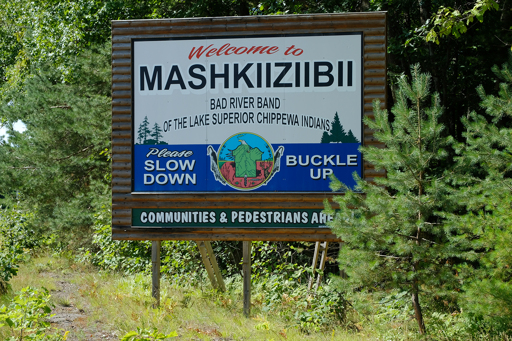
A three-judge panel of the U.S. Seventh Circuit Court of Appeals agreed with a Western District of Wisconsin opinion that the pipeline, Line 5 operated by Enbridge Energy, was trespassing on 12 miles of land within the boundaries of the Bad River Band of Lake Superior Chippewa, an Anishinaabe tribe in northern Wisconsin on the shores of Lake Superior.
“Enbridge’s trespass cannot continue unchecked across the Band’s sovereign land,” the appeals court said in its decision. “To decide otherwise would be substantially in tension with the 1854 Treaty [which created the reservation] and the statutory scheme governing rights-of-way on tribal lands.”
The original district court ruling said Enbridge had to complete a re-routing of the pipeline by June 2026 but the appeals court granted Enbridge more time to complete its ongoing project.
Additionally, the appeals court ordered the lower court to recalculate its restitution order that awarded Bad River $5,151,668 citing the economic benefit of the pipeline among other factors. The panel also refused to hold Enbridge liable for nuisance.
Line 5 is a 645-mile long pipeline carrying crude oil from Superior, Wisconsin, through Michigan and ending in Sanaria, Ontario, Canada. The pipeline, built in 1953, moves roughly 22 million gallons of light oil and natural gas liquid per day from the United States to Canada, according to Enbridge.
“We are reviewing the court’s decision and considering appropriate next steps,” Juli Kellner, a spokesperson for Enbridge told ICT. “Notably, today’s decision voided the district court shutdown deadline for Line 5, eliminated the public nuisance claim, and recognized the importance of energy supplied by Line 5, and its role in U.S.- Canada relations.”
Thursday’s Court of Appeals ruling overturned a previously ordered three-year deadline set for pipeline removal and said that a hasty removal risks violating the Transit Treaty between the United States and Canada and inflicting harm on consumers.
As a compromise, the court said any injunction must be crafted with both the interests of the public and tribe in mind, while providing Enbridge a “reasonable” opportunity to complete a proposed reroute of the pipeline around the Bad River Reservation.
Kelner said the decision also recognized Enbridge’s ongoing 41 mile re-route project as a practical, long-term solution to the dispute.

A 41-mile re-route project is currently underway in northern Wisconsin, where the United States Seventh Circut Court of Appeals upheld a previous ruling that the Canadian oil-company Enbridge is trespassing on tribal land.
“Line 5 is critical energy infrastructure serving 10 refineries and propane production facilities and continues to operate safely and reliably delivering affordable energy to millions of consumers in the Midwest and Great Lakes regions,” Kelner said.
The Bad River Band did not immediately respond to ICT’s requests for comment.
In October 2025, the United States Army Corps of Engineers issued a permit to Enbridge for the construction of a re-route project in northern Wisconsin.
According to the permit, the project replaces 20 miles of the existing pipeline including the 12 mile stretch on the Bad River Reservation. The existing segment would be replaced by a 41 mile long 30-inch diameter segment located entirely outside of the reservation boundaries, curving around its western, southern and eastern boundaries to form a “U” shape.
Enbridge proposes to cease the operation of the segment inside of Bad River once the new re-route project is complete and in service.
“We don’t intend to operate on the Bad River Reservation a day longer than it takes to finish the Line 5 Wisconsin Segment Relocation Project,” Enbridge said on its website. “We simply want to continue to safely operate this critical energy infrastructure until the relocation project is completed.”
Enbridge has previously offered Bad River an $80 million settlement to “reconcile past disputes,” which the tribe rejected.
Earlier this month, Anishinaabe leaders in Michigan were outraged by Michigan’s Democratic Gov. Gretchen Whitmer’s decision to permit new construction on a portion of Line 5 in the Straits of Mackinac, a narrow stretch of water that connects Lake Huron and Lake Superior.
Tribal leaders in Michigan told ICT the construction risks damaging hundreds of tribal burial sites, cultural sites and trust and treaty rights guaranteed by the 1836 Treaty of Washington.
Bad River tribal leaders echoed a similar concern regarding Line 5’s passage through lands guaranteed by the 1854 Treaty with the Chippewa, which created the tribe’s 125,000 acre reservation.
“Our reservation is our permanent home,” former tribal chairman Robert Blanchard said in a 2024 statement. “The land and water connect our people with a way of life, connect us with our grandparents, our children, our grandchildren, and our great grandchildren.”
A 70+ year history
Over the course of its route through northern Wisconsin and Michigan, the pipeline crosses over 400 different rivers and streams, two great lakes and 12 miles of the Bad River Reservation.
The pipeline was able to operate on tribal land due to a 1953 easement granted to Enbridge by the United States Bureau of Indian Affairs. This easement permitted the company to construct a 12 mile stretch of the pipeline on Bad River tribal land for 20 years. In 1975, the Secretary of the Interior again signed a permit granting an additional 20 years of operation, which was set to expire in 1993.
In December 1992, the tribe and Enbridge (then known as Lakehead Pipeline Company), re-signed a permit allowing it to operate for another 20 years in exchange for $450,000, according to the agreement. That permit was set to expire in 2013.
However, In 2010, an Enbridge operated pipeline called Line 6B ruptured in southwest Michigan, spilling nearly a million gallons of oil into the Kalamazoo River, one of the largest inland spills in United States history, called the “Marshall Spill.” Following that historic spill, Bad River declined to re-sign the permit agreement when it lapsed. Due to this, Enbridge was no longer permitted to operate on its lands, according to a statement from previous tribal Chairman Robert Blanchard.
In 2017, the Bad River Tribal Council passed a resolution requesting Enbridge leave the reservation, which it says Enbridge did not adhere to.
In 2019, the tribe sued Enbridge in federal court for trespass and brought forth another claim, a federal common law claim, alleging the company had committed a public nuisance, which is the act of unreasonable interference with land or real estate. The tribe pointed to a risk of the pipeline rupturing and spilling oil into tribal land and the Bad River, which the tribe says has rapidly eroded around the pipeline.
In 2020, Enbridge applied for permits to construct a 41-mile relocation of Line 5 around the Bad River Reservation.
In 2023, Western District of Wisconsin Judge William Conley ruled in favor of the tribe on both claims, and awarded the tribe $5,151,668 in past restitution and ordered Enbridge remove Line 5 from tribal land by June 2026. In the nuisance case, Conley ordered Enbridge adopt a plan to monitor and respond to risks of pipeline exposure.
Both the Band and Enbridge appealed the 2023 decision leading to Thursday’s appeals court ruling.
The post Federal appeals court: Oil pipeline trespassing on Wisconsin tribal land appeared first on ICT.
From ICT via This RSS Feed.