

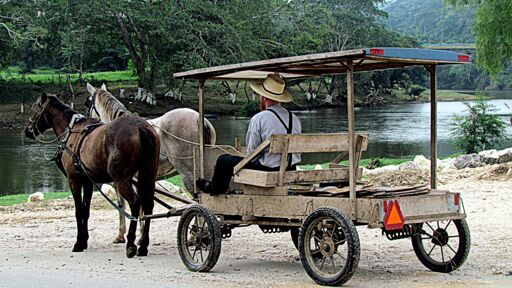
SPANISH LOOKOUT, Belize — When the Mennonite community here purchased a property four years ago in the middle of the Maya Forest Corridor, a government-recognized stretch of land designed to connect forests in the region, conservation groups were concerned. Community members began clearing land before completing an environmental impact assessment, resulting in fires and pollution, according to one report. In addition, Mennonites beat a conservation coalition that had also wanted to purchase the land for the corridor. The battle for that piece of real estate is just one example of how Mennonites conduct business in Belize, and how those moves have led to extensive deforestation. The small Central American country, flanked by Mexico, Guatemala and the Caribbean Sea, is about the size of the U.S. state of New Jersey, but its dense jungle is now much smaller than it once was. The nation lost around 20% of its forest cover between 2001 and 2025 — more than 350,000 hectares (865,000 acres), similar to the U.S. state of Rhode Island. Much of the deforestation in Belize has been tied to Mennonites, the conservative and largely insular Christian denomination that began migrating to Belize more than six decades ago, cutting down the rainforest to establish new colonies. While reports documenting Mennonites and deforestation are common, far less understood is the corporate machinery they’ve put in place for this expansion. Mongabay conducted extensive interviews and reviewed dozens of land records to better understand the way Mennonites became one of the most prolific land…This article was originally published on Mongabay
From Conservation news via This RSS Feed.