

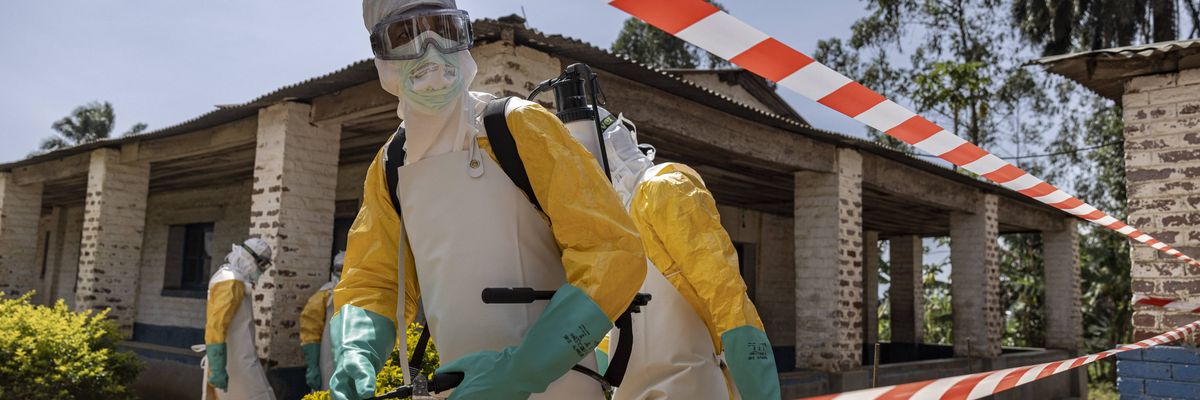
As the official death toll from the Ebola epidemic in the Democratic Republic of Congo topped 1,500, United Nations officials called for a dramatic expansion of humanitarian assistance to combat what’s now the fastest-spreading outbreak of the deadly disease ever recorded.
The DRC’s Health Ministry on Friday confirmed more than 3,400 infections and at least 1,556 deaths since the outbreak was declared in May. The ministry said the fatality rate during the current epidemic is 44%.
The epidemic is caused by the rare Bundibugyo strain of the Ebola virus, which has spread across multiple DRC provinces, with the vast majority of cases concentrated in Ituri Province. Unlike the Zaire strain from previous outbreaks, there is currently no approved vaccine or treatment for the Bundibugyo virus.
The current epidemic has killed more people faster than any previous outbreak, including in 2014-16, when more than 28,000 infections and over 11,000 deaths were reported.
"In the last 24 hours, 50 people have died of Ebola in the Democratic Republic of the Congo and the number of cases is growing exponentially, doubling every 20 days,” senior United Nations aiEbola coordinator Julien Harneis said during a Wednesday press conference in New York.
“So, in support of the government, I’m calling that we step up, across the response, the United Nations, nongovernmental organizations, member states,” Harneis continued. "We need to massively step up our response, be it in terms of supplies, specialized supplies like personal protective equipment, staff, specialized medical staff, and logistics as well.”
Harneis spoke at the press conference with acting UN World Food Program Executive Director Carl Skau, who said that “Ebola feeds on delay, fear, and hunger.”
“Stopping this outbreak requires all hands on deck and communities at the center," he continued. "Food assistance is frontline Ebola containment. It helps families stay home, supports safe isolation, builds trust with communities, and keeps health teams moving. We know what works; what we need now is the speed and resources to scale it before this outbreak outruns the response.”
Skau noted that around 10 million people are suffering from acute food insecurity in the eastern DRC, with 3 million of those in an Integrated Food Security Phase Classification (IPC)-designated “emergency”—one step away from famine.
“You cannot force people to choose between hunger and health,” he said.
Compounding the crisis, a growing number of Ebola patients are dying outside of treatment centers. Officials said that more than 60% of recent Ebola deaths have occurred in communities, increasing the risk of further transmission through unsafe caregiving and burial practices.
Health workers also continue to endure attacks by armed groups, which have forced aid organizations to suspend operations in some of the hardest-hit areas of the epidemic.
Some experts also pointed to US President Donald Trump’s ideologically driven decision to withdraw the US from the World Health Organization, his administration’s dismantling of the US Agency for International Development, and reduced funding for the US Centers for Disease Control and Prevention’s global public health efforts as adversely affecting the response to the current Ebola epidemic, especially when compared with outbreaks in 2014 and 2019.
Meanwhile, health officials in neighboring Uganda this week declared an end to the country’s Bundibugyo outbreak after no new cases were reported for a month. Twenty people were infected, and three died, in Uganda.
From Common Dreams via This RSS Feed.