

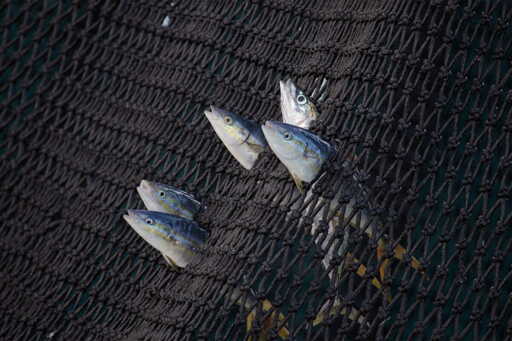
Marine protected areas (MPAs) may prohibit industrial fishing within their boundaries, but they cannot stop fishing gear released elsewhere from drifting inside. A new global study estimates that drifting fish aggregating devices (dFADs) used by industrial tuna fleets affect more than half of the world’s protected marine areas. Some travel thousands of kilometers before sinking or washing ashore, where they can damage coral reefs, entangle wildlife and leave coastal communities with the burden of removing the debris. Published in Science Advances in June 2026, the study combined fishing records, published research, an online survey of MPA staff and experts, and follow-up interviews to assess the global distribution, strandings and impacts of drifting FADs in MPAs. “We were surprised to find that FADs appear to affect more than half of the world’s protected marine area, and that impacts often occurred thousands of kilometers from the original fishing grounds,” study co-author Boris Worm, a marine ecologist at Dalhousie University in Canada, told Mongabay by email. A purse seiner attached to a FAD catches a school of tuna in the Western Central Pacific. Image © Paul Hilton / Greenpeace. Fishing gear does not respect boundaries dFADs are floating rafts deployed by purse-seine fishing vessels — industrial boats that encircle schools of tuna with large nets — to attract skipjack (Katsuwonus pelamis), yellowfin (Thunnus albacares) and bigeye tuna (Thunnus obesus). The devices carry satellite-linked buoys and echo sounders that allow companies to track them and estimate the fish below. But many are later deactivated,…This article was originally published on Mongabay
From Conservation news via This RSS Feed.