

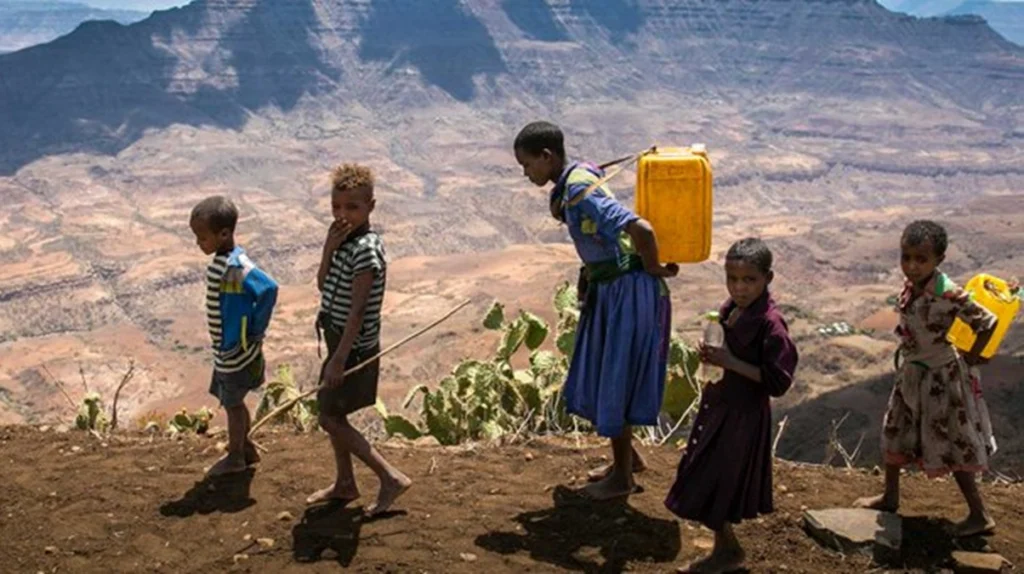
AU Commissioner Vilakati warned that 2026/2027 El Niño event is projected to be the strongest since 1950.
On Thursday, the African Union (AU) Commission called on its members to step up preparedness for the expected 2026/2027 El Niño events, which could trigger droughts, floods, food insecurity and economic losses across Africa.
RELATED:
Brazil Announces $260 Million Package to Prepare for El Niño
AU Commissioner for Agriculture, Rural Development, Blue Economy and Sustainable Environment Moses Vilakati made the call in Addis Ababa, Ethiopia, while opening the extraordinary session of a specialized technical committee regarding the weather pattern.
“2026/2027 El Niño event is projected to be the strongest since 1950. This is not a distant possibility. It is an imminent risk that demands immediate preparation at national, regional and continental levels,” he said.
Many regions of the continent are likely to experience severe droughts, devastating floods, prolonged heat-waves, and disruptions to food production, water shortages, disease outbreaks and increased humanitarian needs.
“These impacts will not only affect vulnerable households; they will also place considerable pressure on national economies, public finances and regional stability. This is neither speculative nor unprecedented. We have already witnessed the devastating consequences of delayed action,” Vilakati warned.
The commissioner recalled that the 2023/2024 El Niño season caused harsh impacts on Africa, affecting millions with severe droughts, devastating floods and destroyed infrastructure.
“What we need now is decisive and coordinated action. The difference between a manageable crisis and a humanitarian disaster will be determined by what we do before the impacts arrive,” he said.
That heat building in the eastern pacific… it’s just relentless.
The red is slightly warmer than normal, the yellow is *hotter than normal*.
That big yellow band (about 4°C above normal) that’s forming is one of the visible signs of the growing Mega El Niño. pic.twitter.com/HV13LvHXL7— tern (@1goodtern) July 30, 2026
El Niño Alters Global Atmospheric Circulation
El Niño is the warm phase of the El Niño-Southern Oscillation (ENSO), a recurring climate pattern driven by unusually warm sea surface temperatures in the central and eastern equatorial Pacific Ocean. Although it originates thousands of miles from Africa, El Niño alters global atmospheric circulation, shifting rainfall patterns and temperatures across much of the continent.
Its effects vary by region, but it is frequently associated with below-average rainfall in Southern Africa during the main growing season and above-average rainfall in parts of East Africa during the short rains, while other regions may experience different or more variable impacts.
In Southern Africa, strong El Niño events have often been linked to drought, reduced agricultural production, water shortages and increased food insecurity.
Countries such as Zimbabwe, Zambia, Malawi, Botswana and parts of South Africa have experienced poor harvests, livestock losses and declining hydropower generation during major El Niño episodes.
Reduced rainfall can also heighten the risk of wildfires and place additional pressure on already limited water resources, affecting both rural livelihoods and urban populations.
In East Africa, El Niño can bring heavier-than-normal rainfall that increases the risk of flooding, landslides, and disease outbreaks, although the magnitude and timing of these impacts differ from one event to another.
Intense rainfall has damaged infrastructure, displaced communities and disrupted transportation and economic activity in countries including Kenya, Somalia, Ethiopia and Tanzania during some El Niño episodes.
teleSUR/ JF
Sources: Xinhua
From teleSUR English via This RSS Feed.