

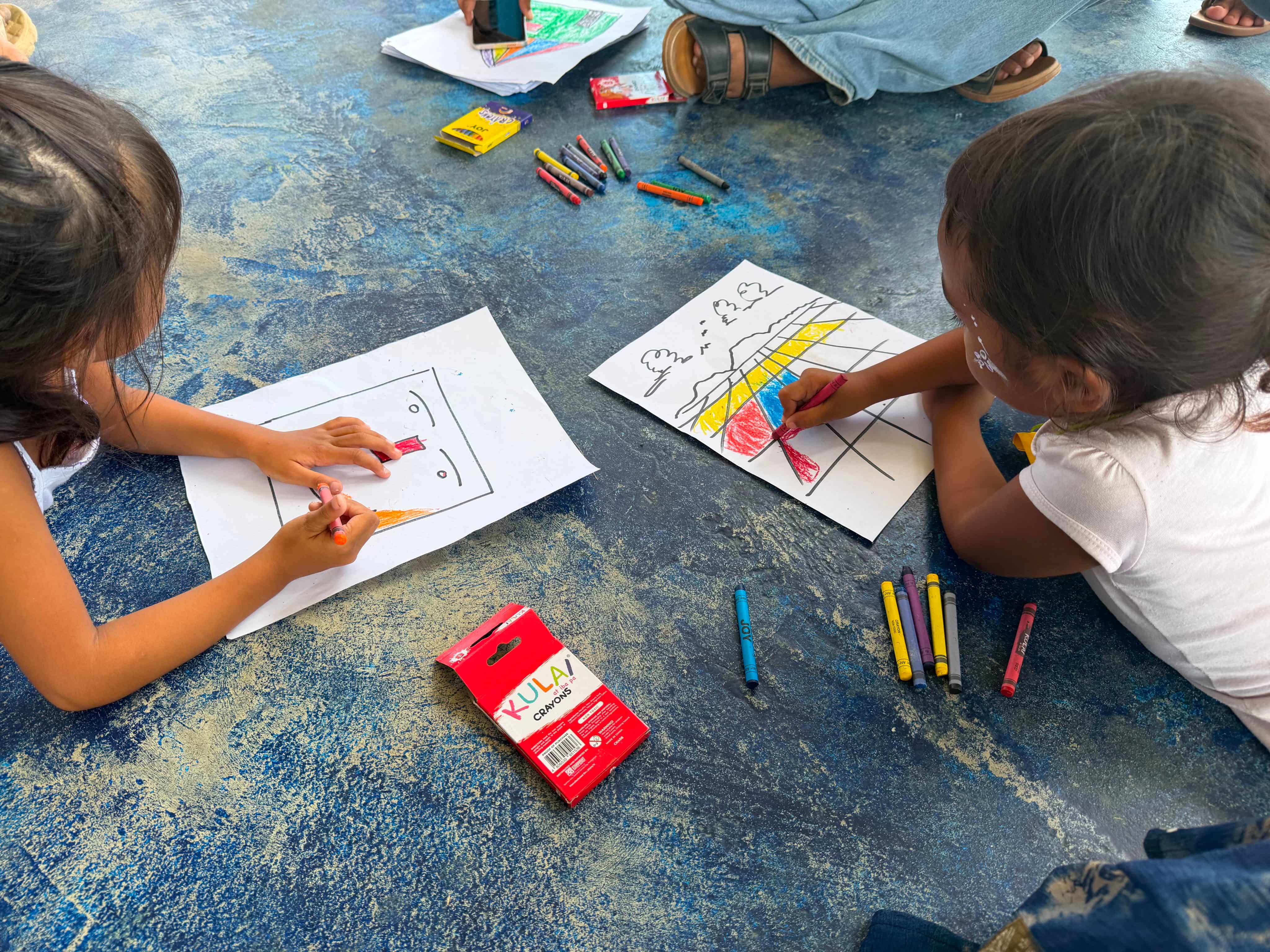
Through arts and psychology-guided open-ended questions, facilitators learned about the story behind their drawings.
ALBAY — In classrooms emptied by displacement and villages recovering from earthquakes, children may struggle to find words for fear. They are therefore encouraged to draw, dance, and sing.
As trivial as these may seem, it reflects a gap in how the country protects young survivors.
“Face painting, dancing, and singing become ways for children to express emotions they cannot easily explain,” said Marilyn Avanceña, chairperson of the board of Kalimudan Culture and Arts Center Association, Inc.
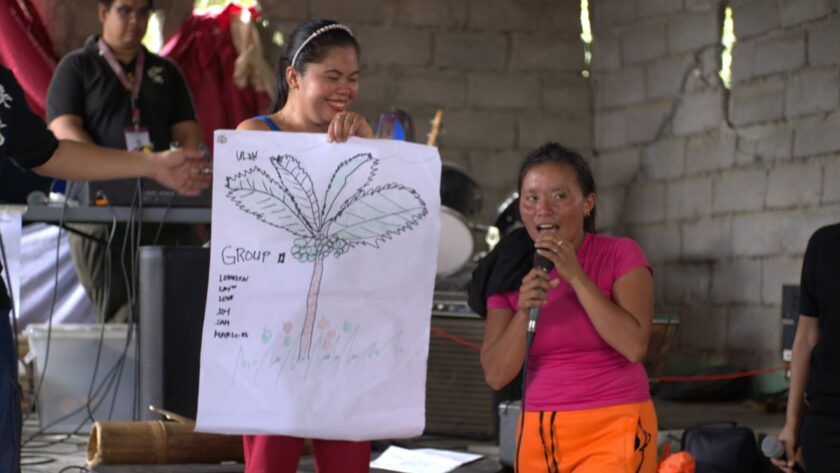
Contributed photo
Psychosocial support is recognized in the Philippine Mental Health Act and integrated in the National Disaster Risk Reduction and Management Council framework. However, it is inconsistently applied, with arts-based support being rarely done. Unlike therapy, it is immediate and practical to help people in distress to feel safe, calm, and connected after a disaster. Avanceña stressed that the government should include such programs.
Composed of alumni from Mindanao State University’s (MSU) performing arts group in General Santos (GenSan) City, Kalimudan uses creative expression to help children release stress and identify emotions. A 2026 scoping review found that non-clinical community arts programs often mirror the principles of psychological first aid, offering immediate relief, strengthening social connection, and embedding recovery in cultural practices.
Avanceña’s call echoes President Ferdinand Marcos Jr. ‘s 2026 State of the Nation Address where he admitted the urgent need for stronger mental health support for children in schools and emergencies, citing the recent fatal school killing in Tacloban as a wake?up call.
Kalimudan’s initiative has reached elementary schools, including where the whole school collapsed, as well as several remote communities. It is also the group’s first partnership with MSU?GenSan’s psychology department. “Music, dance, and art bring people together, release stress, and help children laugh and play again,” Dean Mario “Mayong” Aguja said.
Workshops with teachers and support from various local groups help with limited capacity, while outreach begins with consulting with community leaders before activities.
In Sarangani’s B’laan community, elders joined children in traditional dances, reinforcing cultural identity and belonging. The same attention was given to a mixed community in Big Margus and an Indigenous People’s (IP) community in San Jose. “It showed that psychosocial support must always be culturally sensitive,” Aguja said.
The United Nations Educational, Scientific and Cultural Organization (UNESCO) stressed in a resource guide that this approach aligns with frameworks on protecting culture and living heritage in emergencies, adding that intangible heritage is a foundation for identity and wellbeing.
An important lesson in merging psychology and cultural arts is “do no harm,” said psychology student Fajar Aleyyha Modale. For her, this means not triggering children but also not letting them avoid their emotions.
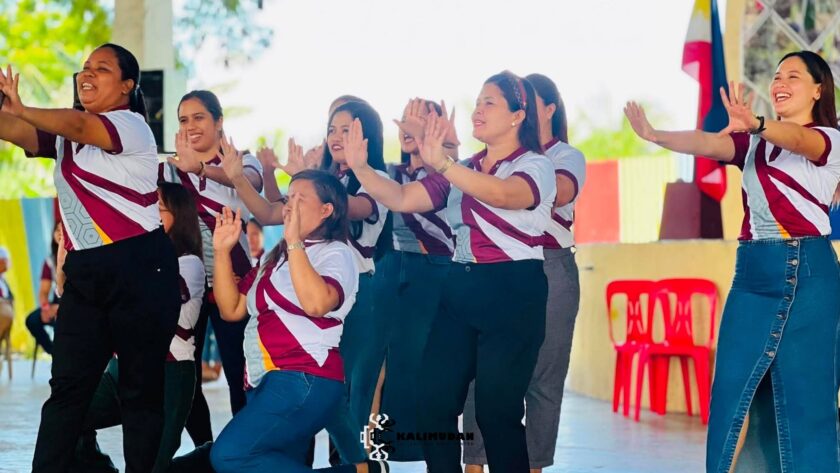
Contributed photo
Through arts and psychology-guided open-ended questions, facilitators learned about the story behind their drawings. Drawings of chocolates, candies, and even Jollibee suggest their wants in this trying time and of their condition before the earthquake, Modale said.
In one case, when a child constantly mentioned the earthquake but no psychologist was present, they let her explain why she drew a house. “She said that she is hoping that her house will be fixed and that the earthquake will end,” Fajar said.
Recovery, interviewees stressed, takes time but has to start somewhere. As Avanceña explained: if the children cannot move on emotionally, they may not be ready to face their current struggles.
“Simple yet familiar songs, movements, and drawings help them reconnect with ordinary life and return to reality,” she said. (RTS, DAA)
The post Government urged to fund arts-based psychosocial support for children appeared first on Bulatlat.
From Bulatlat via This RSS Feed.