

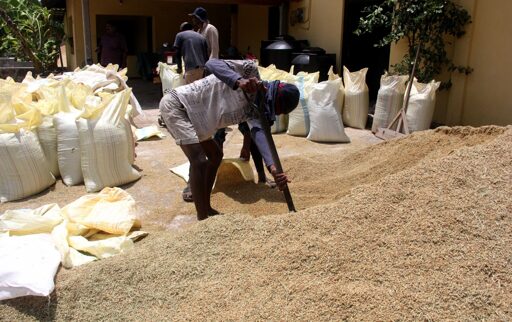
COLOMBO — Even though Sri Lankan authorities are preparing to face an impending El Niño phenomenon, Rathnayaka Mudiyanselage Suwandarathne feels that the country may not be impacted as forecasted. A second generation farmer from Thalangama in the Colombo District, Suwandarathne knows about weather and has been leading an agricultural revolution by promoting the cultivation of heirloom varieties of rice. According to him, it is normal to experience a dry spell between July and September as forecasted. This period coincides with the Yala season, one of two paddy harvesting seasons in Sri Lanka. “By August, the dry period begins, and we need a dry season to obtain the harvest,” he told Mongabay. “We then conduct culturally significant events praying for rains. This is the cycle during the Yala season. Then again from December to March, there’s a drought season, which coincides with the Maha season. Long dry spells occur every four to seven years. But now, we have changed these harvesting cycles,” he said. The World Meteorological Organization’s (WMO) monthly global seasonal climate update indicates an 80% probability of a rapid development into a strong El Niño event between July and September 2026. WMO Secretary General Celeste Saulo said that it would “intensify chances of drought and heavy rainfall and the risk of heatwaves on land and marine heatwaves in many regions of the world.” “When going by initial predictions, the time period for developing a very strong El Niño was between November 2026 and January 2027,” Ajith Wijemannage, head of the Meteorology…This article was originally published on Mongabay
From Conservation news via This RSS Feed.