

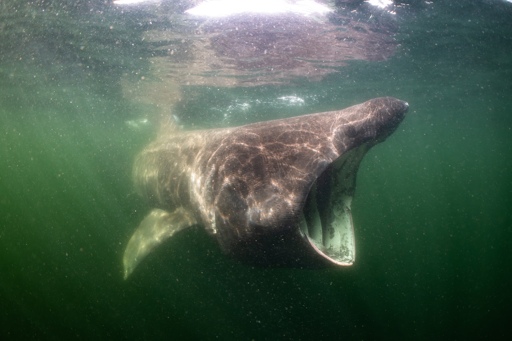
In the North Sea, the vast, shallow sandbank known as Dogger Bank was once among the most productive marine nurseries in Europe. The area stretches across U.K., Dutch, German and Danish waters, and is home to a vast array of marine life, including sharks, rays, dolphins, long-lived shellfish, anemones, corals, sand eels, and seabirds, prompting experts to call it the ecological heart of the North Sea. While much of Dogger Bank has been protected for its unique seabed habitat, destructive industrial activities like oil and gas extraction as well as fishing practices like bottom trawling have continued, even in the protected zones. Now, conservationists have notched a win with a recent court ruling that curtails bottom trawling in the Dutch protected section of Dogger Bank. But they say the threats continue, notably in the form of major wind farm developments rising in the U.K. protected section. A major difficulty in protecting a place as large as Dogger Bank, which spans 18,765 square kilometers (7,245 square miles), is that it’s divided into three separate marine protected areas (MPAs) managed by three different countries. The German section of Dogger Bank was the first to be protected, as a Natura 2000 site under the European Union’s Habitats Directive, in 2007. The Dutch section followed in 2009, and the U.K. section in 2012. Since then, the U.K. has left the EU and now manages its Dogger Bank Special Area of Conservation (SAC) as part of its own network of protected areas. (The Danish section…This article was originally published on Mongabay
From Conservation news via This RSS Feed.