

Most trafficking victims identified in Spain are migrant women from Latin America.
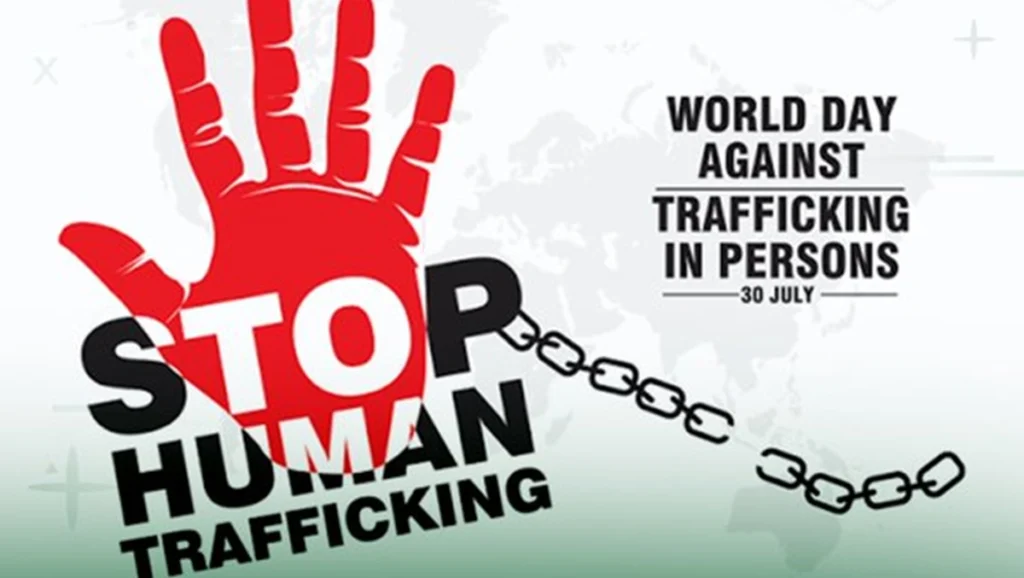
On July 30, human rights advocates observe the World Day Against Trafficking in Persons, a date that recalls the suffering of thousands of people whose economic circumstances lead them to become victims of abuse and violence, often in jobs related to sexual services.
RELATED:
Yazidi Genocide Remains Unpunished 12 Years Later: Murad
So far in 2026, the Red Cross has detected 1,339 women and girls, most of them migrants, in situations of trafficking and exploitation in Spain.
“The way they tie you down is with an invisible and mental chain,” said Paula, a 35-year-old woman from the Dominican Republic and a survivor of human trafficking.
“Behind every victim there is manipulation, there is harm, there is fear, there is constant control that no one chooses,” she continued in a narrative that seeks to break the most widespread social myth: that women are there because they want to be.
On this World Day Against Trafficking in Persons, UNODC Executive Director @Monica_Juma_ calls for decisive action to end the scam business and free those trapped behind it, for the sake of our common humanity.
Full statement: https://t.co/vdZWTxAv4Y#EndHumanTrafficking pic.twitter.com/5zIAthqej1
— UN Office on Drugs & Crime (@UNODC) July 30, 2026
A Crime Fueled by Supply and Demand
“Human beings become merchandise because today it is the second most profitable business,” emphasized Rocio Mora, president of the Association for the Prevention, Reintegration and Assistance of Prostituted Women (APRAMP).
In 2025, this organization provided assistance to 7,037 people through its offices and mobile units staffed by specialized teams that conduct field mapping to identify potential victims.
For that reason, APRAMP insists on building a society free of violence and exploitation by trying to curb the demand that shapes the future of thousands of women and girls every year, forcing them to carry “a suitcase without rights.”
“As long as we remain the country with the greatest demand for women to be enslaved, it is very difficult for us to stop all of this,” Mora said.
Most Victims Are from Latin America
Years ago, trafficking victims in Spain came primarily from Romania and African countries. Today, however, Latin American nations are the largest source of trafficked women.
In 2025, Spain’s Civil Guard found that more than 90% of 576 identified victims came from countries such as Argentina, Colombia, Peru, Brazil, and Paraguay.
“It is an international crime that must be stopped both by the state and by institutions in the countries of origin and destination,” the APRAMP president pointed out.
teleSUR/ JF
Source: EFE
From teleSUR English via This RSS Feed.