

Washington seeks to link health care assistance with agreements to access critical minerals.
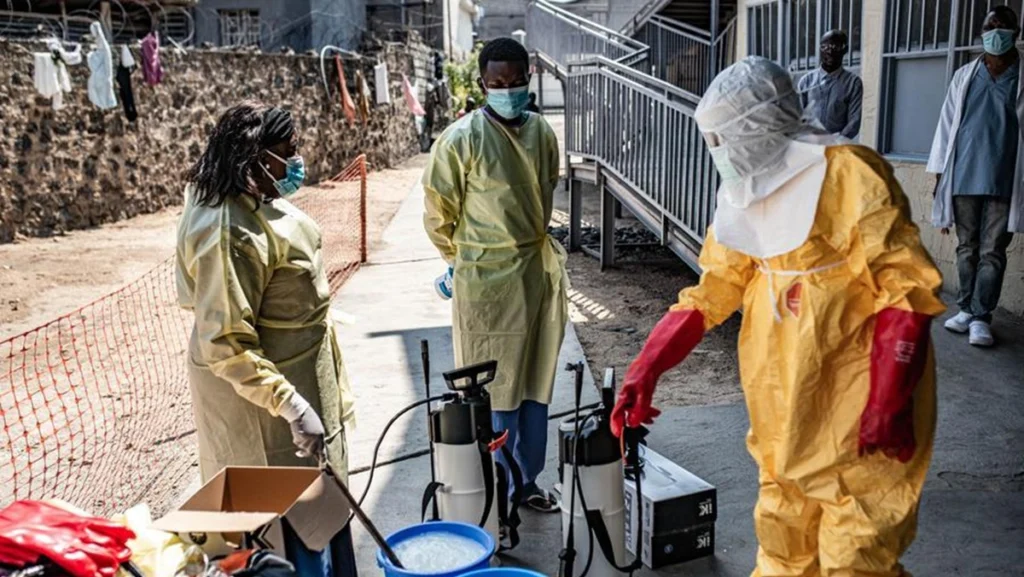
Under Washington’s “America First Global Health Strategy,” seven American aid workers entered a U.S. isolation facility in central Kenya in mid-July, defying weeks of local protests and Kenyan High Court orders to halt the work.
RELATED:
African Health Authorities Urge U.S. to Lift Travel Restrictions to Uganda Amid Ebola Outbreak
The strategy aims to rebuild U.S. global health assistance around a new generation of bilateral agreements. Since December 2025, Washington has signed health cooperation memorandums with more than 30 countries, with a total value of US$20 billion.
The money, however, comes with provisions, which have sparked African objections: Ghana refused to sign the deal in April; Zimbabwe walked away from its own deal in February, calling the terms “asymmetrical”; and Zambia shelved its agreement in May after Washington demanded that it be signed alongside a critical minerals pact.
DIGITAL COLONIALISM
Ostensibly for HIV/AIDS, malaria and tuberculosis programs, the agreement Washington offered Ghana would run for five years, but it required Accra to share 25 years of its citizens’ health records. Those data provisions led President John Dramani Mahama to reject the deal.
Arnold Kavaarpuo, executive director of Ghana’s Data Protection Commission, said “the proposed data sharing agreement looked at access not only to health data sets, but also to metadata, dashboards, reporting tools, data models and data dictionaries,” which allows 10 U.S. entities’ access to such data with no prior approval needed from Ghana.
Agence France-Presse reported a further demand that the GhanaCard biometric database held by Ghana’s national identification authority be integrated with American systems in real time, bypassing the country’s 2012 Data Protection Act.
All of these, Kavaarpuo said, amounted to “outsourcing the health data architecture of the country to a foreign body.”
David Gyedu, a cybersecurity expert, warned that such a transfer of biological information carries permanent and irrecoverable risk, as a stolen bank password can be reset, but no one can reset an HIV status or reissue his or her own DNA, fingerprint, iris pattern or genetic marker.
Kenya faced a similar situation. Under a framework signed last December, Washington pledged about US$1.6 billion over five years while Kenya was required to contribute roughly US$850 million.
The core of the deal, African Business magazine found, was to move Kenyan health data in one direction, with disbursement conditional on the data crossing the border.
Lawsuits against the government over the agreement followed within weeks, and the High Court suspended implementation. The Court of Appeal lifted that order in May, and a final ruling is due at the end of October.
Zimbabwean government spokesperson Nick Mangwana said his country had been asked to share its biological resources and data over an extended period, with no corresponding guarantee of access to vaccines or treatments developed from them, while Washington was offering no epidemiological data in return.
Such arrangements redistribute the ownership of data rather than return it, the journal PLOS Global Public Health said, producing what it called “digital colonialism”: African lives are counted and monitored to manage risk elsewhere, under the banner of partnership.
The United States is supporting the Ampasindava rare earths project in Madagascar as part of a broader effort to reduce dependence on rival nations for critical mineral supplies, according to the U.S. State Department.
The initiative reflects Washington’s strategy to diversify… pic.twitter.com/EpmeU0aAHP
— The Epoch Times (@EpochTimes) July 29, 2026
A TROJAN HORSE
After the formal withdrawal from the World Health Organization in January this year, the United States has relied more heavily on health aid as leverage in bilateral bargaining. In Zambia, that bargaining reached the mining sector.
Zambian Foreign Minister Mulambo Haimbe said in May that a proposed five-year health agreement worth up to US$2 billion had stalled over data terms that the Zambian government considers unacceptable.
A further concern is imposed minerals prerequisites, indicating US$1 billion in health funding over five years to Zambia, less than half of what the country had been receiving, in exchange for opening its copper, cobalt and lithium industries to American companies.
A draft of the U.S. State Department memorandum weighed cutting lifesaving assistance to HIV patients in Zambia to force concessions on critical minerals, with reductions possible as early as May.
The 300-million-dollar agreement Zimbabwe rejected also carried American demands over its minerals. Health Policy Watch had reported in January that health memorandums for Zambia, the Democratic Republic of the Congo and other countries were being delayed until the United States secured more favorable access to their minerals.
Zimbabwe’s NewsDay said that the United States has long interwoven humanitarian aid with its own strategic interests, tying health assistance to political concessions, economic reforms and demands over resources. Such aid functions as a “Trojan horse,” the paper said, embedding surveillance, shaping policy priorities and securing access to Africa’s strategic minerals and markets.
More than 50 civil society organizations, including the Resilience Action Network Africa, wrote an open letter warning African leaders that the terms on offer only serve Washington’s own strategic goals.
Jonas Atingdui, a Ghanaian economic and policy analyst, said Washington has long drawn on its standing as a donor to advance its interests in diplomacy, security, geopolitics and scientific research, making global health part of great-power competition.
Africa is home to ~30% of global critical mineral reserves, but remains burdened by outdated geological data, infrastructure constraints, and reliance on raw mineral exports.
New AI and data applications could change that: accelerating discovery, reducing drilling time,…
— Africa Center (@ACAfricaCenter) July 29, 2026
ERODING SOVEREIGNTY
Lemmy Nyongesa Mulaku, a scholar of international affairs at the University of Nairobi, said allowing the United States to obtain and use African citizens’ health data amounts to a continuation of neo-colonialism, adding that the data “is not for sale.”
Accepting the American terms, Gyedu noted, would conflict with the privacy provisions of Ghana’s 1992 Constitution and its data protection and cybersecurity laws, making refusal not merely a political choice but a legal necessity.
Under the U.S. terms, medicines approved by the U.S. Food and Drug Administration (FDA) would have entered the market without review by Ghana’s Food and Drugs Authority, disputes would have been settled under U.S. laws, and US$109 million pledged by Washington would have depended on U.S. congressional approval and the availability of funds.
An analysis by the Regional Network for Equity in Health in East and Southern Africa found that the agreements generally require African countries to treat FDA approvals and emergency use authorizations as principal bases for approving health products of their own, leaving national drug and public health regulators largely sidelined.
Moreover, the Kenya Legal and Ethical Issues Network on HIV and AIDS has noted that the Kenya-U.S. agreement grants legal immunity to American personnel and contractors, suggesting that Kenyan courts may have no jurisdiction in a dispute over data misuse.
Those concerns were tested in Kenya. Alongside the US$13.5 million for Ebola preparedness, Washington built a 50-bed isolation facility at the Laikipia air base, about 200 km north of Nairobi, for American personnel exposed to the virus in the DRC and Uganda but not yet showing symptoms.
The plan drew fierce opposition, with Kenyans afraid of importing the outbreak into their country that has recorded no cases. Hundreds of local residents demonstrated from late May into June, while police fired tear gas and live rounds, killing three people.
Despite the protests, the U.S. charity Samaritan’s Purse confirmed that seven of its American staff, withdrawn from the DRC, had begun a 21-day quarantine at the facility in mid-July, and the U.S. State Department acknowledged the arrangement.
Ghanaian Health Minister Kwabena Mintah Akandoh said the refusal of the health agreement was part of Ghana’s push for “health sovereignty,” adding that Ghana wants a meaningful partnership which “did not come with restrictive conditions.”
African analysts describe the arrangement with Washington as a transaction rather than a partnership, in which the price of the aid is the recipient countries’ health data, minerals and regulatory authority.
Exporting rules and pursuing a strategic advantage under the banner of assistance is far removed from what global health cooperation is meant to be, they argue.
teleSUR/ JF
Source: Xinhua
From teleSUR English via This RSS Feed.