

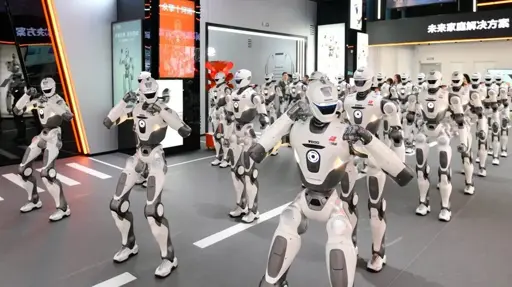
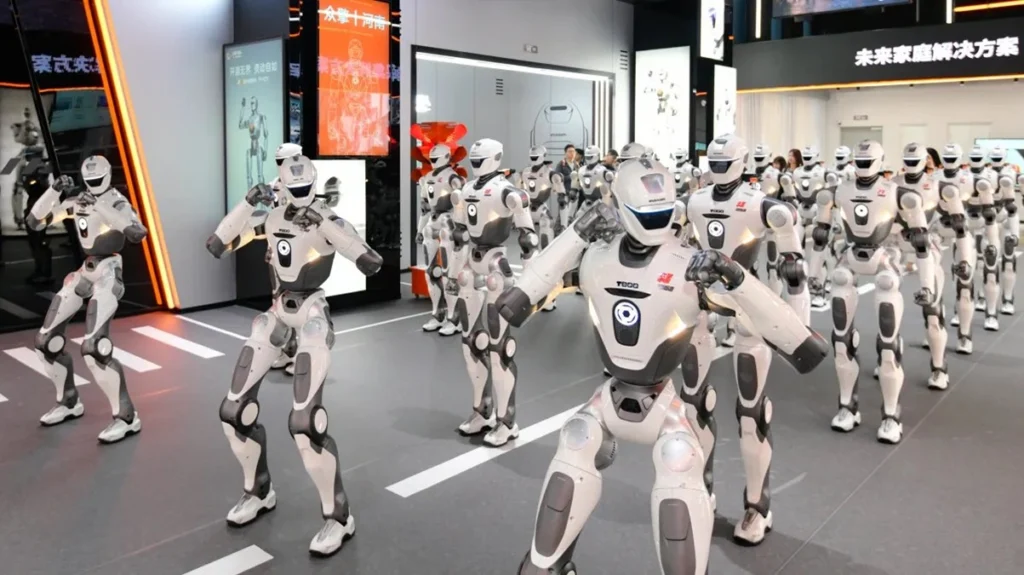
The U.S. Federal Communications Commission decided to block imports of humanoid robots on national security grounds.
The United States has long presented itself as the world’s leading champion of free markets. It urges others to open their economies, lower trade barriers and embrace competition. Yet when it faces competition from overseas, Washington increasingly abandons the very principles it claims to uphold.
RELATED:
300+ Humanoid Robots Stun the World as China Hosts Record-Breaking Second Robot Half Marathon
The latest example is the U.S. Federal Communications Commission’s decision to block imports of humanoid robots on so-called national security grounds. China is not explicitly named, but the intended target is obvious.
Nor is this an isolated measure. Chinese telecommunications equipment, electric vehicles and now humanoid robots have all been swept into Washington’s ever-expanding definition of “national security threats.” Whenever Chinese companies gain a competitive edge, the response is increasingly to suppress rather than compete.
The contradiction is unmistakable. Washington demands open markets abroad while closing its own when domestic industries face stronger rivals. It lectures others on fair competition while replacing market rules with administrative barriers whenever the outcome proves inconvenient. Such blatant double standards expose a simple reality: free markets are embraced only when they serve U.S. interests.
The U.S. has banned imports of foreign-made humanoid robots, targeting China over national security concerns.
The move is the latest step in the growing technology rivalry between the world’s two largest economies. pic.twitter.com/b4hlsdyJtI— “Pulse” by Shams TV (@PulseInDc) July 30, 2026
Nor will these restrictions achieve their stated objective. China’s competitiveness in robotics has been built on manufacturing capability, engineering talent, complete industrial supply chains and one of the world’s largest domestic markets. No import ban can reverse the technological progress China has already achieved.
History has repeatedly shown that innovation does not thrive behind walls. Robotics, artificial intelligence and other frontier technologies advance through competition, collaboration and the free flow of ideas.
Politicizing technology and weaponizing national security only disrupt those forces, ultimately harming global innovation as well as U.S. competitiveness.
Ultimately, if Washington continues to see competition as a threat rather than a catalyst for innovation, its ambitions to revive industries and sustain technological leadership are very likely to prove elusive.
teleSUR/ JF
Source: Xinhua
From teleSUR English via This RSS Feed.