

Bullets:
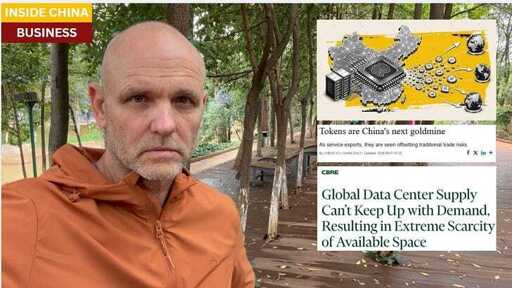
In 2022, China began construction of the world’s largest AI system.
The initiative, called “Eastern Data, Western Compute” relocated energy-intensive data center operations to West China, where electricity production is abundant.
Later, China’s open-source large-language models and breakthroughs in semiconductors allowed for AI inference to be performed at the world’s lowest cost.
China now exports AI output, and its Token Economy transforms cheap power and data processing into high-profit-margin services.
Inside China / Business is a reader-supported publication. To receive new posts and support my work, consider becoming a free or paid subscriber.
Report:
Good morning.
Investors, tech companies, and most governments have thought that the AI war will be won with the fastest chips, or the most powerful large language models. We pointed out several times, previously, that the demand for electricity was one key bottleneck that nobody was paying attention to, until very recently.
But there is another. The United States and Europe, and most of Asia as well, have hit a wall in data center capacity. There is no commercial real estate available today to stack the big, expensive server racks that Nvidia builds.
AI requires massive facilities that are highly specialized. And the US is out of space. Meanwhile, China has already completed the largest state-sponsored tech infrastructure buildout in history, and has a huge surplus of data center capacity, and also happens to have the world’s cheapest electricity, and the world’s most cost-effective large language models. As a result, tech companies across the world are simply renting China’s excess compute.
CBRE is not a Silicon Valley hyperscaler—they’re just the guys who know everything that’s going on in commercial real estate across the world. According to them, there is an “extreme scarcity” of available space for AI. In the first quarter, vacancy was 6.7% globally for data center capacity. Waves of new supply have been announced, but few are being completed. Atlanta’s data center vacancy rate is 1%, and it’s the second-tightest market in the country. That means that the vacancy rate in the Northern Virginia region is even lower than 1%. In the United States, new supply is absorbed as soon as it comes online.
80% of space under construction in the biggest markets is already pre-leased. The vacancy rates are falling across the world, and here is the money line: companies that have not leased data center space face limited options through 2030. The pipeline of new projects is insufficient to dent the demand, and it’s taking longer to finish projects:

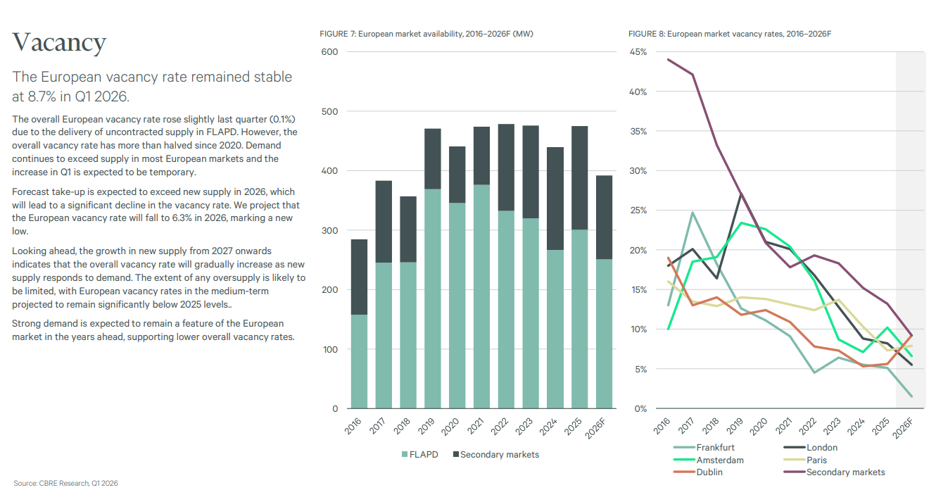
The situation isn’t much better in Europe. Vacancy rates there are at all-time lows, and are forecast to hit 6.5% later this year:
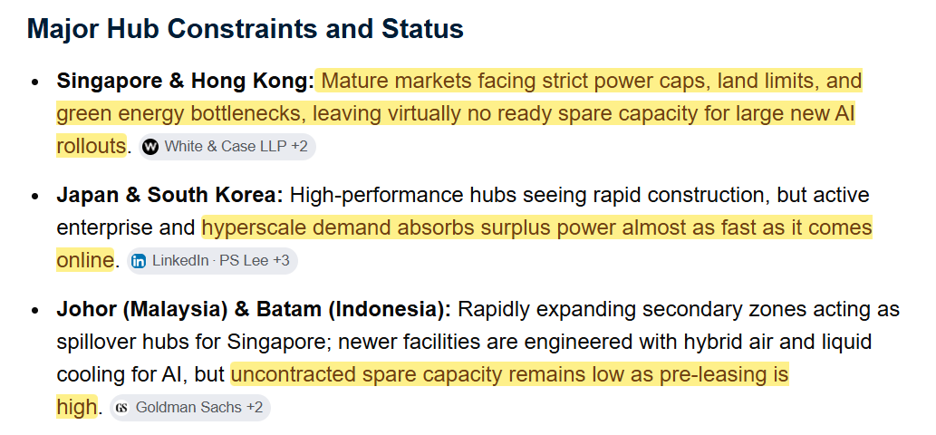
Looking next to Asia: Singapore and Hong Kong have no spare capacity for new data centers. Japan and South Korea: data centers are sucking up new electricity production as fast as it comes online—and thanks to the ongoing war in Iran, which has choked energy supplies through the Strait of Hormuz, they shouldn’t expect much good news if they’re hoping for more power. Malaysia and Indonesia: pre-leasing levels are high and spare capacity is hard to find.
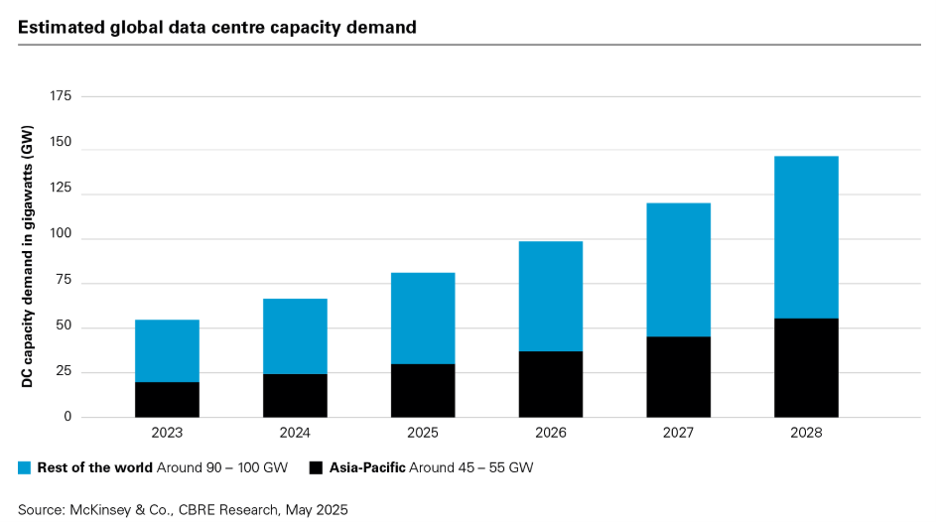
Asia will be 40% of total global capacity for AI and is expected to double in the next five years, but $800 billion in new investments will be needed in Asia to make that happen. But there are big hurdles in the way: Asian economies are major net importers of energy, and data centers are major consumers of power. There are competing demands for land near major cities.
So Asia has a problem. AI data center demand is growing in Asia, but investments in the data centers aren’t keeping up. Remember Moody’s forecast of $800 billion in new data center investment in Asia by 2030. But that investment isn’t coming in. 2024 was a record year for data center investment, at about $21 billion:
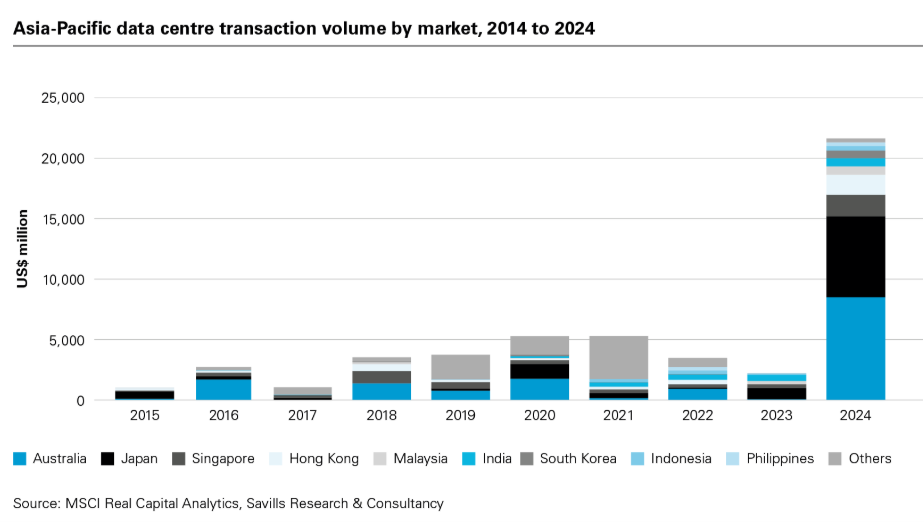
That is a big spike over previous years, and almost more than all the previous years combined. And in 2025, investment grew to $15 billion through the first seven months.
But what is needed is $200 billion in new construction, every year through 2030. It’s not even close. The energy problem, the power demand problem, the land problem—they swamp everything. The data center builders know that as soon as they can be built and plugged into the grid, they will lease all of it. But they can’t be built, and cannot be plugged into the grid.
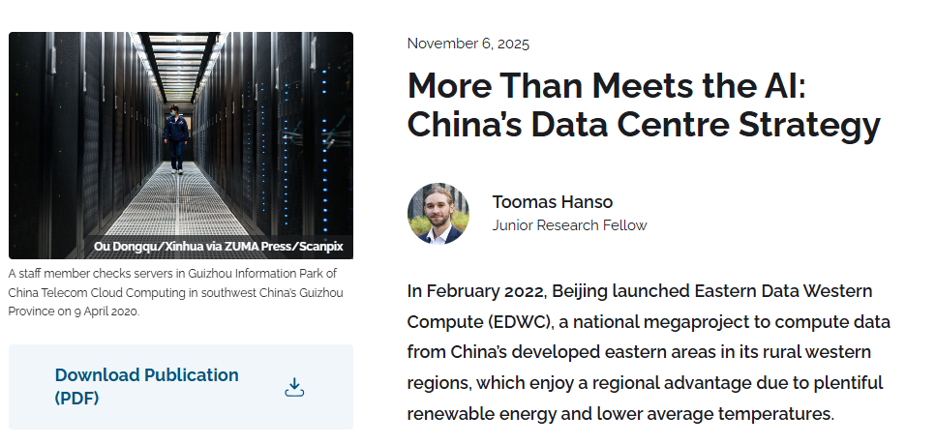
But China is the standalone exception, in Asia and everywhere else. Four years ago, Chinese policymakers launched the East Data West Compute initiative. Western China is a literal powerhouse of electricity production, while East China is where companies generate the demand for data processing.
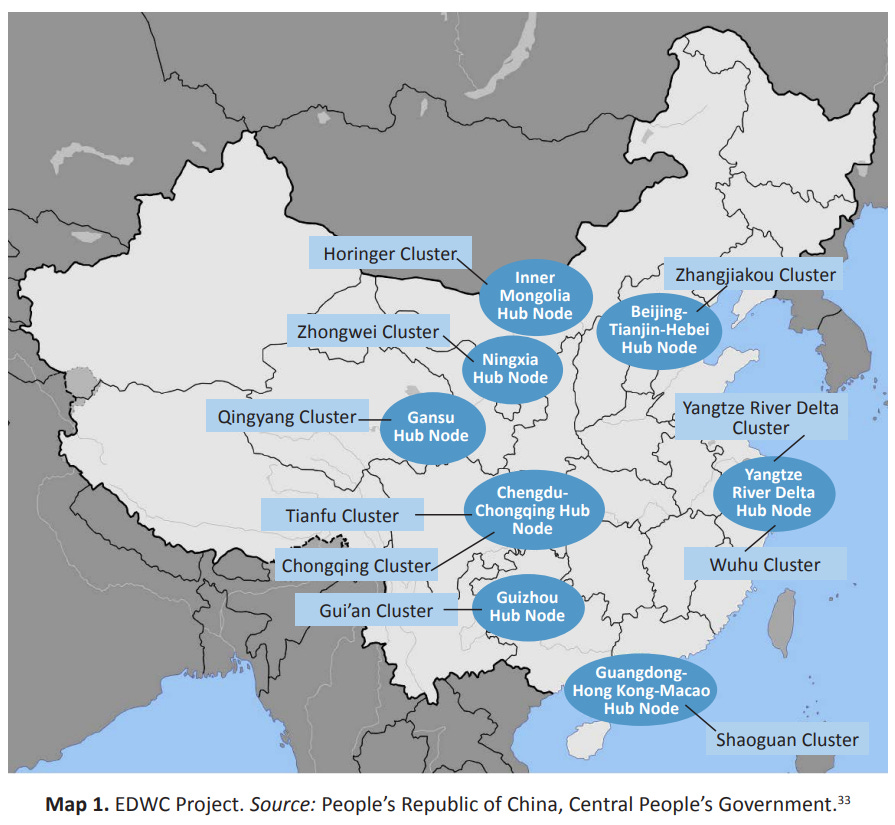
China built eight national computing hubs, and ten national computing clusters. An agency called the National Data Administration was launched to stitch all the nodes and clusters together, and coordinate the data flows. Major investors were found for the respective hubs and clusters; these are big companies here, household names in China:
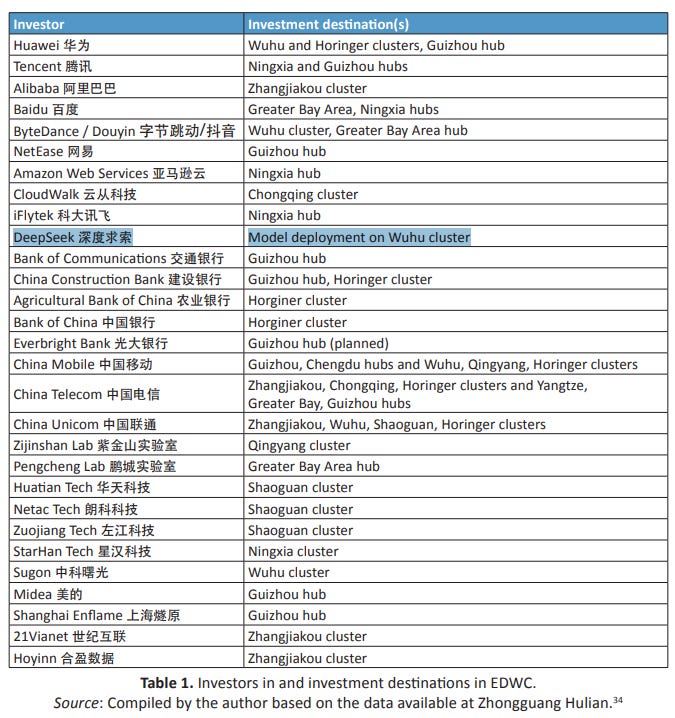
As an aside, this report is dated November 2025, and DeepSeek was a key partner for “model deployment”. Now, DeepSeek is a household name everywhere, and DeepSeek’s open-source large language model blew up the world for fanboys of OpenAI, Grok, and Anthropic.
Each node and hub in China’s EDWC system had specific objectives, KPI’s for compute capacity and speed, and a year into the program the Chinese had finished 14 national supercomputing centers, and 60 intelligent computing centers. China was forecast to pass the United States in computing power by 2025, or last year.
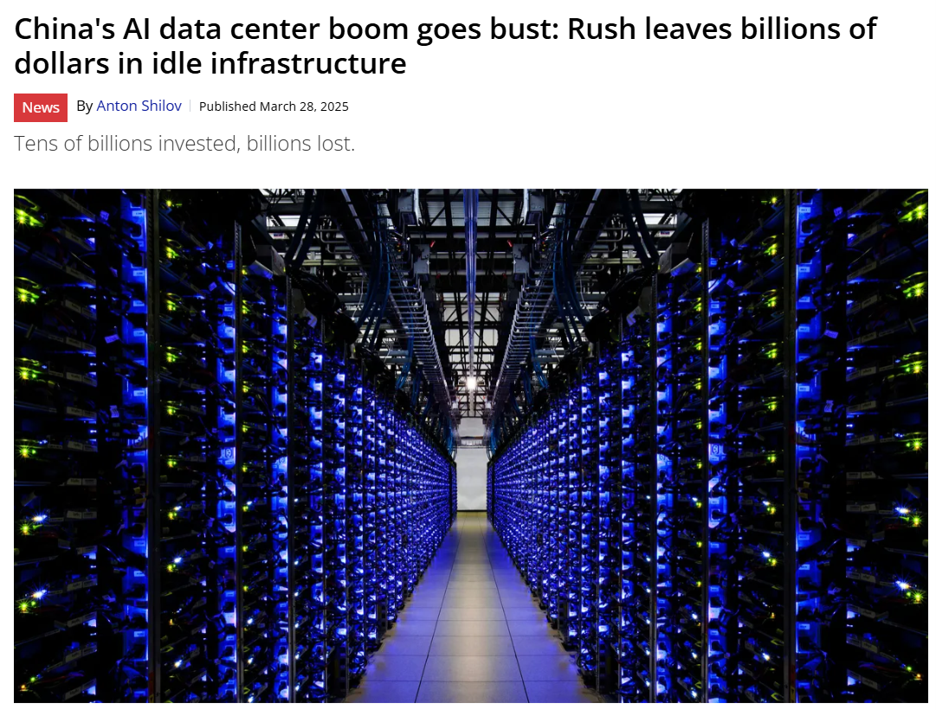
And here we go again, with so-called industry experts in the United States who saw China had overbuilt capacity in data centers, in this case. In the United States and Europe, investment and construction are reactive: in reaction to new demand. In China, it is anticipatory—-they build well in advance of new demand.
This is not a policy failure, but a strategy, and a strategy they have used in every single industry, every single time, and then the world has no choice but to buy from here. Because it’s the only place where anyone can buy, in this case, data center capacity.
And now in 2026, China has a booming export economy for AI tokens. It’s a brand new industry, called “token outbound”. The MIT Technology Review assumed that China was building data centers for domestic tech companies, and wondered where the demand would possibly be coming from.
Now we know. The demand is from everywhere. Tech startups across Asia are rapidly adopting AI in their operations, but data centers haven’t even been built in their markets. And accessing data centers in the United States costs too much. China is a lot closer anyway, and the round-trip latency between Shantou, in Guangdong, and Singapore is 32.7 milliseconds. That means it’s much faster for a tech company in Singapore running an AI query to get it done in China, compared to the US.
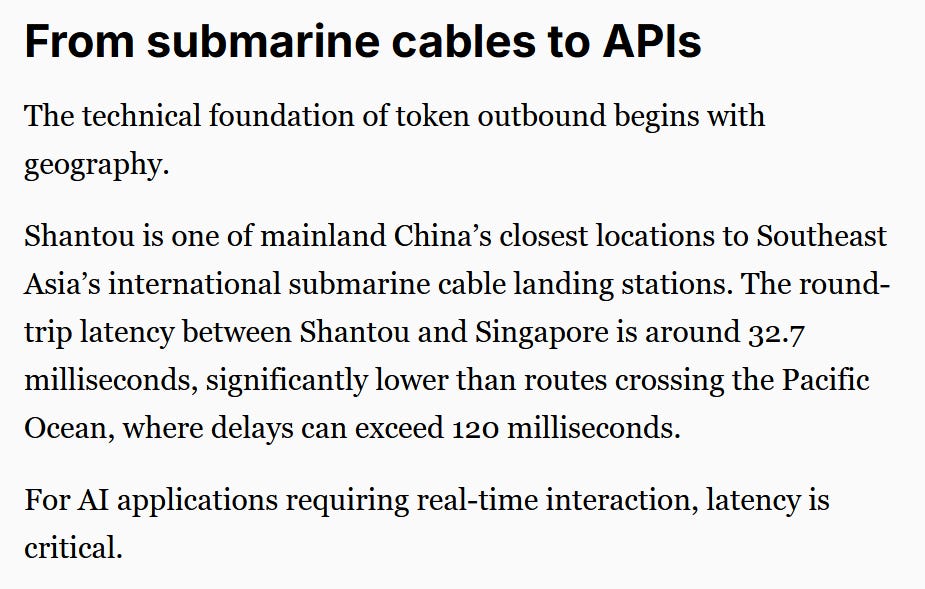
For companies in China, it means new overseas customers, and for everything in the tech and hardware space. China has been under sanction for years, and could not build their AI architecture with the fastest chips from Nvidia and the other Western suppliers. So they had to build their own chips, and they developed chip-stacking architectures that optimize the performance of Chinese semiconductors. Then came the Chinese large language models developed by DeepSeek and Kimi and Alibaba and others that provide the same performance at a fraction of the cost.
So the chips, the LLMs, and the East Data West Compute project form an entire, integrated system of Artificial Intelligence. Combined with cheap Chinese electricity, it has become a massive, high-margin service export. What crosses the border is the AI results, and that huge Chinese buildouts in the power generation, the chips, and the data centers now threaten all that investment in foreign markets. Companies don’t care where the heavy lifting of AI inference gets done, as long as the work is performed quickly, and cheaply.
The electricity is in China, and stays here. The computing power is in China, and stays here. But the value is exported. Cheap electricity generated in Xinjiang powers the servers right there in the desert. The resulting AI tokens are then routed through international fiber hubs like Shantou, which export them globally at a massive premium.
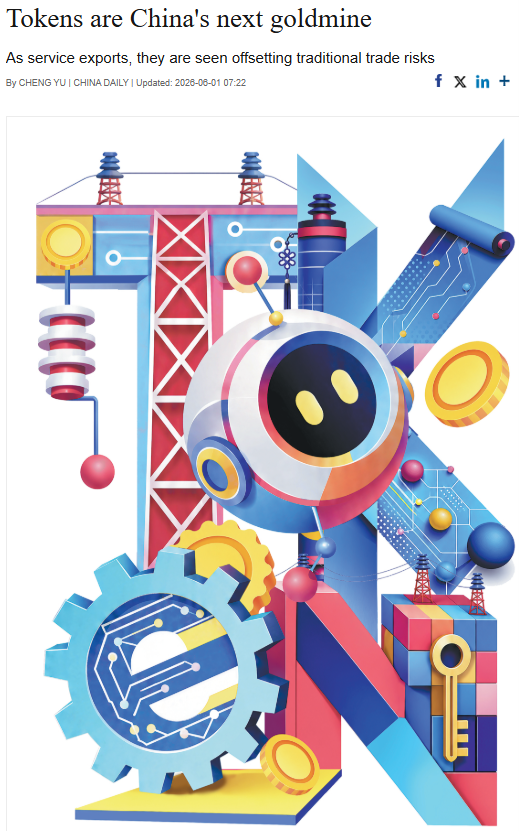
This feature in China Daily goes more deeply into the nuts-and-bolts of how the Chinese AI export model is working. The AI economy requires vast amounts of power, fast servers, fiber to connect them all together and to the outside world, and policy regulation to make sure nothing goes off the rails.
Then, just like in every single other industry: China overbuilds capacity—deliberately—and deliberately pushes prices down.
While the rest of the world is choking on the need for hundreds of billions of new CapEx spend here in Asia, and over a trillion dollars in the United States, and are still years away from even turning them on, China is already taking the industry over.
Be good.
Resources and links:
Global Data Center Supply Can’t Keep Up with Demand, Resulting in Extreme Scarcity of Available Space
https://www.cbre.com/press-releases/global-data-center-supply-cant-keep-up-with-demand-resulting-in-extreme-scarcity-of-available-space
European Data Centres Figures Q1 2026
https://www.cbre.com/insights/figures/european-data-centres-figures-q1-2026
AI growth to further strain data centre capacity
https://www.cbre.com/insights/books/european-real-estate-market-outlook-2026/data-centres
European Data Center Figures
https://mktgdocs.cbre.com/2299/12439527-d1a2-46eb-b485-4fd377f0d618-223048296/European/_Data/_Centres/_Figures/_.pdf
2025 in review: Asia emerges as the hub of the data center boom
https://www.lightreading.com/data-centers/2025-in-review-asia-emerges-as-the-hub-of-the-data-center-boom
The Asian perspective on the data centre landscape
https://www.whitecase.com/insight-alert/asian-perspective-data-centre-landscape
APAC data centers: Dispersed growth, unique challenges
https://www.moodys.com/web/en/us/creditview/blog/apac-data-centers-800bn-dollar-opportunity.html
More Than Meets the AI: China’s Data Centre Strategy
https://icds.ee/en/more-than-meets-the-ai-chinas-data-centre-strategy/
China explores new AI ‘Silk Road’ with token outbound
https://interestingengineering.com/inside-china/china-explores-new-ai-silk-road-with-token-outbound
Tokens are China’s next goldmine
https://www.chinadaily.com.cn/a/202606/01/WS6a1cc2c4a310d6866eb4baae.html
The Download: China’s empty data centers, and OpenAI’s new practical image generator
https://www.technologyreview.com/2025/03/26/1113810/the-download-chinas-empty-data-centers-and-openais-new-practical-image-generator/
China’s AI data center boom goes bust: Rush leaves billions of dollars in idle infrastructure
https://www.tomshardware.com/tech-industry/artificial-intelligence/chinas-ai-data-center-boom-goes-bust-rush-leaves-billions-of-dollars-in-idle-infrastructure
Biden signs bill to boost U.S. chips, compete with China
https://www.reuters.com/technology/biden-sign-bill-boost-us-chips-compete-with-china-2022-08-09/
America’s biggest power grid just told data centers it can cut their power off
https://startupfortune.com/americas-biggest-power-grid-just-told-data-centers-it-can-cut-their-power-off/
DeepSeek challenges the AI dominance of Silicon Valley
https://dhinsights.org/news/deepseek-challenges-silicon-valleys-ai-dominance
China is “changing lanes” and winning on all fronts in the Chip War
China’s Got Big Plans for AI — In the Desert
https://www.bloomberg.com/news/articles/2025-07-08/china-builds-ai-dreams-with-giant-data-centers-in-the-desert
Inside China / Business is a reader-supported publication. To receive new posts and support my work, consider becoming a free or paid subscriber.
From Inside China / Business via This RSS Feed.