

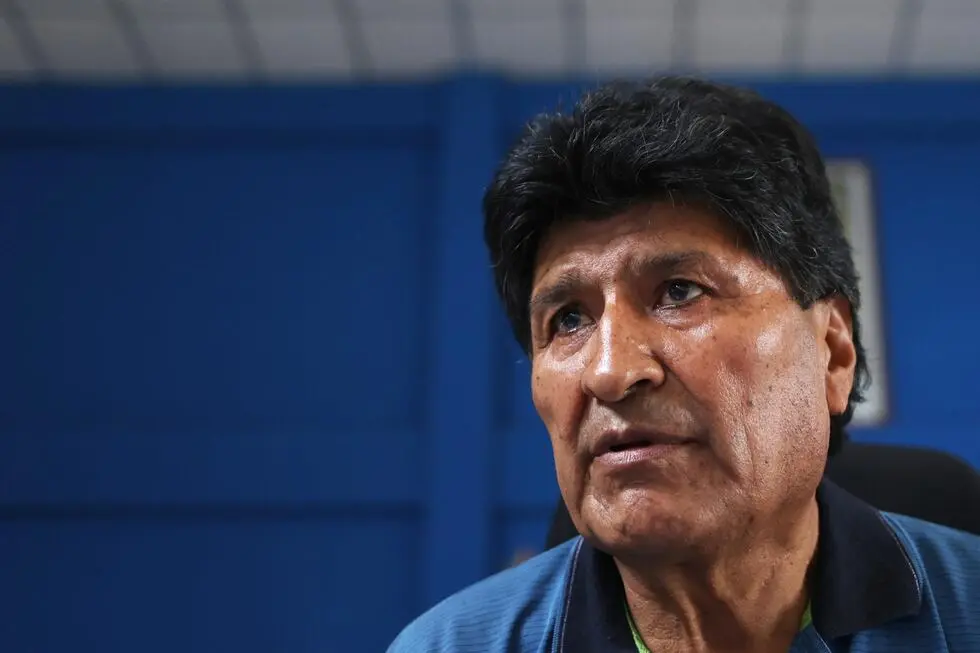
Bolivia’s Prosecutor’s Office in Santa Cruz issued an arrest warrant Wednesday against former President Evo Morales for his alleged role in the 53-day road blockades against the neoliberal policies of President Rodrigo Paz’s administration.
The former President, who governed Bolivia from 2006 to 2019, faces charges including armed uprising against state security, terrorism, attacks on transportation safety, criminal association, public incitement to commit crimes, and attacks on public service security. Juan Carlos Huarachi, former executive secretary of the Bolivian Workers’ Central (COB, in Spanish), was also charged.
The warrant marks the latest escalation in the government’s judicial offensive against Morales and allied social movement leaders.
RELATED: Evo Morales Denounces Service Cuts in Cochabamba
Morales has emphatically rejected the accusations, calling them politically motivated persecution. “This is not justice, this is persecution,” the former president stated from Cochabamba, where he remains under the protection of thousands of supporters. His defense team previously argued that a separate arrest warrant issued years ago in Tarija for alleged human trafficking charges had already expired under statutes of limitations.
The 53-day blockades emerged as the central expression of a mass popular uprising against President Paz’s neoliberal agenda, which social movements characterize as an attempt to dismantle the plurinational state model established under Evo Morales’ government. Protesters demanded dialogue and accused the right-wing administration of governing for traditional elites rather than the country’s marginalized majorities.
Hoy el gobierno emite una nueva orden de aprehensión en mi contra, acusándome de supuestos delitos de terrorismo y alzamiento armado. Buscan responsabilizarnos de las movilizaciones sociales para ocultar el verdadero drama que vive Bolivia: una profunda crisis económica y social,…
— Evo Morales Ayma (@evoespueblo) July 29, 2026
Text reads: “Today the government issued a new arrest warrant against me, accusing me of alleged crimes of terrorism and armed revolt. They seek to hold us responsible for social mobilizations in order to hide the real drama that Bolivia is experiencing: a deep economic and social crisis, the result of a model that has abandoned the people and protected corruption.
Our position has always been clear: we are on the side of those who suffer from adjustment, fuel shortages, rising cost of living, insecurity and the rise of drug trafficking. With processes and political persecution they will not solve the problems that they themselves have caused; they only try to divert attention with a new headline.…”
Among the key demands raised during the mobilizations were the non-criminalization of social protest and the guarantee that protest leaders would not be apprehended -demands that the arrest warrant now directly contradicts.
For grassroots leaders, the detention orders against Morales and other popular figures represent a smoke screen to divert attention from the government’s own responsibility in the deepening crisis facing the Andean nation. “The Paz government refuses to recognize its role in creating this situation,” said local leaders in statements to the press, arguing that the administration has chosen judicial repression over political dialogue.
Historical Context and Implications
This is not the first arrest warrant issued against Morales. In previous years, authorities in the department of Tarija ordered his detention in a separate case that his defense claims has already prescribed. The pattern of judicial actions against the former president has drawn criticism from human rights organizations and international observers who warn of the weaponization of the judiciary for political purposes.
Morales, Bolivia’s first native president, led the country for nearly 14 years before being forced into exile following a disputed 2019 election and subsequent political crisis. He returned to Bolivia in 2020 and has remained an influential figure in national politics, leading the Movement Toward Socialism (MAS, in Spanish) party. Despite being barred from running for president again under constitutional term limits, his political influence remains significant, particularly among Indigenous and working-class constituencies.
The arrest warrant is likely to deepen the already severe political polarization in Bolivia. The MAS party has condemned the measure, calling it an unconstitutional attempt to silence opposition voices. Meanwhile, the Paz administration defends the judicial process as a necessary response to what it describes as acts of sedition that threatened public order and the rule of law.
From teleSUR English via This RSS Feed.