

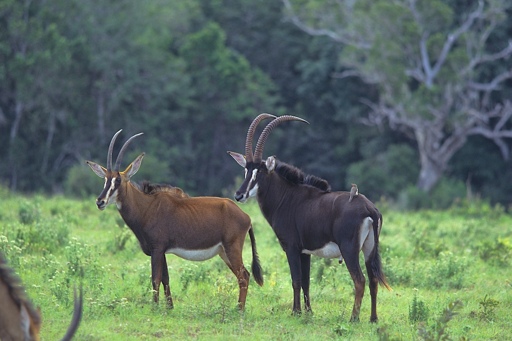
Introducing animals outside their natural ranges is a practice fraught with risk, one that the International Union for the Conservation of Nature (IUCN) — the recognized global authority on the natural world — explicitly discourages. The IUCN’s guidelines for responsible wildlife translocation classify the importation of nonnative wildlife as a “critical risk” to be carried out only under a very narrow set of exceptional circumstances. There are very good reasons for these precautions. The natural world is awash with examples of species that were released outside their natural ranges becoming invasive, with devastating consequences. Even if species released outside their natural ranges don’t become invasive, they may still drastically disrupt the ecological dynamics of a community. For decades, translocations of animals within their former ranges have been used as a helpful tool in conservation. Reintroduction of species for conservation purposes such as bolstering an existing population, reestablishing a population that has gone extinct in the wild, and maintaining genetic diversity all rely on translocations. Such movement of animals may also help enhance tourism by offering greater numbers or a more diverse array of local species. Moving animals outside their natural range (an introduction rather than a reintroduction), however, is a fundamentally different and a potentially problematic proposition. The outcomes of these “conservation introduction” cases are often binary: the animals struggle mightily, if not die off, or the animals manage to acclimate to the unfamiliar surroundings and proceed to compete for resources with the native species, potentially inflicting harm in the process. And while…This article was originally published on Mongabay
From Conservation news via This RSS Feed.