

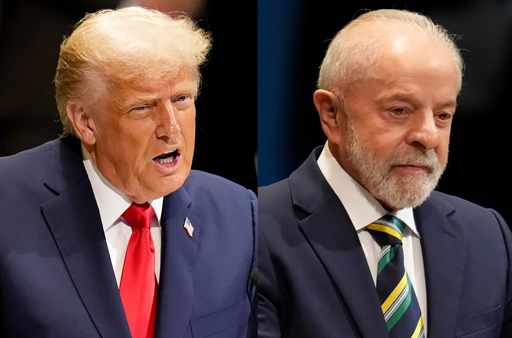
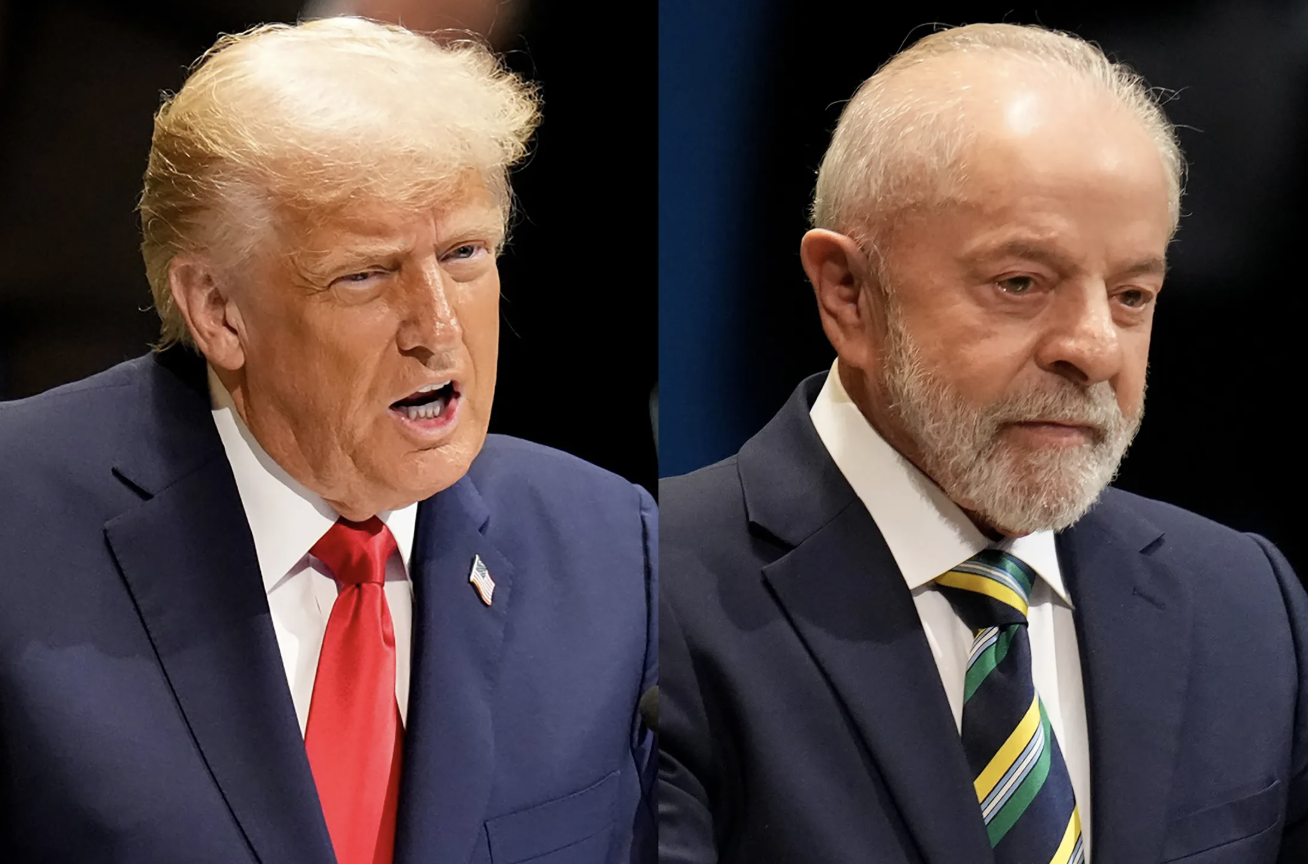
The following op-ed by Brazilian President Lula first ran in the Washington Post. Donate to help us cover the Brazilian presidential election this fall.
A year ago, I was taken aback by the publication, on a digital platform, of a letter from President Donald Trump imposing a 50 percent tariff on Brazilian goods. Its very first paragraph referred to former president Jair Bolsonaro — who was convicted last year for attempting a coup d’état in Brazil and is now under house arrest — making the political motivation behind the measure explicit.
In my conversations with President Trump since then, I have stressed that we do not need to share the same worldview to pursue a mutually beneficial relationship between our countries. After all, we lead the two largest democracies and economies in the Americas.
Negotiations between us, together with rulings by the U.S. Supreme Court, dismantled the initial version of the sweeping tariff measures. Yet this month, disregarding dozens of meetings between our teams, solid technical arguments and documents I personally handed to President Trump, the U.S. government imposed new tariffs on Brazil ranging from 12.5 percent to 37.5 percent.
As a result, Global Trade Alert, an independent organization based in Switzerland, estimates that Brazil and Turkey are now the second most heavily tariffed countries by the United States, behind only China. This is despite the U.S. surplus with Brazil in bilateral trade in goods and services, which has totaled $428 billion over 15 consecutive years.
Besides being unfair, the new tariffs are a strategic mistake: They will harm the U.S. economy and the U.S. partnership with Brazil. Several U.S. industrial sectors depend on Brazilian inputs. Food, footwear, textiles, furniture, auto parts and many other products will become more expensive for U.S. consumers.
Brazilian exports to the United States have fallen to their lowest level since 1997. Comparing the first six months of 2025 and 2026, bilateral trade with the U.S. declined by 12.8 percent, while Brazil’s trade with the European Union grew by 6.1 percent and its trade with China increased by 15.9 percent.
In the medium term, these tariffs will disrupt supply chains that are currently deeply integrated, and Brazilian companies will replace their U.S. suppliers with partners elsewhere.
This speaks volumes about the inconsistency between the interests the United States proclaims in its national security strategy and the policies it pursues toward the Western Hemisphere.
Latin America and the Caribbean need neither aircraft carriers patrolling their waters nor punitive tariffs. What we lack are reliable and predictable partners. At a time when the U.S. is closing off its market, other countries have stepped forward as alternatives, offering a positive agenda capable of fostering economic and social development.
I am convinced that joining forces around concrete initiatives involving investment, trade and the fight against organized crime is the way forward to overcome the ills afflicting a hemisphere that belongs to all of us.
Dividing the world into spheres of influence and pursuing neocolonial ventures for strategic resources are anachronistic gestures and steps backward.
Despite the United States’ long history of political and military interventions in Latin America and the Caribbean, there have been moments when Washington proved capable of being a partner worthy of our development interests.
President Franklin D. Roosevelt implemented the Good Neighbor Policy, which sought to replace the use of force with diplomacy in U.S. foreign policy toward the region. That approach made a decisive contribution to the early stages of Brazil’s industrialization. When confronting the 2008 financial crisis, President George W. Bush included three Latin American countries in the inaugural Group of 20 leaders’ summit.
For Brazil, the only war we need to wage in this part of the world is the war against hunger, poverty and inequality. And the only weapons we should deploy are investment, technology transfer, and fair and balanced trade.
Attempts to impose ideological constraints on the bilateral partnership, or to instrumentalize it for electoral purposes, will not stand. Never before has a U.S. secretary of state declared that Brazil is not a friend of the United States. No one will defeat us through lies.
President Trump’s claims against Brazil, attempting to justify tariffs, are unfounded. Freedom of expression is not a free pass for criminal activity on social media platforms — we will not give up on protecting our families and children from the greed of a handful of tech oligarchs. Our payment system, PIX, does not discriminate against U.S. companies and is an international benchmark for digital public infrastructure. The whole world knows that, starting in 2023, we began aggressively combating environmental crimes and drastically reducing deforestation across all Brazilian biomes.
We respect the sovereignty of other states and negotiate with all those who know how to respect ours. Reciprocity is the foundation of every relationship between nations, and we have the appropriate mechanisms to ensure it.
We stand ready to continue engaging in open and constructive dialogue, as the relationship between two countries such as Brazil and the United States requires. But Brazil’s destiny is for Brazilians alone to determine — without foreign interference or subservience.
Donate to Help Us Cover the Brazilian Presidential Election
From Payday Report via This RSS Feed.