

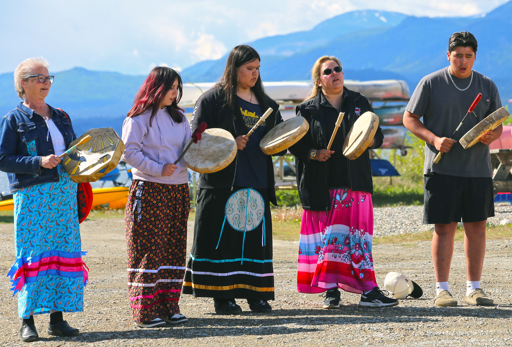
INVERMERE, Canada — Mark Thomas, Secwépemc salmon chief for the Upper Columbia, welcomes groups of students to a narrow stretch of the Columbia River, between the Rocky and Purcell mountains in western Canada. It’s late May, and snow still graces the distant peaks. For the past five months, students from schools nearby towns have raised sockeye salmon (Oncorhynchus nerka) in their classrooms. They have watched pea-sized eggs transform into tiny, newly hatched fish known as alevin, with an egg sac still attached to their silvery bodies, and then to free-swimming fry. This morning, they will slip the fry into the river, just downstream from its headwaters in the province of British Columbia. “When you go down to the river, tell the water your name, introduce yourself to the water spirits,” Thomas tells them. “Then you can pray for whatever you want. You can pray to be smarter, or taller. You can pray for your family — or the fish.” Thomas begins by smudging the group as part of a traditional ceremony, using an eagle’s wing to gently waft smoke from a bundle of juniper and sage that is smoldering in an abalone shell. The kids then make their way to the riverbank and, to the sounds of drumming and traditional song, each takes a plastic cup with a fish inside. When they are ready, they send it down a DIY funnel and watch the tiny fry swim away. The morning’s fry release, through the Fish-in-Schools program, and an afternoon ceremonial…This article was originally published on Mongabay
From Conservation news via This RSS Feed.