

Survey finds widespread dissatisfaction with the new government, deep institutional distrust and persistent economic concerns.
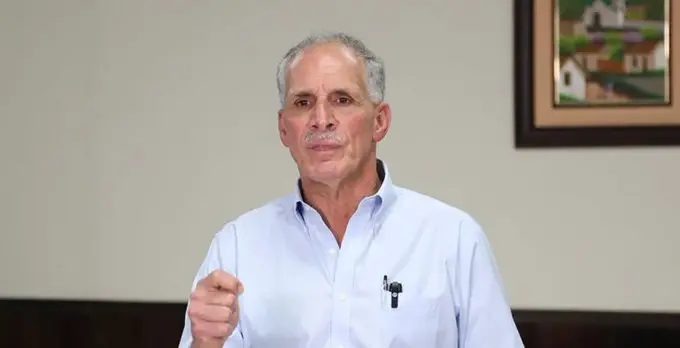
A majority of Hondurans disapprove of President Nasry Asfura’s first 100 days in office, with most saying his administration has delivered no significant achievements and represents a continuation of past governments, according to a nationwide public opinion survey released Tuesday by the Jesuit Reflection, Research and Communication Team (ERIC-SJ).
RELATED:
The fifteenth edition of ERIC-SJ’s Public Opinion Survey gave Asfura’s administration an average rating of 3.82 out of 10. According to the findings, 50.6% of respondents rated the government’s first 100 days as bad or very bad, while 74.2% said they could not identify any achievements. Another 74.8% said they believe the current administration represents “more of the same.”
The report, titled 15 Years of Voices, Data and Memory, is based on 1,559 face-to-face household interviews conducted between May 12 and 23 across 16 of Honduras’ 18 departments.
Presenting the findings, Mercy Ayala, who led the research through ERIC’s Human Rights Research Unit, said the economy remains the public’s foremost concern. Nearly half of respondents identified the economic crisis and unemployment as the country’s main problem, while 20.1% cited crime and insecurity and 16.9% pointed to shortcomings in health care and education.
Reflecting those priorities, 52.7% said the government’s main focus this year should be creating jobs and strengthening the economy. Another 18% said improving the health and education systems should take priority.
The survey also found widespread skepticism about the legitimacy of the November 2025 general election. Some 64.7% of respondents believe electoral fraud occurred, and a similar proportion said the election weakened Honduran democracy.
Six in 10 respondents said Salvador Nasralla was the true winner of the election, while nearly 30% identified Asfura as the victor. The survey also found that 80.7% believe intervention by U.S. President Donald Trump influenced the election’s outcome.
Nearly six in 10 respondents, or 59.5%, said they believe Asfura is influenced in the exercise of power, attributing that perception primarily to the U.S. government, economic groups and former President Juan Orlando Hernández.
Support for electoral reform was also strong, with eight in 10 respondents saying Honduras needs sweeping changes to its electoral system, including limits on the reelection of lawmakers and mayors beyond two terms, the introduction of a presidential runoff and electronic voting.
The findings also highlight deep distrust of state institutions. Political parties, the Supreme Court, the National Electoral Council, the National Congress and the central government ranked among the country’s least trusted institutions. By contrast, the Evangelical and Catholic churches received the highest levels of public confidence, followed by the Ministry of Education.
Half of those surveyed said they do not identify with any political party, while 77% reported little or no interest in party politics, despite remaining engaged with public issues affecting the country.
On migration, one-third of respondents said they had considered leaving Honduras, citing limited income opportunities and the country’s economic situation as the main reasons.
The survey also found that 72.9% support continuing extraditions to the United States as a tool to combat drug trafficking.
On human rights, respondents identified women as the group facing the greatest violations. According to the findings, 73.4% believe the state does little or nothing to address violence against women, while 64.9% said freedom of expression is not fully respected in Honduras.
Opening the presentation, Jesuit priest Germán Rosa described the survey as “an act of real democracy” because it allows citizens to express their views on the country’s reality.
Jesuit priest Ismael Moreno, widely known as Father Melo, said the findings portray “a Honduran society undergoing rapid transformation” that is more urban, more connected and younger, yet deeply distrustful of its institutions.
“The message of this survey is unequivocal. Public institutions are experiencing a profound crisis of legitimacy,” Moreno said.
He warned that many Hondurans no longer believe public institutions respond to their needs and said that if political elites continue repeating the same practices, people could eventually seek solutions outside democratic institutions.
Despite the widespread discontent, the survey also found a measure of optimism. Some 58.6% of respondents said they feel hopeful about Honduras’ future, compared with 36.7% who said they feel fear, suggesting that while dissatisfaction remains high, many citizens continue to expect meaningful change.
From teleSUR English via This RSS Feed.