

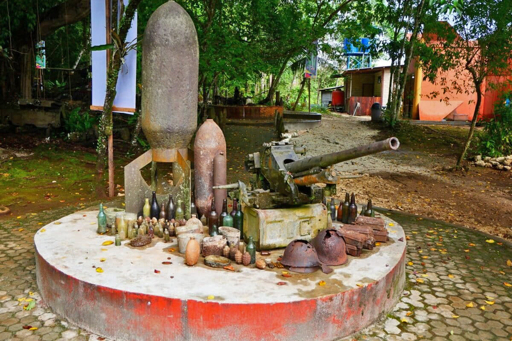
BIAK, Indonesia — The munition here had outlasted one of the Pacific’s fiercest World War II battles. Eight decades later, investigators in Indonesia said it exploded by the timber-framed houses in the coastal village of Fandoi on Indonesia’s Biak Island. The blast killed at least seven people and injured around 20, many seriously, police told journalists. Fandoi village head Frans Rumsarwir said two fishers remained missing since the blast. “Lai was sawing, while Nando used a chisel,” Frans said, referring to two fishers by their given names. A World War II bomb had exploded in the village. Investigators and officials later concluded two local fishers were dismantling an unexploded munition recovered from coastal waters off Papua, where some of the Pacific’s most intense fighting took place in 1944. Their deaths are the latest in a long legacy of unexploded wartime ordnance, which has killed or injured at least 25,000 people across neighboring Papua New Guinea since 1945, according to The HALO Trust, the world’s largest humanitarian mine-clearance organization. No concrete estimate exists for the death toll across Indonesia. Authorities have known about repurposing of unexploded bombs for decades, yet some fishers continue to recover wartime explosives for use in blast fishing despite the extreme danger. Goa Jepang — or “Goa Binsar,” as locals call it — is a Japanese military bunker from World War II. Image by Asrida Elisabeth/Mongabay Indonesia. Legacy of war New Guinea and its surrounding islands were among the Pacific’s most violent World War II theatres, while…This article was originally published on Mongabay
From Conservation news via This RSS Feed.