

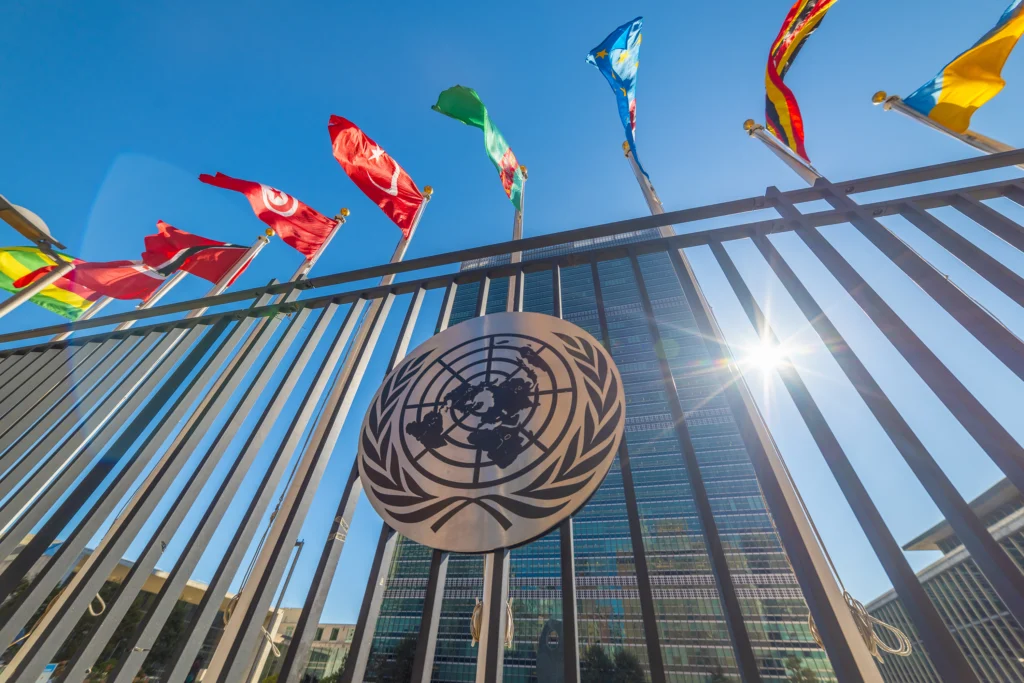
Uruguay’s historic forum on August 3 brings together five candidates from the region to present their vision for reforming the United Nations amid global crises and a window of opportunity for the Global South.
For the first time in decades, Latin America and the Caribbean are positioning themselves as serious contenders to lead the United Nations.
Five of the six candidates vying to replace António Guterres as Secretary-General come from the region, a historic concentration that reflects both a geopolitical opportunity and a collective ambition to reshape the multilateral order.
RELATED: UNHCR Agency Marks 75th Anniversary of Refugee Convention
The forum, convened by the Government of Uruguay -which holds the pro tempore presidency of the Community of Latin American and Caribbean States (CELAC)- will take place on August 3 in Montevideo. The event is organized in partnership with the Gqual Campaign and the International Strategic Thinking Center (Cepei).
Uruguay será sede del Diálogo Regional sobre el Futuro Liderazgo de las Naciones Unidas, un encuentro inédito que reunirá en Montevideo a las cinco candidaturas de América Latina y el Caribe a la Secretaría General de la ONU para presentar y contrastar sus propuestas.
La… pic.twitter.com/QimT7wxmXm
— Cancillería Uruguay
(@CancilleriaUy) July 27, 2026
Text reads: “Uruguay will host the Regional Dialogue on the Future Leadership of the United Nations, an unprecedented meeting that will bring together in Montevideo the five candidates from Latin America and the Caribbean to the UN General Secretariat to present and compare their proposals…”
Participating in person will be former Chilean President Michelle Bachelet, former Ecuadorian Foreign Minister María Fernanda Espinosa, and Costa Rican diplomat Rebeca Grynspan, currently Secretary-General of the United Nations Conference on Trade and Development (Unctad). Virtual interventions will come from Rafael Mariano Grossi, Director General of the International Atomic Energy Agency (IAEA), and former Guyanese Foreign Minister Carolyn Rodrigues-Birkett.
The presence of five Latin American and Caribbean candidates is unprecedented. It is bolstered by the traditional principle of geographic rotation that guides the selection of the UN’s top representative. Since the organization’s founding, only one Secretary-General has come from the region: Peruvian diplomat Javier Pérez de Cuéllar, who served from 1982 to 1991.
Latin America brings to the table a trajectory of consistent support for international law, multilateral cooperation, and the historic declaration of the region as a Zone of Peace, signed by CELAC member states in 2014. These credentials position the region as a credible voice in a world fractured by armed conflicts, geopolitical divisions, and humanitarian crises.
Challenges Ahead
Despite its diplomatic strengths, the region faces significant internal challenges that could shape the candidates’ platforms. Violent crime, the expansion of transnational criminal networks, persistent inequality, and democratic backsliding in several countries remain pressing issues. Any candidate from the region will need to demonstrate that they can lead global efforts on peace and security while addressing the structural problems at home.
The agenda in Montevideo will include proposals to transform the UN’s institutional structure, confront transnational organized crime, strengthen international law and human rights, promote gender equality and inclusion, and advance sustainable development strategies that tackle both the climate crisis and deepening inequalities.
The selection process is now entering the deliberation phase. The UN Security Council will present a recommendation to the General Assembly, which will appoint the next Secretary-General. The new leader will take office on January 1, 2027, replacing António Guterres after his two-term mandate.
A Regional Opportunity
For Latin America and the Caribbean, the current race represents more than a chance to lead the UN. It is an opportunity to advance a Global South agenda that prioritizes development, equity, and peace over the geopolitical interests that have historically dominated the Security Council. The candidates from the region share a common background in multilateral diplomacy and a track record of advocating for international cooperation.
Uruguay’s role as host underscores the country’s commitment to multilateralism and its leadership within CELAC. By convening this unprecedented dialogue, the Uruguayan government aims to ensure that the voices of Latin America and the Caribbean are heard not only during the campaign but throughout the next Secretary-General’s term.
As the August 3 forum approaches, the world will be watching Montevideo -not just as a stage for candidate presentations, but as a signal of whether the Global South is ready to assume a more decisive role in shaping the future of global governance.
From teleSUR English via This RSS Feed.