

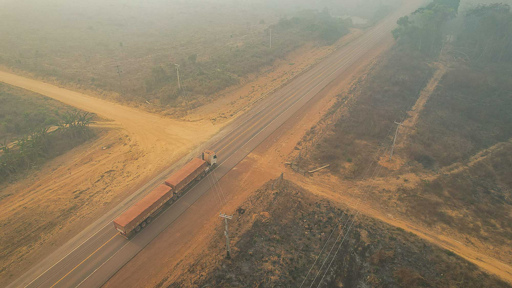
Millions of hectares of Amazon rainforest are newly at risk of being legally deforested, a new study estimates. The potential increase in deforestation comes as soy companies have terminated their voluntary participation in the Amazon Soy Moratorium, a private-sector agreement that barred signatories from buying soy grown on land deforested after 2008. Researchers found 9.1 million hectares (22.5 million acres) of private forest, a total area around three times the size of Belgium. Additionally, more than 28 million hectares (69 million acres) of public forests without any clear purpose or protection could now face additional pressure from rural land speculation, where people buy and hold land to sell later at a higher cost, and illegal conversion for agriculture. According to Tiago Reis, a conservation specialist at WWF-Brazil and co-author of the analysis, the positive impacts of the moratorium went beyond the direct prevention of soy-linked deforestation. “[The Soy Moratorium] also hindered illegal deforestation, land speculation, social conflicts and land conflicts,” Reis told Mongabay Brasil reporter Lucas Berti. In January 2026, the Brazilian Association of Vegetable Oil Industries (Abiove) announced it was withdrawing from the pact. Abiove represents many of the largest grain traders operating in Brazil including Cargill, ADM, Bunge, Louis Dreyfus Company and COFCO International. Other companies not represented by Abiove, including Amaggi and Glencore, also left the agreement. The former signatories of the moratorium traded roughly 90% of the soy grown in the Brazilian Amazon. The decision to leave the soy moratorium was prompted by a new law…This article was originally published on Mongabay
From Conservation news via This RSS Feed.