

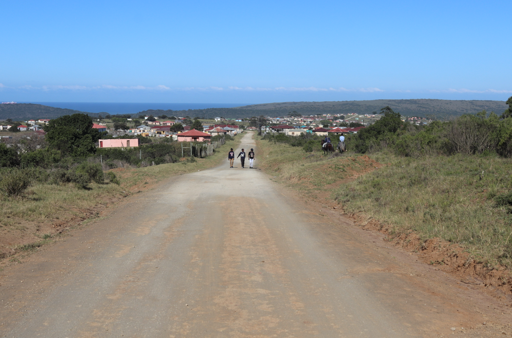
PHOZI VILLAGE, South Africa — On a grassy mountainside overlooking the Indian Ocean on South Africa’s Eastern Cape coast, dozens of cattle graze freely. For generations, families in the small rural villages of Tyolomnqa, Phozi, and Qaga, about 30 miles from the nearest city, KuGompo, have relied on these communal lands for food, income, healing and spiritual connection. Residents of the village say a planned open-cast mine complex spread over thousands of hectares of communal land threatens their way of life. The Tyolomnqa Heavy Mineral Sands Project, proposed by Johannesburg-based Vendicom Minerals Beneficiation Group, is targeting zircon, rutile, ilmenite and leucoxene — heavy mineral ores used in products ranging from ceramic tiles and paint pigments to titanium for aircraft, medical implants and some renewable energy technologies. Though, its initial application to prospect in the area was rejected by the government on procedural grounds, communications from a consultancy hired by Vendicom to conduct the environmental and social impact assessment show that the company is still keen to mine in the region. The area Vendicom is eyeing is spread across up to 18 miles (29 kilometers) of communal grazing land stretching across the Tyolomnqa, Keiskamma and Kiwane estuaries. The three rivers, all of whose names are derived from Indigenous words, flow through rolling grasslands before reaching estuaries fringed by dunes and sandy beaches. The word Keiskamma comes from the Khoekhoe language and is commonly translated as “place of sweet waters.” For generations, rural isiXhosa communities have relied on these connected ecosystems for…This article was originally published on Mongabay
From Conservation news via This RSS Feed.