

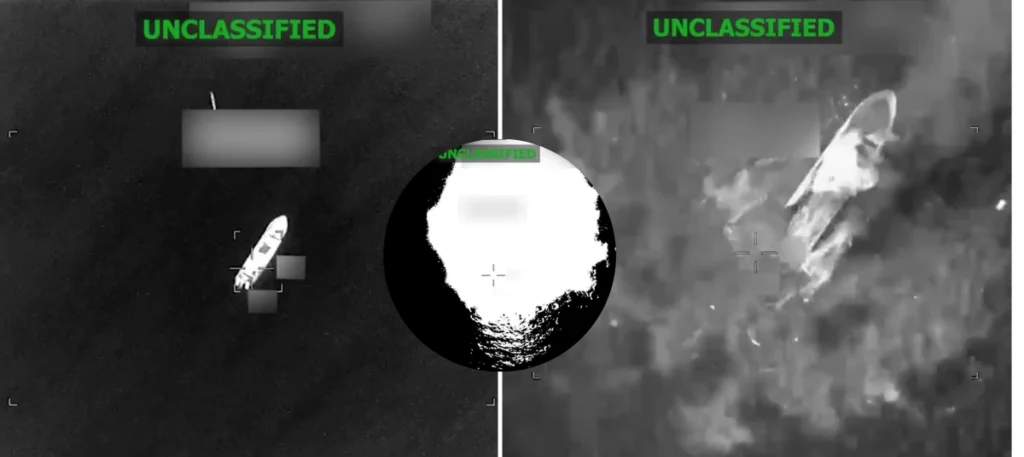
Report says traffickers adapted by changing vessels and routes, leaving cocaine supplies largely unchanged.
A U.S. Drug Enforcement Administration (DEA) assessment has found that months of U.S. military strikes targeting suspected drug trafficking boats in the Caribbean and eastern Pacific have failed to reduce the flow of cocaine into the United States, according to a Washington Post report published Monday.
RELATED:
The assessment concluded that the campaign, launched in September 2025, neither reduced cocaine availability nor increased its price in the United States. Instead, traffickers adapted by shifting to larger vessels and moving closer to coastlines, where U.S. forces are less likely to carry out strikes.
“When you squeeze the balloon on one side, it always expands on the other side,” an anonymous DEA official told the Washington Post. “They always find the weak spots and exploit them.”
The report also cited a congressional aide familiar with a Senate Armed Services Committee briefing, who said Pentagon officials acknowledged last month that cocaine seized in the operation’s target areas continues to show high purity levels, indicating that supplies have not significantly declined.
The findings contrast with previous claims by President Donald Trump that the military campaign had stopped 98.2% of drugs entering the United States by sea.
The White House defended the operation, saying it had “not only eliminated narcoterrorists themselves, but also discouraged bad actors from trying to smuggle drugs,” according to the report.
Chief Pentagon spokesman Sean Parnell also defended Operation Southern Spear, saying it was doing “exactly what it was designed to do: detect, disrupt and dismantle designated terrorist organizations and the networks they rely on to traffic narcotics, generate illicit revenue, and threaten the security of the United States and the Western Hemisphere.”
Since the campaign began, U.S. forces have struck at least 67 boats and killed at least 221 people, according to the report.
The operation has also faced growing legal and human rights scrutiny. Human rights organizations, Democratic lawmakers, international bodies and several South American countries have questioned both its legality and effectiveness.
Critics argue the strikes could amount to extrajudicial killings because the Defense Department has not released evidence that the targeted boats were carrying drugs, and those on board had no opportunity to defend themselves before their vessels were destroyed.
The campaign has also raised constitutional concerns, as Congress, which has the sole authority to declare war under the U.S. Constitution, did not authorize the attacks on the boats.
From teleSUR English via This RSS Feed.