

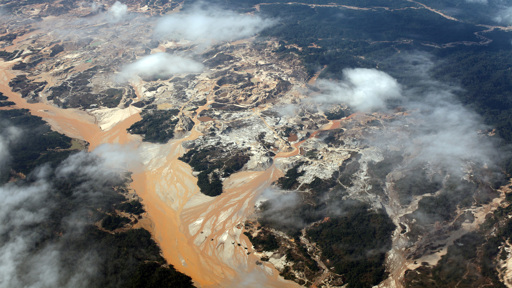
Founder’s Briefs: An occasional series where Mongabay founder Rhett Ayers Butler shares analysis, perspectives and story summaries. The world’s largest remaining stretches of undisturbed forest are shrinking. Fires now cause more of the loss than logging, while mining and oil and gas development have moved close to the top of the list. That’s the conclusion of a new analysis from the World Resources Institute, based on data developed with researchers at the University of Maryland, U.S., and the nonprofit Greenpeace. The report examines “intact forest landscapes,” large blocks of forests that show no readily detectable signs of industrial activity or fragmentation. Their global extent has fallen by more than 15%, or 195 million hectares (482 million acres) between 2000 and 2025, an area roughly the size of Mexico. Canada, Russia, and Brazil contain almost two-thirds of the remaining intact forests. They also recorded the largest reductions. Fires have become a major driver of recent decline in intact forest area, accounting for almost 40% of the reduction between 2020 and 2025, up from 21% during 2000-2013. Logging, previously the leading cause, accounted for around one-fifth since 2020. Mining, drilling, and exploration contributed nearly 19%, making extractive industries the third-largest cause. Drivers of intact forest landscape loss. Image courtesy of World Resources Institute. The figure for extractive industries requires some explanation. While agriculture remains the main cause of global deforestation, mines and oil wells directly clear a relatively small area. However, the WRI analysis measures the loss of intact forests: A road,…This article was originally published on Mongabay
From Conservation news via This RSS Feed.