

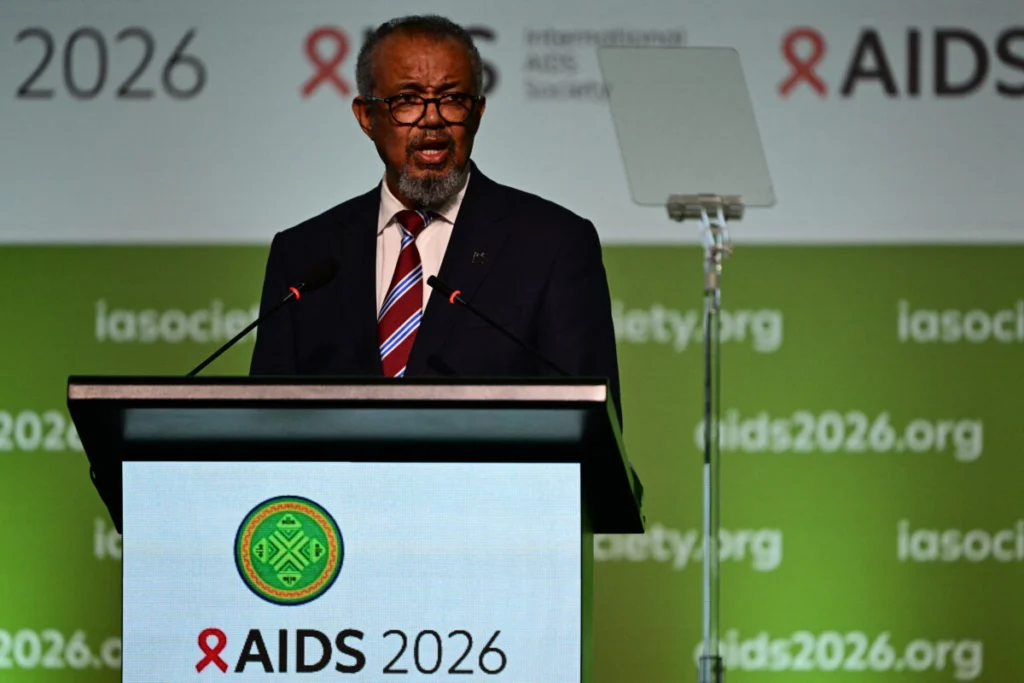
UNAIDS warns that sharp funding cuts could trigger millions of new HIV infections unless urgent action is taken.
Global cuts to HIV funding are threatening decades of progress against the epidemic and could derail efforts to end AIDS by 2030, UNAIDS warned on Monday as the 26th International AIDS Conference opened in Rio de Janeiro, Brazil.
RELATED: U.S. Ends Temporary Protection for Over 300,000 Haitian Migrants
A new UNAIDS report found that international funding for HIV programs fell 18% to $7.3 billion in 2025, its lowest level in nearly two decades. The agency said the decline jeopardizes gains that have reduced new HIV infections and AIDS-related deaths to their lowest levels in more than 30 years.
UNAIDS Executive Director Winnie Byanyima said the United States had provided 75% of international HIV funding before President Donald Trump returned to the White House. She warned that shrinking financial support, coupled with widening inequalities, is putting three decades of progress in the global HIV response at risk.
The agency noted that in January 2025, Trump ordered a temporary suspension of all U.S. HIV-related funding. Although life-saving HIV programs resumed days later, most prevention initiatives remained cut.
Without urgent action to restore progress toward the 2030 targets, UNAIDS projects that the world could see more than three million new HIV infections by the end of the decade. The report also said funding cuts, along with other health emergencies such as Ebola outbreaks, are slowing efforts to end AIDS.
Beatriz Grinsztejn, president of the International AIDS Society, said about nine million people still lack access to HIV treatment, underscoring the need to accelerate efforts to close persistent gaps in care.
World Health Organization Director-General Tedros Adhanom Ghebreyesus said ending AIDS by 2030 “is still possible,” but will require rethinking how health services are delivered, strengthening community organizations and ensuring equitable access to scientific advances.
Jarbas Barbosa, director of the Pan American Health Organization, said meeting the 2030 goal will depend on sustained commitment from political leaders, the private sector and civil society, warning that no country can end the epidemic alone. He also said several Caribbean countries rely on external donors for more than 90% of their HIV programs, leaving them especially vulnerable to reductions in international assistance.
The warnings came as global health leaders gathered in Rio de Janeiro to assess progress against HIV/AIDS, with funding shortfalls emerging as one of the most significant obstacles to achieving the global goal of ending the epidemic by 2030.
From teleSUR English via This RSS Feed.