

Relatives of victims of state repression reject Keiko Fujimori’s incoming government and demand the repeal of laws they say foster impunity.
Relatives of victims of state repression in Peru have called for nationwide protests during the country’s Independence Day celebrations, rejecting the incoming government of Keiko Fujimori and demanding the repeal of laws they say shield perpetrators of human rights abuses from justice.
RELATED: Venezuela and Peru Restore Diplomatic Ties After Two-year Rupture
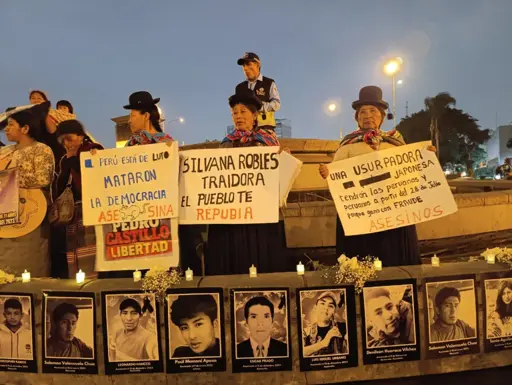
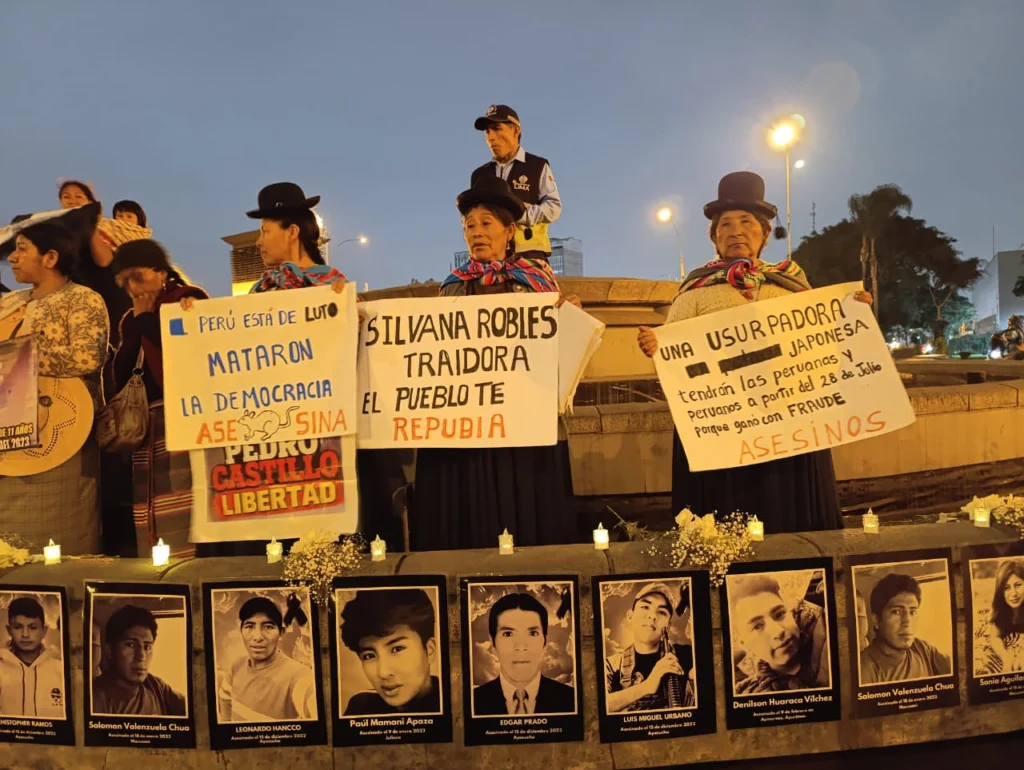
Hours before Fujimori was set to take office, relatives of people killed or disappeared during periods of state repression in the 1980s, 1990s and 2000s gathered outside Lima’s Palace of Justice to honor their loved ones and denounce the return of Fujimorismo to the presidency.
The groups, representing cultural, social and political organizations, held a symbolic vigil at the Paseo de los Héroes, displaying photographs of victims alongside candles and banners. They accused the Fujimori leadership, as well as military and police commanders, of responsibility for serious human rights violations, including enforced disappearances, extrajudicial executions, torture and forced sterilizations.
Raúl Samillán, president of the Association of Families of Victims of the 2022 and 2023 Massacres, said the incoming administration would mark a setback for justice and vowed that victims’ groups would not recognize Fujimori’s authority.
“It is deeply regrettable that Mrs. Keiko Fujimori has taken power in a fraudulent and illegitimate manner,” Samillán told teleSUR.
“We, as people from the south and as victims of the governments of Dina Boluarte and Keiko Fujimori, will not recognize her. We will not allow her to set foot on lands where the blood of our children and loved ones was shed,” he said.
The organizations also called for the repeal of what they described as “pro-crime” laws, which they said were enacted by Fujimori’s Popular Force party and protect members of the National Police and Armed Forces accused of human rights violations, hindering victims’ access to justice.
“The first thing Mrs. Fujimori should do is repeal all of those pro-crime laws that were drafted and approved by her Popular Force party,” Samillán said.
Samillán also criticized the Fujimorismo bloc’s election to the Senate presidency a day earlier, saying it undermines the country’s balance of powers and further entrenches impunity. He expressed hope, however, that the Chamber of Deputies, where democratic parties hold a coalition, could advance legislation to hold those responsible for human rights violations accountable.
Organizers announced three days of protest activities. A vigil was scheduled for July 27 outside the Palace of Justice, followed by a nationwide march on July 28, with the main rally in Lima timed to coincide with Fujimori’s address to the nation. The demonstration will also feature a symbolic flag-washing ceremony. An alternative civic parade, titled “From the People for the People,” is scheduled for July 29.
Samillán said demonstrations would take place across the country, not only in the capital, urging Peruvians to reject the incoming president. He argued that Fujimori does not represent the country and noted that she was defeated in 16 regions of southern Peru.
From teleSUR English via This RSS Feed.