

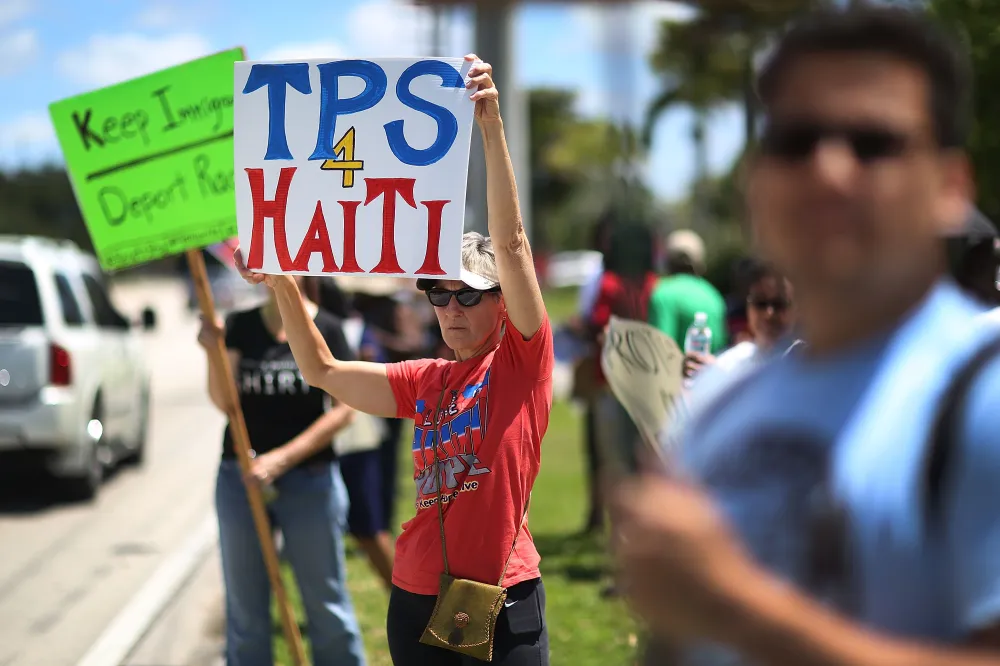
The U.S. Temporary Protected Status (TPS) for more than 300,000 Haitian migrants and thousands of Syrian citizens in the United States expired on July 27, marking the largest termination of this benefit since the Trump administration’s immigration restriction policies began.
The expiration responds to the Supreme Court’s ruling issued last month, which endorsed the cancellation of the Temporary Protected Status (TPS) for Haiti and Syria, setting July 27 as the final deadline after temporary injunctions from lower courts had expired. With the legal protections lifted, beneficiaries now face potential removal proceedings.
Following the expiration, Immigration and Customs Enforcement (ICE) plans to intensify operations targeting the Haitian population without active legal status, according to sources linked to security forces.
RELATED: 330 U.S. Rallies Demand an End to ICE While Honoring Its Victims
Immigration control operations could directly impact areas with high migrant presence, including communities in Florida and Springfield, Ohio. This latter locality was the scene of false statements spread during the 2024 presidential campaign by Donald Trump and his vice presidential candidate, JD Vance.
Authorities also anticipate that by the end of this week, new deadlines linked to TPS for other countries under judicial protection will take effect. The cascading nature of these terminations threatens to multiply the number of migrants facing deportation in the coming months.
Today, TPS protections for Haitians come to an end, putting them at risk for deportation from ICE.
That is why I filed a discharge petition for the American Dream and Promise Act, to extend protections for TPS holders from Haiti and 16 other countries. TPS holders should not…
— Rep. Sylvia Garcia (@RepSylviaGarcia) July 27, 2026
The protection mechanism, established in the Immigration and Nationality Act of 1952, grants employment authorization and suspension of deportations to individuals whose home countries face armed conflict, natural disasters, or extraordinary conditions.
Without this coverage or an alternative legal status, beneficiaries become exposed to expulsion procedures from U.S. territory.
$2,600 for Voluntary Departure
In response to the expiration, a spokesperson for the Department of Homeland Security (DHS) declared this Monday that police operations continue nationwide and affirmed that “it is time to close,” stating that affected individuals cannot remain in the country.
Previously, DHS General Counsel James Percival informed through the social media platform X that TPS holders in the process of expiration have the option to accept a payment of $2,600 and a free plane ticket to return to their countries of origin. The offer has been criticized by immigrant advocacy organizations as an attempt to expedite removals rather than a genuine humanitarian measure.
Temporary protected status is exactly that — TEMPORARY.
For those with terminated TPS: it’s closing time. You don’t have to go home, but you can’t stay here.
It’s not too late to get a $2,600 check and a FREE flight home: https://t.co/YGo3uuNvrE pic.twitter.com/8kPIp6AvBd
— Homeland Security (@DHSgov) July 27, 2026
Community leaders in cities with large Haitian populations have expressed alarm at the unfolding situation. Many TPS holders have lived in the United States for over a decade, established families, purchased homes, and built businesses. The sudden termination of their protected status uproots lives and separates families, with children who are U.S. citizens facing the prospect of either losing a parent to deportation or relocating to a country they have never known.
Immigration rights organizations have announced plans to challenge the TPS termination through legal avenues, though the Supreme Court’s ruling creates substantial legal obstacles. Advocacy groups are focusing on providing information about available protections, including asylum applications, special immigrant juvenile status, and family-based petitions that might offer alternative pathways to legal residency.
Meanwhile, the broader context of U.S. immigration policy under the current administration continues to harden. Recent executive orders have expanded restrictions on student visas, journalist entry permits, and green card applications, signaling a comprehensive shift toward enforcement rather than integration. For the 300,000 Haitians now stripped of TPS protection, the immediate future holds uncertainty and fear.
From teleSUR English via This RSS Feed.