

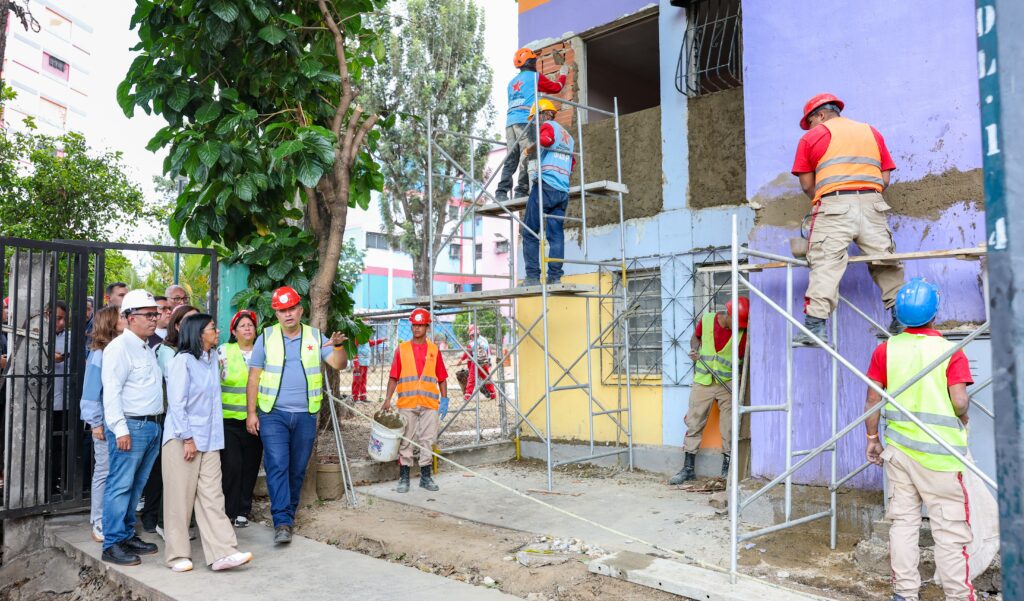
Venezuela’s Acting President of Venezuela Delcy Rodriguez this Monday deployed popular brigades as part of the Venezuela Rises Plan aimed at accelerating the country’s recovery following the devastating twin earthquakes of June 24.
Acting President Delcy Rodriguez emphasized the centrality of Popular Power organization and community self-management in the national reconstruction process. “Every step we are taking is alongside the community and the families. We are going to recover Venezuela. We are going to rebuild a new Venezuela,” she stressed during the visit to the January 23 Parrish in Caracas (23 de Enero, in Spanish).
“Above the rubble lies the will of a people, of a new spirituality, of a national unity that joins forces to solve problems collectively, communally,” the Acting President added, highlighting the social and political dimensions of the recovery effort.
RELATED: La Guaira Registers More Than 21,000 Venezuelan Families in Housing Census
The communal brigades were equipped with tool kits, three-wheeled motorcycles for transporting construction materials, trucks for debris collection, and ambulance units to strengthen the capital’s healthcare system.
This logistical deployment aims to transform collective organization into tangible reconstruction results across affected neighborhoods.
Ver esta publicación en Instagram
Una publicación compartida por teleSUR English (@telesurenglish)
Accompanied by government authorities including Mayor Carmen Meléndez, Minister Jacqueline Faría, Head of Government Naum Fernández, and Sectorial Vice President Juan José Ramírez, Rodríguez reviewed the plans and architectural models developed by local communal councils and communes to improve living conditions and infrastructure in the zone.
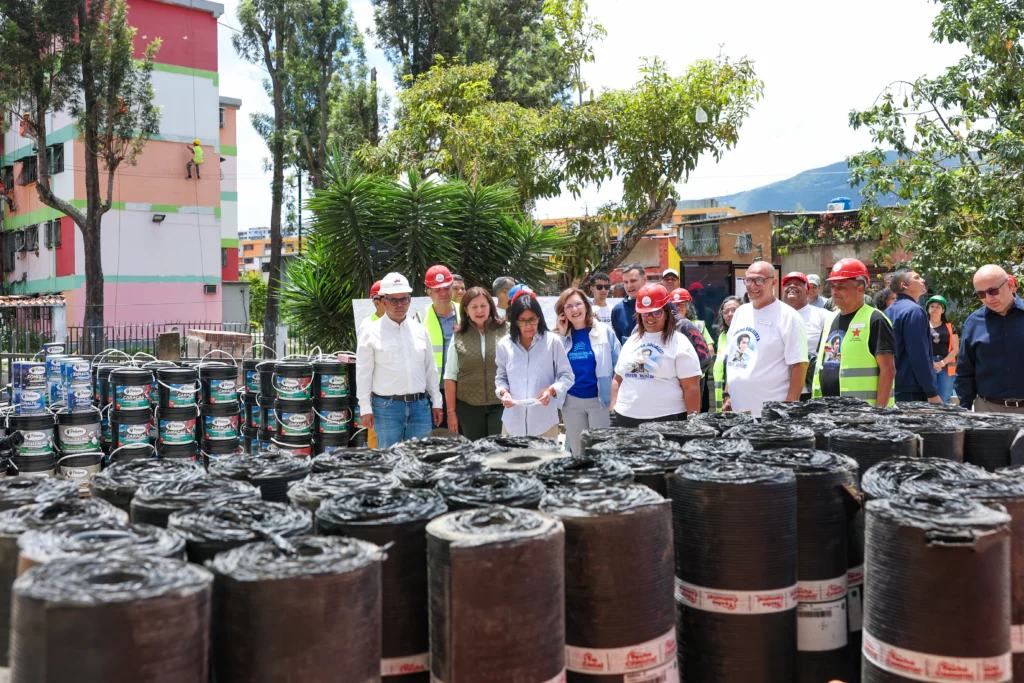
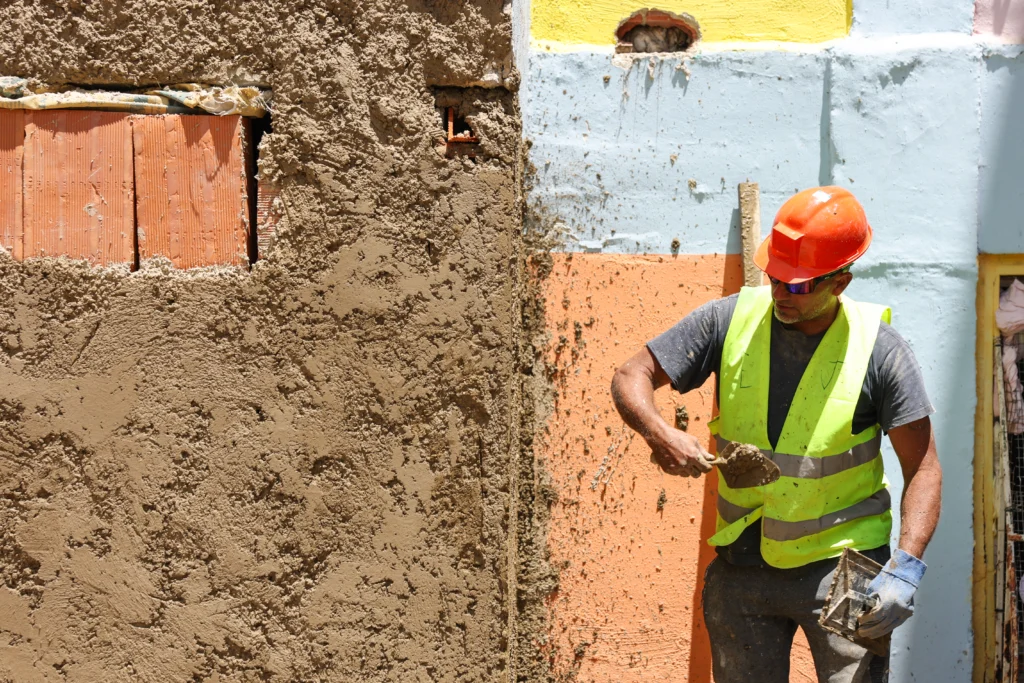
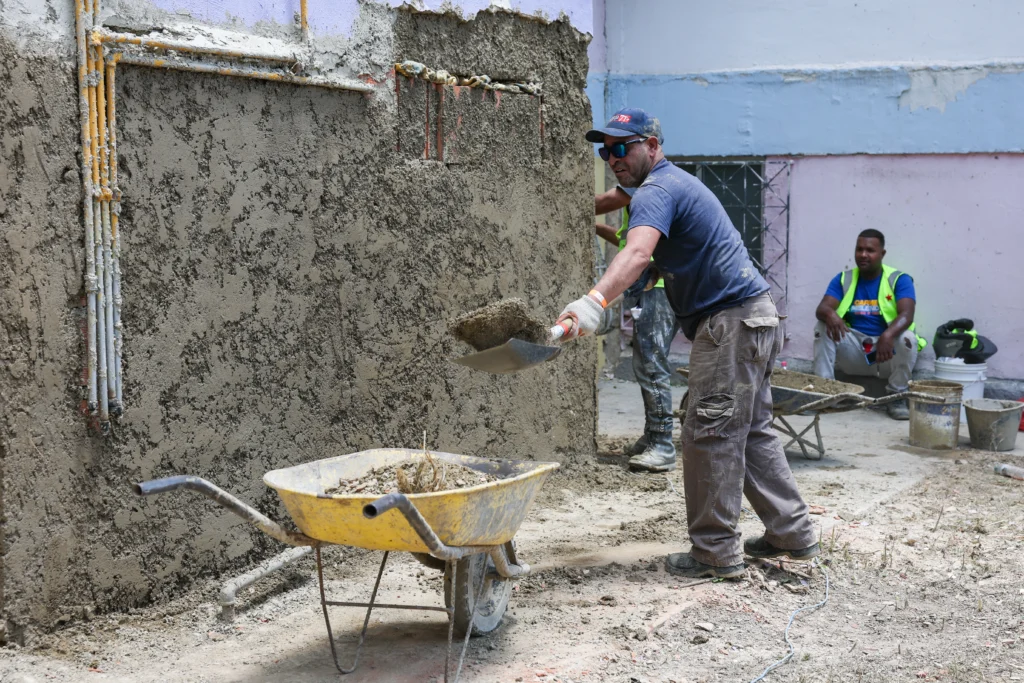
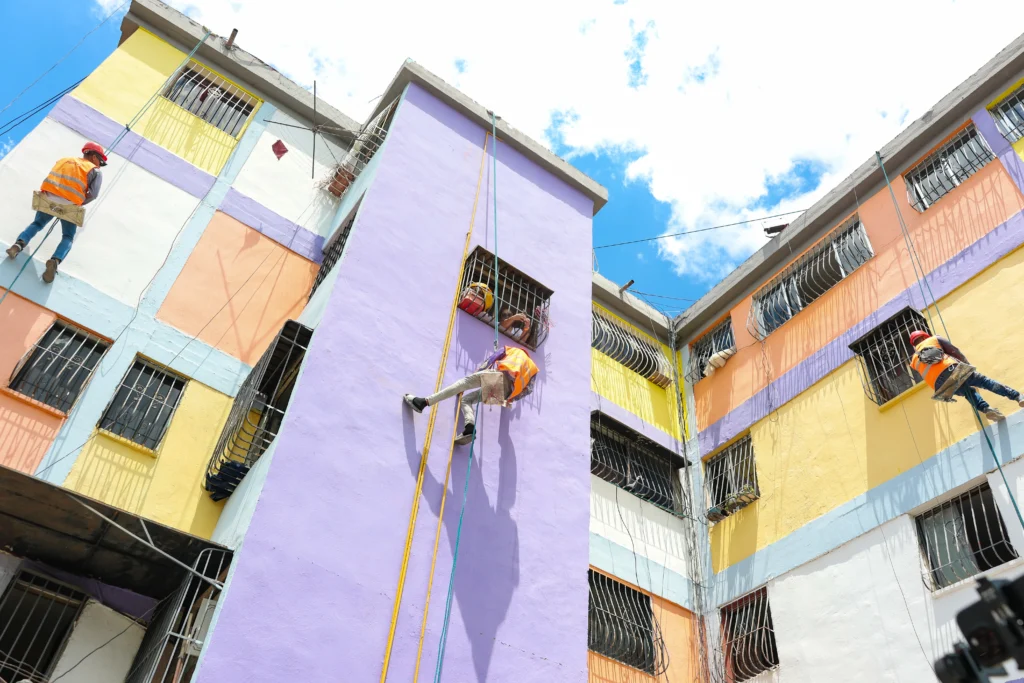
Photos: Venezuelan Presidential Press
30,000 Homes Inspected
The Venezuelan Acting President detailed that the Presidential Commission for Infrastructure Habitability Evaluation has inspected more than 30,000 homes using the technical traffic light habitability system, coordinated by specialists. This systematic approach allows for efficient classification and prioritization of interventions.
Within this diagnostic framework, over 12,000 properties classified under yellow status -those presenting moderate damage without severe structural failures- are currently undergoing intervention for prompt rehabilitation. Structures categorized under red status remain under continued technical evaluation, requiring more complex engineering assessments before safe reoccupation.
Ver esta publicación en Instagram
Una publicación compartida por teleSUR English (@telesurenglish)
The government’s technical approach combines rapid response with rigorous safety standards, ensuring that repaired homes meet structural integrity requirements before families return. This method has prioritized transparency, with community representatives participating directly in the inspection brigades.
Acting President Rodríguez announced that the national government plans the construction and gradual delivery of homes for families currently residing in temporary camps. The authorities project granting approximately 4,000 homes by December of this year. During a recent delivery of more than 240 homes to earthquake victims, Rodríguez further projected the completion of over 10,000 houses by 2027.
The July 24 twin earthquakes, which struck regions including Caracas and coastal areas, caused significant structural damage to buildings, displaced thousands of families, and exposed vulnerabilities in urban infrastructure. The government’s response has centered on mass community mobilization rather than centralized bureaucratic mechanisms, reflecting Venezuela’s established model of Popular Power as the primary vehicle for social transformation.
Civil protection authorities have maintained continuous monitoring of aftershocks while coordinating with community leaders to identify priority intervention zones. The integration of technical expertise with grassroots organization represents a distinctive feature of Venezuela’s recovery strategy in the face of natural disaster.
International solidarity organizations have expressed willingness to support the reconstruction process, although the U.S. coercive measures continue to constrain access to construction materials and financial resources. Despite these limitations, the Venezuelan government has sustained its commitment to fully restore affected communities through the combined effort of state institutions and organized popular movements.
From teleSUR English via This RSS Feed.