

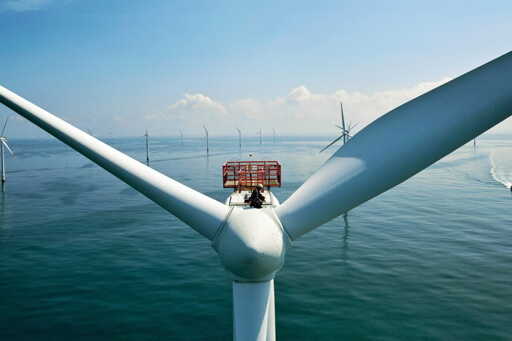
This is Part Two in a Mongabay series about trends in the offshore wind industry. Part One, published in April, described the sector’s untapped potential and gaps between installed energy generation capacity and climate goals. The last year has highlighted both the vast potential of the growing offshore wind sector, and the major headwinds it must contend with. On one hand, the United Kingdom, a major offshore wind market, produced nearly 20% of the electricity it generated from offshore wind alone in 2025. Some 3,000 turbines generated enough electricity to power around 15.5 million homes. In 2025, 9.3 GW of offshore wind capacity was connected to the grid. By the end of 2026, it’s estimated that a further 18.8 GW will be added across the world. That would take total global capacity above 100 GW. In contrast to this positive backdrop are signs the industry is in a difficult period. 2025’s installations were dominated by China, at 6.6 GW, with European countries only adding around 3 GW. That’s off pace to meet many countries’ national targets, which must be fulfilled to meet climate goals. The Global Wind Energy Council, a trade industry association based in Portugal, also noted that just 11.4 GW of new projects were awarded contracts in 2025, down from 56 GW in 2024. That follows a series of failed auctions. Some developers also canceled large-scale projects. Notably, in May 2025 Danish developer Ørsted axed its U.K.-based Hornsea 4 project, which would have become one of the largest offshore…This article was originally published on Mongabay
From Conservation news via This RSS Feed.