

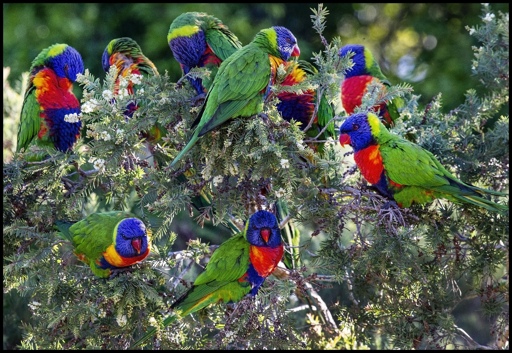
Habitat loss, climate change, hunting and the pet trade are well-known drivers of bird declines. A new study suggests the colors of the birds themselves may also influence their extinction risk: Birds with colorful plumage seem to be more threatened than those with dull colors. Researchers Montague Neate-Clegg and Natalia Ocampo-Peñuela were on a bird watching trip in Vietnam when they realized that some of the colorful birds they spotted were both highly threatened and prized for the pet trade, Neate-Clegg, an assistant professor at the University of California Davis told Mongabay in a video call. “So, we got talking about how more colorful birds might be at higher risk of extinction.” To test their idea, the researchers analyzed the conservation status for some 4,334 passerine bird species using data from the International Union for the Conservation of Nature (IUCN) Red List. Passerine birds make up more than half of all known bird species and include perching and songbirds such as canaries, finches, sparrows and bulbuls. The researchers then compared extinction risks for these species with colorfulness, or the number of distinct colors on each bird. They also looked at geographic threat patterns and controlled for other factors including body size, diet, ability to disperse and dependency on forest. The study found that colorful birds are indeed more threatened than dull birds, even after accounting for body size and other traits. In Southeast Asia, where brightly colored birds are heavily targeted for the pet trade, the pattern was especially clear. “If…This article was originally published on Mongabay
From Conservation news via This RSS Feed.