

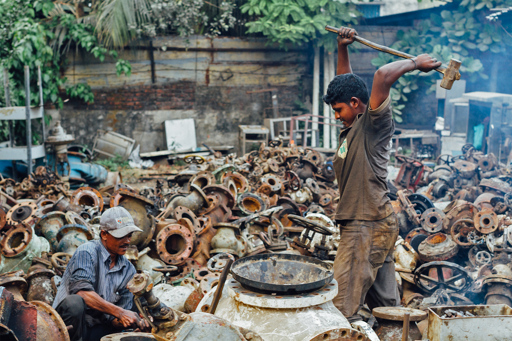
DHAKA — Ships sail oceans all over the world, yet as they reach the end of their lives, they mostly go to die on the beaches of Bangladesh, India and Pakistan. Around 85% of the world’s end-of-life ships are dismantled and recycled in these three South Asian countries, an industry that has long relied on low-cost manual labor but has also been criticized for its high disregard for worker safety and severe environmental pollution. Shipbreaking is so hazardous that the industry was shut down in industrialized countries in the 1960s, displaced to less-industrialized countries, particularly in South Asia. Data from the NGO Shipbreaking Platform, which campaigns for improved ship-recycling standards, show that since 2009, 8,221 ships have ended up on South Asian beaches, 480 workers have died on the job, and 520 have been injured. The numbers don’t account for pollution so severe that fish stocks have declined in these areas, putting local fishers out of work. The future of Bangladesh’s ship recycling industry now hinges on a dispute over two international treaties: the Basel Convention, which regulates the transboundary movement of hazardous waste, and the Hong Kong International Convention for the Safe and Environmentally Sound Recycling of Ships (HKC), a sector-specific treaty adopted under the International Maritime Organization (IMO). Bangladesh ratified both conventions: Basel in 1993, and HKC in 2023. The latter came into force in 2025, while the former entered into force in 1992. Shipbreaking in Chittagong, Bangladesh. Shipbreaking is so hazardous that the industry was shut down…This article was originally published on Mongabay
From Conservation news via This RSS Feed.