

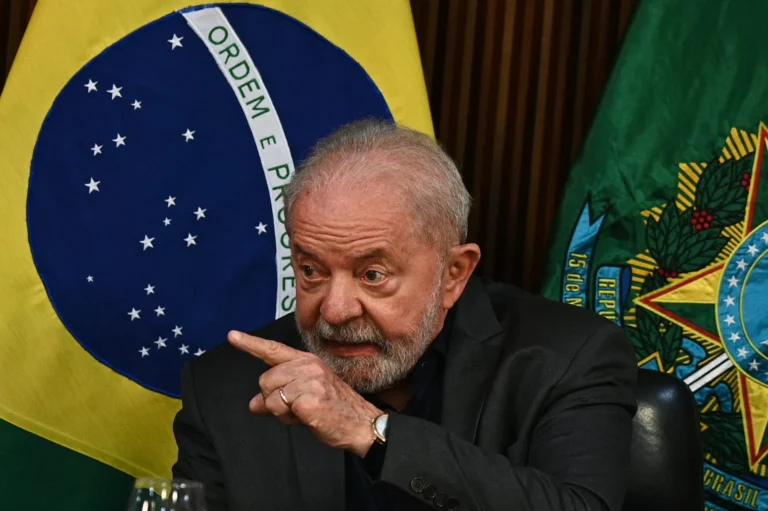
Brazil Milei visit draws no diplomatic weight, as Lula’s government rejects the Argentine leader’s trip as far-right political theater in São Paulo.
Related: Brazilian Women Will Be Able to Carry Pepper Spray for Self-Defense
Brazil Milei visit was downplayed by the Brazilian government on Saturday, which described Argentine President Javier Milei’s trip as a far-right political event with no relevance to the country’s institutional agenda. Officials in Brasília said the visit does not alter Brazil’s domestic political landscape and should be understood as private partisan activity rather than state diplomacy.
The administration of President Luiz Inácio Lula da Silva made clear that Brazil Milei visit has no official protocol status. According to Brazilian authorities, the Argentine leader’s appearance in São Paulo is tied to electoral and ideological alignment with the Bolsonarist camp, not to any bilateral governmental meeting.
Milei is expected to attend the Liberal Party convention in São Paulo, where the candidacy of Senator Flávio Bolsonaro for the presidency will be formalized. Brazilian officials say the event is meant to strengthen ties between Milei and sectors of the Brazilian far right, but they insist that the move has little capacity to shift Brazil’s political scenario.
Brazil Milei visit and the diplomatic line
Brazil’s Foreign Ministry confirmed that the Argentine delegation did not request bilateral meetings, which means the trip does not qualify as a state visit or any other formal diplomatic mission. That distinction is central to the government’s position, which treats Brazil Milei visit as a private political action rather than an institutional one.
Officials also said the Brazilian government is maintaining constant monitoring of Milei’s public statements during the trip. The message from Brasília is that any attempt to interfere in Brazil’s electoral debate or attack public institutions will receive a response through official diplomatic channels.
The tone reflects a broader caution inside Lula’s administration, which has sought to avoid unnecessary confrontation while defending Brazil’s democratic institutions. Even so, the government’s language suggests deep skepticism toward the Argentine president’s ideological agenda and its potential links with Bolsonaro-aligned forces.
Milei is also set to receive the Order of Ipiranga from São Paulo Governor Tarcísio de Freitas. That decoration has been interpreted by critics as a symbolic gesture toward the right-wing alliance surrounding the event, adding another layer of political meaning to Brazil Milei visit.
El Presidente Javier Milei participó de un encuentro con el Gobernador del Estado de San Pablo, Tarcísio de Freitas, y con el Senador y candidato a Presidente de Brasil, Flávio Bolsonaro, en el Palácio dos Bandeirantes, la casa de gobierno de San Pablo.
Participaron también la… pic.twitter.com/4w621ejHQi
— Oficina del Presidente (@OPRArgentina) July 25, 2026
Bolsonaro ties and regional impact
The Argentine president’s schedule had included a direct meeting with former President Jair Bolsonaro, but that plan was blocked by Brazilian judicial authorities. Bolsonaro is currently under house arrest after being convicted over an attempted coup, a case that continues to shape Brazil’s political environment.
That legal context is part of why Brazil Milei visit has attracted attention far beyond ceremonial protocol. The trip places Milei in close proximity to a political network under heavy judicial scrutiny, linking him to one of the region’s most controversial far-right figures.
For Lula’s government, the key point is not the symbolism alone but the attempt to use foreign political figures to energize domestic conservative forces. Officials believe the visit is aimed at bolstering Bolsonarism rather than building any new state-to-state relationship between Brazil and Argentina.
The episode also reflects the broader polarization that continues to define politics in South America. Brazil Milei visit illustrates how ideological alliances now frequently cross borders, even when official diplomacy remains frozen or deliberately limited.
Brazil’s response suggests it wants to separate institutional foreign policy from partisan spectacle. That distinction is likely to matter more as regional elections approach and political leaders seek international visibility to reinforce their domestic standing.
— Lula (@LulaOficial) July 25, 2026
Geopolitical context
Brazil Milei visit comes at a moment when Latin America is experiencing renewed ideological fragmentation, with governments and opposition blocs increasingly looking for support beyond their borders. In that landscape, even a private trip can carry regional significance.
The interaction between Argentina’s libertarian president and Brazil’s Bolsonarist opposition highlights a wider transnational far-right network that now operates across the Southern Cone. At the same time, Lula’s rejection of the trip as irrelevant signals an effort to defend Brazil’s autonomy in the face of external political symbolism.
This is not just a bilateral episode. It reflects the current struggle over who defines legitimacy, democratic authority, and public order in Latin America. For Brasília, the answer is clear: foreign ideological alignment will not be allowed to set Brazil’s political agenda.
From teleSUR English via This RSS Feed.