


Federated Farmers celebrated the scrapping of Mana Whakahono ā- Rohe agreements on social media, also issuing a press release headlined: “Feds pressure pays off on iwi-council agreements.” (Source: Facebook)
By removing Mana Whakahono ā-Rohe agreements from its proposed resource management system, the government continues its programme of stripping back Māori participation and environmental protection at the same time, writes Tina Porou, an environmental planner.
There have been very few days over the last nine years when resource management reform hasn’t occupied my mind. It has consumed my work, my weekends, my conversations and, if I’m honest, my mental health. (Sorry to my whānau!)
So when the government announced it would remove the existing Mana Whakahono ā-Rohe agreements from its proposed resource management system — agreements that set out how local councils and iwi authorities collaborate on resource management — I was not surprised. I was angry, because I knew what that decision would mean for the people I work alongside every day.
As a Māori environmental planner, I am privileged to work with iwi and hapū throughout Aotearoa, around marae tables, in tribal offices, council offices, on rivers, and at kitchen tables.
On paper, the work can look technical. But the conversations themselves are about something much more personal: an awa that no longer flows as it once did, a wetland or customary fishery that has been lost, a wāhi tapu threatened by development, or a Treaty settlement still not reflected in council decisions.
The law is only the vehicle. The real kōrero has always been about our people, our whakapapa, and our relationship with the taiao.
Since the announcement, my phone has run hot. Whānau, council staff, iwi chairs and hapū leaders have asked the same question: “What do we do now, T?”
They’re not asking because they’ve forgotten who they are, or because their responsibilities to whenua and wai have disappeared. They’re asking because our people immediately begin looking for the next pathway.
That’s what Māori have always done. We adapt, reorganise, and find another way. But that doesn’t mean we should accept what has happened.
Mana Whakahono was modest, practical, and, frankly, the bare minimum. It was a way for iwi and councils to agree on how they would work together and to keep talking when things became difficult.
Mana Whakahono did not transfer decision-making power from councils to iwi. Nothing could be agreed without the council’s consent, so the claim that Māori were wrenching power away from elected authorities is simply a myth. But the fear of Māori having a place at the table outweighed both the evidence and the truth about what the law actually did.
I think about the Ngāti Tūrangitukua relationship with Taupō District Council. Our Mana Whakahono ā-Rohe agreement was hard-fought. It did not remove disagreement, but it gave us a reason to keep returning to the table until the relationship became strong enough to produce real outcomes.
In Tūrangi, the result is Te Kapua Park Playground and a new sports facility, Te Mataapuna, built on Ngāti Tūrangitukua whenua. They are places where our children play, our whānau gather, and where the entire community can see themselves and their taiao reflected and celebrated.
Those projects happened because hapū and council had built enough trust to solve problems together.
Tūrangi is only one example. Across the country, iwi and hapū have invested years in hard-won arrangements with councils. Others had only recently initiated Mana Whakahono and, for the first time, felt there was a genuine pathway towards an enduring relationship. For many, that initiation carried real hope in a new resource management system that otherwise offered only marginalisation for Māori. Now that pathway has been removed before some of those conversations have had the chance to grow.

The Mana Whakahono ā- Rohe agreement between the Taupō District Council and Ngāti Tūrangitukua hapū, which holds mana whenua over Tūrangi township and its surrounds, was hard-fought, writes Tina Porou. “It did not remove disagreement, but it gave us a reason to keep returning to the table until the relationship became strong enough to produce real outcomes.” This photo was taken on the day the agreement was signed at Hirangi Marae in June 2022. (L-R): Ngāti Tūrangitukua Māori Committee chair Hine Mohi, Mayor David Trewavas, Ngāti Tūwharetoa Ariki Tā Tumu Te Heuheu, Taupō District Council CEO Gareth Green, Ngahana Hartley of the Waipapa 1A Māori Reservation, and Ngāti Tūrangitukua Charitable Trust Chair Lauren Fletcher. (Source: Taupō District Council)
The government may be able to remove Mana Whakahono from legislation, but it can’t remove iwi and hapū, whakapapa, mana whenua, Te Tiriti or our responsibilities to the taiao. We will still turn up, organise, negotiate, and challenge poor decisions.
What it’s removing is an orderly pathway that helped relationships form before disagreement became expensive and adversarial.
After years of doing this work, I have learned that good relationships must be invested in. Bad relationships cost far more. Their price is paid in hearings, litigation, delays, distrust, and projects that become harder than they ever needed to be. Councils will carry that cost alongside iwi, and communities will be left with poorer outcomes.
That is why I find the government’s argument about democracy so dishonest. Apparently, it’s democratic for Federated Farmers and other well-resourced lobby groups to have direct access to ministers, so they can campaign against Māori participation and influence legislation. But it’s somehow undemocratic for mana whenua to have an agreed relationship with councils that make decisions within our own rohe. That tells us whose influence is considered legitimate and whose is treated as a threat.
Democracy can’t simply mean the majority makes every decision while Māori are told to submit, appeal, or wait for another election. We’ve lived through generations of decisions made without us — decisions that drained wetlands, straightened rivers, polluted waterways, destroyed fisheries, damaged wāhi tapu, and transferred environmental risk into Māori communities. We warned about the consequences, were called difficult and obstructive, and were later asked to help fix the damage.
The removal of Mana Whakahono isn’t isolated in the system. It sits inside a much wider reform programme that is stripping back Māori participation and environmental protection at the same time. The Resource Management Act was never perfect, and it never delivered rangatiratanga, but Part 2 of that Act at least recognised that our relationships with whenua, wai and taonga mattered, that kaitiakitanga mattered, and that Te Tiriti had a place in decision-making.
It was the bare minimum, but it was still a foundation.
We are being told Treaty settlements are protected, but that’s not true. Part 2 of the Resource Management Act formed part of the foundation for those settlements. The Crown has replaced it with something weaker, watering down the practical effect of every settlement and breaching the promises on which they were made. You can’t pull the floor out from under a house and then insist nothing has changed.
Now, that foundation is being pulled away just when the taiao needs stronger protection, not less.
Governments work in three-year cycles — the taiao does not. A law can be changed overnight, but a wetland can be destroyed in weeks and take generations to return. A river can be damaged in a decade and take centuries to heal. A species can be lost forever. This government could do harm in 10 years that our mokopuna may still be trying to repair a thousand years from now.
If I’m honest, exhaustion has become one of the defining feelings of the last three years. Every few months another bill arrives, another announcement is made, and iwi and hapū are expected to understand the consequences almost overnight.
Sometimes I feel as though I spend more time translating legislation than helping restore rivers. I joke that we have all moved through anger, denial and bargaining, but there has never really been acceptance. Every time another pathway closes, Māori begin looking for another one.

Tina Porou: “A law can be changed overnight, but a wetland can be destroyed in weeks and take generations to return.” (Photo supplied)
Much of my work now is about finding those openings. If one mechanism disappears, what else can we use, and how do we protect enough today to leave something for the next generation?
Councils don’t have to wait for legislation to tell them to behave honourably. They can continue investing in direct relationships with mana whenua, honour the arrangements already built, involve iwi early, and resource participation properly. Ordinary people can also reject the idea that environmental protection and Māori leadership are obstacles to progress.
I’m tired of explaining Te Tiriti to people who should already understand it. I’m tired of explaining why Māori belong at the table, and of explaining marginalisation to the people and institutions creating it.
Concepts like kaitiakitanga and Te Mana o te Wai were gifts from te ao Māori to this country. Te Mana o te Wai reflects a simple truth: first the water, then the essential health needs of people, and only then sustainable economic use.
That is not extremism. It is brilliance, because there can be no economy or community if the natural systems sustaining us have collapsed.
But our babies are built differently.
Many of our children — not enough yet, but enough to turn the tide — are first-language speakers of te reo Māori. They don’t think in English first. They think in te reo Māori. They dream in te reo Māori. Their understanding of the world is formed through te ao Māori and tikanga, and that can never be taken from them.
When our children don’t carry the same language trauma as the generations before them, where do they look next? Their next battle is the taiao. Our nannies and pāpās saw this moment coming. They knew the greatest tools they could give our children were identity and language, because both are built on the foundation of the taiao. The taiao sits at the centre of our art, waiata, stories, language, values, tikanga and our understanding of who we are.
Our babies will take that knowledge into a new phase. They will reshape the systems and institutions managing the taiao, and they will turn the tide.
In the meantime, people like me, and the whānau, hapū and iwi I work alongside across this country, are holding the line. We are trying to ensure that what we hand to our children is at least no worse than what was handed to us, and we will uphold that fiercely.
You can’t sustain healthy, taiao-centred communities through climate change while degrading the whenua and wai that sustain them. You can’t build a resilient future without mātauranga and Māori voices leading the conversation.
If this country tries to do that without us, it will fail. Our leadership is not a threat to Aotearoa. It is one of the things that might still save it. We welcome a wider coalition of the willing — wherever you are.

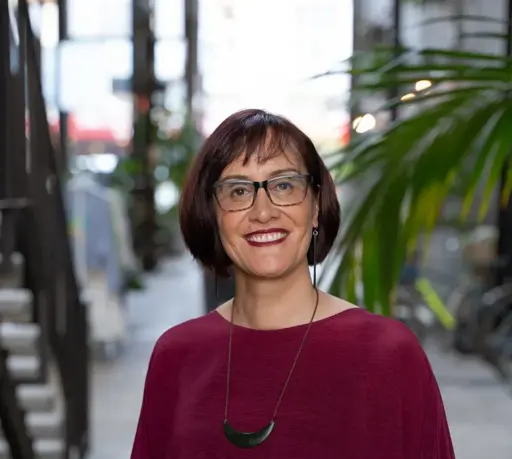
Tina Porou (Image: Poipoia Environmental Consultancy)
Tina Porou (Ngāti Porou, Ngāti Tūwharetoa, Rongomaiwahine and Ngāi Tāmanuhiri) has more than 20 years’ experience as an environmental planner, tangata whenua advocate, strategist and governance leader in natural resource management, sustainability and Māori development. She lives in Tūrangi.
The post Tina Porou: ‘Our leadership is not a threat to Aotearoa’ appeared first on E-Tangata.
From E-Tangata via This RSS Feed.