

The Moncada assault marked a turning point in Cuba’s revolution, shaping Fidel Castro’s path, repression, and the rise of July 26.
Related: US State Department Report on Cuba: 9 Controversial Claims That Spark Global Criticism
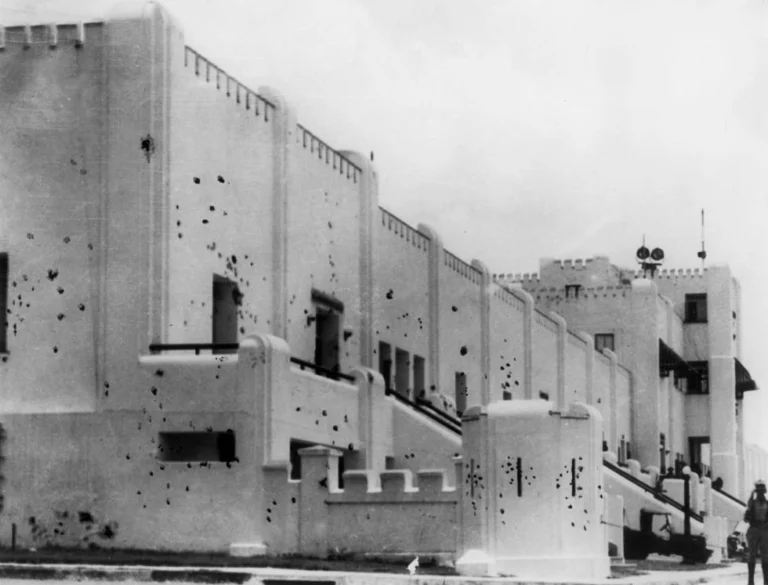
Moncada assault stands as one of the most decisive events in modern Cuban history, not because it succeeded militarily, but because it transformed a failed attack into the political and moral foundation of the Cuban Revolution. The assault on the Guillermón Moncada barracks in Santiago de Cuba on July 26, 1953, became the opening chapter of a revolutionary process that would later overthrow the Batista dictatorship.
At the time, Fulgencio Batista had seized power in the March 10, 1952 coup, closing off legal routes for progressive political forces. In that context, the Moncada assault emerged as a response to dictatorship, exclusion, and the belief that only armed struggle could reopen the path to national change.
The city of Santiago de Cuba gave the episode its symbolic setting. In the eastern capital, carnival, popular tradition, and anti-colonial memory converged in a story that would become part of Cuba’s political mythology. The attack was timed to take advantage of the confusion created by the festivities, echoing earlier moments in Cuban history when insurgent messages were hidden inside popular celebrations.
The Moncada assault involved a small group of young revolutionaries led by Fidel Castro, many of them members of what he later called the “Generation of the Centennial,” in reference to José Martí’s birth. Their objective was not simply to attack a barracks but to seize weapons, ignite a popular uprising, and challenge the dictatorship from within its own military stronghold.
Moncada assault and its historical setting
The Moncada assault took place in a Cuba marked by political repression, social inequality, and closed institutions. Batista’s regime, established after the 1952 coup, had eliminated any realistic electoral path for opposition forces and deepened the crisis of legitimacy.
Fidel Castro later explained that the plan aimed to capture the barracks, obtain weapons, and trigger an uprising in Santiago de Cuba. He acknowledged that the action could not be sustained as a conventional urban battle and that an irregular war would eventually be necessary. Still, the Moncada barracks was seen as a strategic source of arms and a symbolic target.
The attack began in the early hours of July 26, 1953, with around 150 rifles, short firearms, and only three weapons of war. Despite the limited arsenal, the operation became a defining political moment. The military objective failed, but the historical meaning of the action grew far beyond its battlefield result.
The balance of casualties was severe. According to the account, the Batista forces suffered 46 casualties, including 19 dead and 27 wounded between the Moncada barracks in Santiago de Cuba and the Carlos Manuel de Céspedes barracks in Bayamo. The revolutionary forces reported 8 dead and 10 wounded in combat, while later killings of detained rebels raised the number of martyrs to 61.
Among the participants were two women, Haydée Santamaría and Melba Hernández, who later became central figures in preserving the memory of the attack and its political legacy. Their testimony helped shape the revolutionary narrative around courage, sacrifice, and continuity.
Moncada assault memory and repression
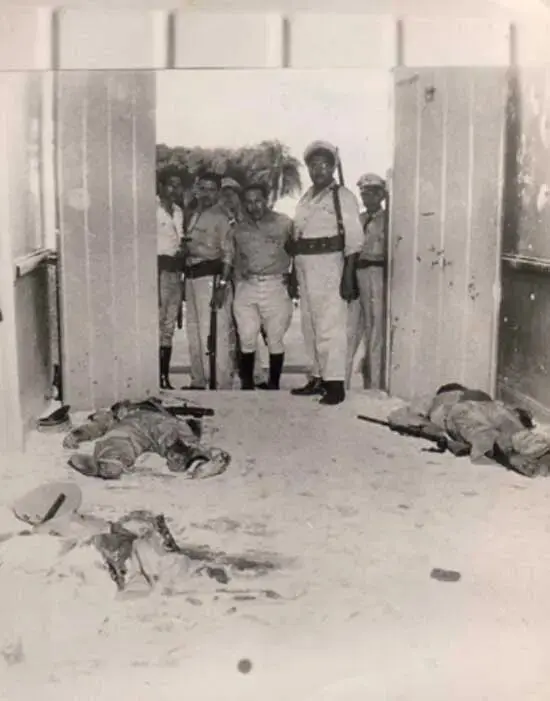
After the attack, the repression that followed became as important as the operation itself. The article describes the Moncada barracks as a site where the Batista regime carried out torture, execution, and a coordinated effort to hide the scale of the violence.
Fidel was captured by a soldier named Pedro Sarría, who reportedly advised him not to reveal his true identity. Sarría later refused to hand him over to other officers and took him to the Vivac instead of returning him to the barracks. That decision likely saved Fidel’s life.
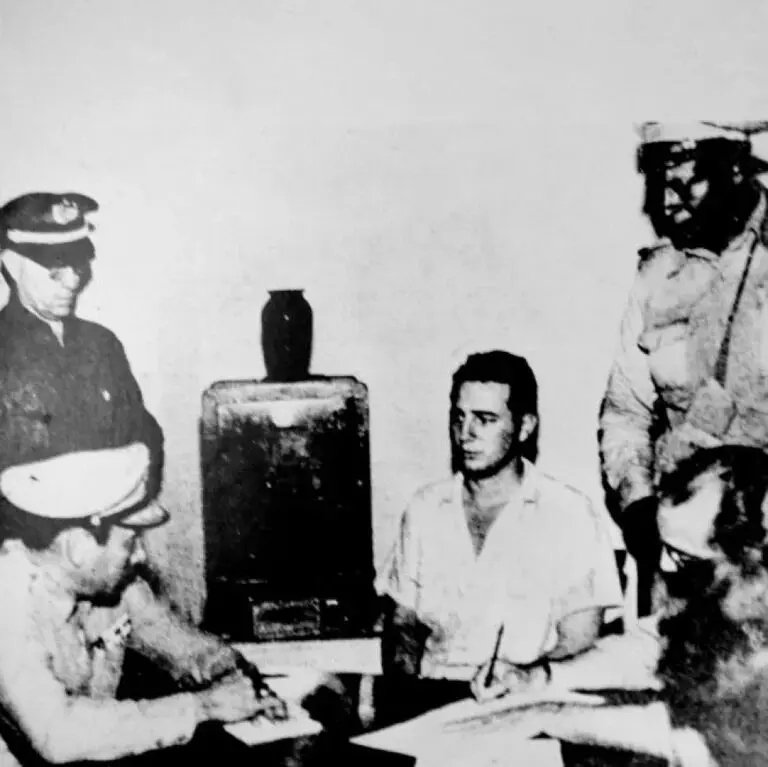
A famous photograph of Fidel seated beneath an image of José Martí was taken at the Vivac, where he was interrogated by Alberto del Río Chaviano, known as the “Jackal of the East.” According to the article, Chaviano ordered journalists and photographers to surrender their film and prevent any record of the killings from leaving the scene.
The role of the press became crucial. Marta Rojas, then a journalism student, arrived in Santiago on the first flight from Havana and witnessed the aftermath firsthand. Her reporting and later recollections helped document the brutality that the authorities tried to conceal.
She later described being guided through the barracks and seeing signs of torture, bloodstains, beaten bodies, and a staged attempt by officials to reconstruct the crime scene before the press could fully inspect it. The article presents this as an early example of state censorship and information control.
The publication Bohemia became one of the few outlets willing to preserve the evidence. Photographer Panchito Cano managed to secure images of the victims, and journalist testimony helped create a public record that challenged the official version of events.
Fidel’s defeat and the revolutionary program
The military failure of the Moncada assault did not end the movement. Instead, it pushed Fidel and the surviving rebels toward the Sierra Maestra and a deeper phase of political organization.
Fidel later turned the setback into what the article describes as the beginning of a broader insurrection. The movement’s survival depended on transforming defeat into political strength, prison into school, and memory into program.
That program emerged most clearly in Fidel’s self-defense speech at trial, later known as “History Will Absolve Me.” Written and reconstructed in prison, the speech became the ideological text that gave coherence to the revolutionary cause.
According to the article, Fidel used lemon juice to write portions of the text in secret, preserving the speech line by line so it could eventually circulate. The result was not just a courtroom defense but a political manifesto that defined the aims of the movement.
The article states that 30 revolutionary combatants were tried, many of them sentenced to prison on Pinos Island, while the most severe sentence went to Fidel: 15 years. Yet the growing discredit of Batista, combined with public pressure and protests by mothers and supporters, eventually led to the release of the Moncada prisoners.
During imprisonment, Fidel kept organizing. He wrote to Melba Hernández and Haydée Santamaría explaining that the movement remained alive and needed discipline, structure, and continuity. That correspondence showed that the Moncada assault had failed militarily but succeeded politically in creating a revolutionary nucleus.
Geopolitical context and regional impact
The Moncada assault cannot be understood only as a Cuban event. It became part of a broader Latin American history of anti-dictatorial struggle, Cold War polarization, and debates over sovereignty, armed resistance, and social justice.
For the region, Moncada helped shape the language of revolution that would later influence movements in Latin America, Africa, and the Global South. The Cuban Revolution that followed became a reference point for anti-imperialist politics and for governments seeking independence from US influence.
At the same time, the legacy of Moncada remains controversial in international debate because it raises questions about the use of armed action, the legitimacy of revolt, and the role of historical memory in political identity. In Cuba, however, the date is remembered not as a failed raid but as the symbolic birth of the revolution.
The article also places José Martí at the center of that memory. Fidel’s speech framed Martí not as a figure of the past, but as a living political force whose ideas continued to inspire sacrifice and resistance. In that sense, Moncada became a bridge between 19th-century independence thought and 20th-century revolutionary struggle.
Legacy of July 26
The phrase “July 26” became more than a date. It became the name of the movement that would later lead the insurrection against Batista and eventually triumph on January 1, 1959.
Fidel’s warning to his comrades before the assault captured the spirit of that moment: victory or defeat in the immediate battle did not determine the movement’s future. The gesture itself would serve as an example to the Cuban people, and history would judge it later.
That is why the Moncada assault remains central to Cuban political memory. It represents courage, tragedy, repression, and strategic vision all at once. The men and women who survived prison and those who died in the barracks became part of a founding myth that still shapes Cuba’s revolutionary identity.
The article closes by recalling Fidel’s conviction that the revolution would triumph through sacrifice, exile, the Sierra Maestra campaign, and persistence. Moncada did not end the struggle; it gave it direction.
From teleSUR English via This RSS Feed.