

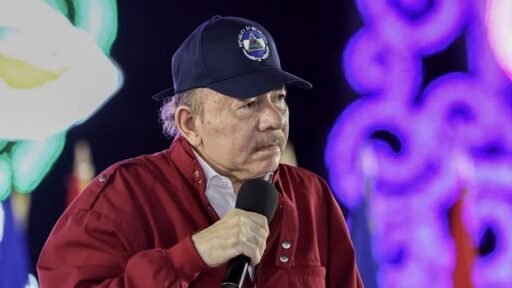
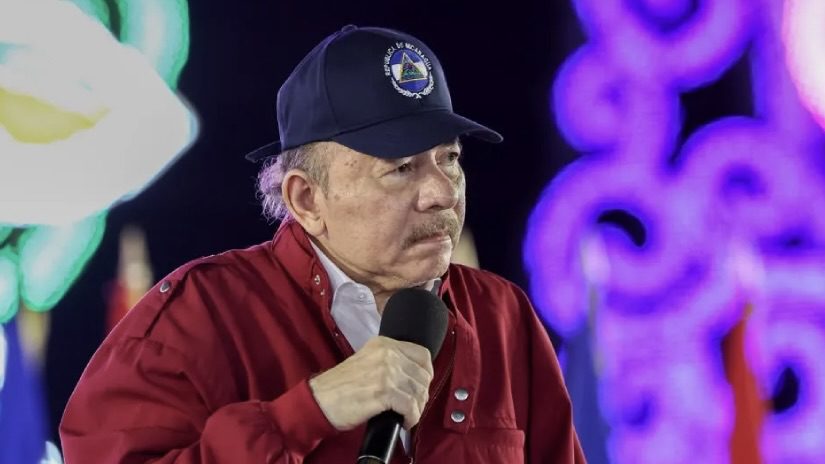
On July 19, during celebrations marking the 47th anniversary of the Sandinista Revolution (which overthrew the US-backed Somoza dictatorship after more than four decades in power) Nicaraguan President Daniel Ortega declared that US-backed political parties would “never” return to power in Nicaragua.
“Don’t think that just because there’s no war we’re at peace,” said the president. “They [the US-backed opposition] are constantly conspiring, organizing, trying to figure out how to create parties so that in an election – an election they’re supposed to hold – those parties will win. And that’s the end of the story of parties installed by the Yankees, installed by the Somoza supporters, ever coming back to power. Never, never, never.”
US officials and Western media claim Ortega vowed to end elections
His speech has garnered both support from the Sandinista movement and harsh criticism from the opposition. However, the harshest response likely came from outside Nicaragua – from the United States, a country that has imposed sanctions on Nicaragua in recent years.
Headlines in US and Western media were full of claims that Ortega had ended democracy, citing that the president had said “there will be no more elections.”
Latin American journalist Camila Escalante refutes these claims. In a post on X, she said the Sandinista leader’s remarks “have been purposely taken out of context and have been mistranslated.”
The full quote is the following:
“They will never see another election where they can attempt to seize power by cheating their way into government. We’re going to work with the National Assembly and the relevant organizations on laws that will put up a wall against the coup plotters and the traitors, and no matter how much money the Yankees give them, they won’t succeed,” Ortega said before thousands of supporters.
However, echoing headlines in the corporate media, US Secretary of State Marco Rubio, via X, stated that his country will take action against the Ortega government: “The Trump Administration and the international community will not stand by as the Murillo-Ortega dictatorship deepens repression at home and manufactures instability that threatens US national security. Ortega’s pledge to abolish elections in Nicaragua proves his cowardice and fear of the Nicaraguan people’s will.”
For its part, the US State Department issued a statement saying: “Daniel Ortega and Rosario Murillo have abandoned even the pretense of popular consent. The Nicaraguan people have the right to choose their own leaders through democratic elections. The United States calls on the international community to join forces to demonstrate to the Murillo-Ortega dictatorship that it cannot expect to maintain business as usual with other nations when it is thwarting the basic tenets of our democratic hemisphere.”
Nicaragua begins to implement Ortega’s announcement
A few hours later, Nicaragua’s National Assembly stated in an official communiqué that it will initiate the necessary processes to develop a “Work Plan” to move forward with Ortega’s directives.
“The National Assembly will hold special sessions with the Supreme Electoral Council to ensure the constitutional, legal, and formal steps that underpin the reforms for a state and establish pathways that guarantee the legal foundations of this momentous aspect of institutionality and support the political, democratic, sovereign, and free practices of our national and local electoral processes,” the legislature said in an official statement.
Foreign interference in elections in Latin America and the Caribbean
Nicaragua’s efforts to change the legal infrastructure around elections are taking place in a broader regional context. Countries across the region have seen repeated allegations of foreign interference, disinformation campaigns, and electoral irregularities.
Leaked recordings known as “Hondurasgate” exposed discussions involving senior Honduran officials, former president Juan Orlando Hernández, allies of Donald Trump, Javier Milei, and other regional actors regarding coordinated efforts to undermine progressive governments in the region, including Mexico and Colombia, through media operations and political destabilization campaigns.
In the last few years, the region has seen a succession of right-wing advances in Ecuador, Panama, Chile, Honduras, Bolivia, Peru, and, most recently, Colombia. Analysts have described this as a new “Angry Tide” – a coordinated resurgence of the Latin American far right, backed politically and diplomatically by Washington and increasingly aligned with transnational conservative networks seeking to reverse the gains of the Pink Tide.
Following Colombia’s razor-thin presidential election, President Gustavo Petro likewise challenged the legitimacy of the result, citing alleged irregularities and demanding greater scrutiny of the vote. Similar fraud allegations also surrounded Honduras’ recent election, where critics argued that irregularities in the vote count and outside political pressure benefited the right-wing victory.
From this perspective, Nicaragua’s decision to tighten electoral restrictions on parties receiving foreign backing can be viewed not as an unprecedented rejection of democracy, but as a defensive response in a context of foreign intervention against progressive governments throughout Latin America.
Read more: Ibrahim Traoré: We do not want a democracy that kills
From BT News via This RSS Feed.