

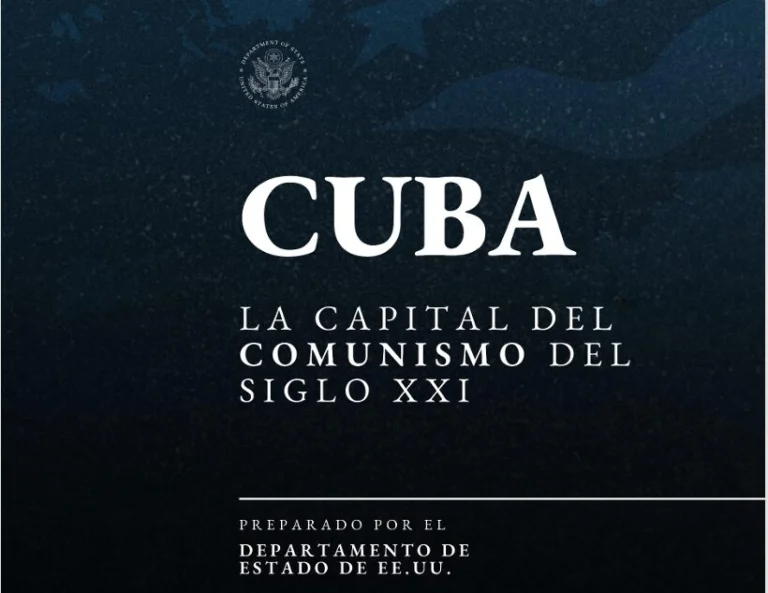
The US State Department report on Cuba raises 9 controversial claims, drawing criticism over bias, Cold War rhetoric, and geopolitical implications.
Related: U.S. Imposes New Coercitive Sanctions Targeting Cuba Medical Services and Energy
US State Department report on Cuba has reignited longstanding geopolitical tensions, following the release of a more than 100-page document titled “Cuba, the Capital of 21st Century Communism.” Published under the administration of Donald Trump, the report is structured into eight chapters and a conclusion, presenting a narrative that critics argue aligns primarily with Washington’s ideological stance.
From the outset, the US State Department report on Cuba frames the Caribbean nation as a sustained threat, alleging decades of subversion against the United States. However, analysts point out that the document lacks analytical depth and reflects a one-sided interpretation of historical events, raising concerns about its purpose and timing.
The report appears crafted not only to consolidate support among international right-wing sectors but also to shape US public opinion in favor of a more aggressive posture toward Cuba, potentially including military considerations.
US State Department Report on Cuba: Ideological Conflict Narrative
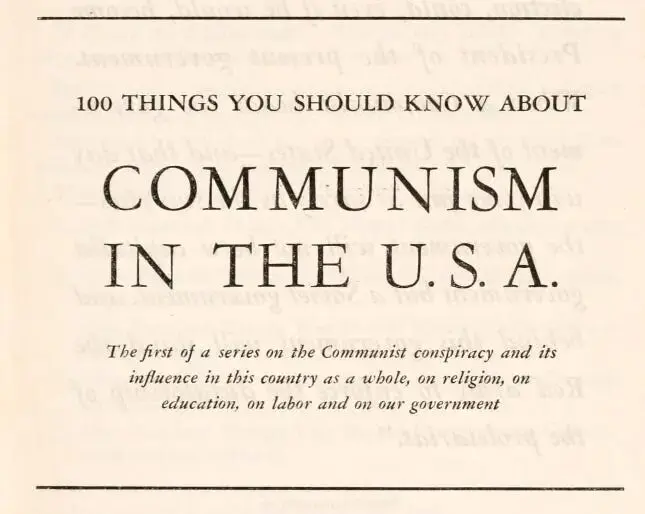
The first chapter, titled “The Revolutionary State,” asserts that Cuba has conducted nearly seven decades of ideological and political infiltration within the United States. It accuses Havana of recruiting activists, influencing institutions, and supporting what it describes as “left-wing terrorism” on US soil.
These claims revive Cold War-era concepts such as infiltration and ideological recruitment, long used in anti-communist discourse. The report acknowledges that Cuba’s most effective actions have occurred on the “ideological battlefield,” a statement that critics argue reflects historical patterns of political persecution.
During the latter half of the 20th century, thousands of educators and activists across Latin America were persecuted under similar accusations, often during military dictatorships backed by Washington. The report, however, does not address this broader historical context.
It further identifies contemporary organizations such as Black Lives Matter-linked activism, Antifa, academic institutions, and migrant advocacy groups as part of a network allegedly influenced by Cuba. Observers note that such generalizations risk conflating domestic dissent with foreign interference.
At the same time, the US State Department report on Cuba portrays the United States as a victim of aggression, omitting key historical actions taken by Washington against the island.
Historical Tensions and Omitted Context
Historical records indicate that US-Cuba relations have been marked by decades of hostility, including covert operations, economic sanctions, and direct confrontations.
Among the most significant events:
- The 1961 Bay of Pigs invasion, a failed US-backed attempt to overthrow the Cuban government.
- The 1960 La Coubre explosion in Havana harbor, which killed dozens.
- The 1976 bombing of Cubana Flight 455, resulting in 73 deaths, widely condemned as a terrorist act.
- The longstanding economic embargo, imposed in 1962 and still in force, which has severely impacted Cuba’s economy.
The US State Department report on Cuba does not fully acknowledge these घटनाओं, instead emphasizing Cuba’s alleged destabilizing role abroad.
Critics argue that this selective narrative undermines the report’s credibility, particularly when it attributes Cuba’s economic struggles solely to internal governance, without addressing the effects of sanctions.
Exporting Revolution and Global Influence
Another central claim in the US State Department report on Cuba is that Havana has historically sought to “export revolution,” supporting insurgent movements across Latin America and beyond.
The document references Che Guevara’s doctrine of “two, three, many Vietnams”, framing it as a strategic blueprint for destabilizing US-aligned governments. It also links Cuba to movements such as the Sandinista revolution in Nicaragua and contemporary political developments in Venezuela.
Notably, the report describes Venezuela as a “Cuban colony,” a characterization widely disputed by regional analysts. It also omits mention of Cuba’s international medical missions, which have provided healthcare services in dozens of countries and are often viewed as a cornerstone of its foreign policy.
Intelligence, Activism, and “Internal Enemies”
The report dedicates several chapters to Cuba’s intelligence capabilities and its alleged influence within US civil society. It highlights cases such as Ana Belén Montes, a former US intelligence analyst convicted of spying for Cuba.
Additionally, it scrutinizes solidarity initiatives like the Venceremos Brigade, which has brought thousands of US citizens to Cuba since 1969. According to the report, such programs form part of a broader network of influence involving NGOs, academic institutions, and advocacy groups.
The US State Department report on Cuba labels these exchanges as infiltration mechanisms, a claim that has drawn criticism for reviving McCarthy-era rhetoric and potentially stigmatizing legitimate international cooperation.
Geopolitical Context and Global Implications
The release of the US State Department report on Cuba comes amid shifting global alliances and renewed tensions between major powers.
The document links Cuba to a broader anti-US coalition involving Russia, China, Iran, and Venezuela, suggesting that Havana plays a coordinating ideological role. It also references Iran’s presence in Latin America, framing it as part of a strategic threat to US interests.
This perspective reflects a wider geopolitical narrative, in which Latin America becomes a contested space between competing global actors. Analysts warn that such framing could justify increased interventionism in the region, further complicating diplomatic relations.
At the same time, the report underscores Washington’s concern over ideological influence, particularly in an era marked by social movements, digital activism, and political polarization.
Conclusions and Controversy
In its concluding section, the US State Department report on Cuba argues that the island’s perceived weakness should not be mistaken for harmlessness. It portrays Cuba’s influence as primarily ideological, capable of shaping movements within the United States itself.
Critics highlight a key contradiction: while emphasizing Cuba’s economic limitations, the report attributes to it a disproportionate global influence, raising questions about the consistency of its arguments.
Furthermore, the document suggests that internal dissent within the United States may be linked to foreign ideological manipulation, a stance that could have significant implications for civil liberties and political discourse.
Ultimately, the US State Department report on Cuba appears to serve not only as a foreign policy assessment but also as a domestic political instrument, reinforcing narratives that blur the line between external threat and internal opposition.
cuba-report-pdf-spanishDownload
From teleSUR English via This RSS Feed.