

Bullets:
US exports of LNG are soaring, with Qatari natural gas production offline for years after Iranian strikes.
Europe is highly reliant on US exports of liquefied natural gas, after the EU banned purchases of Russian energy.
But Asian buyers that previously sourced from Qatar are paying record prices for LNG in spot markets, and snapping up cargoes that previously would have gone to Europe.
American LNG companies will boom for years as Qatar rebuilds, and with US feedgas costs some of the lowest in the world. That results in massive margins after liquefaction and export.
Inside China / Business is a reader-supported publication. To receive new posts and support my work, consider becoming a free or paid subscriber.
Report:
Good morning.
The world’s attention is focused on the disruption of crude oil markets, now that the Strait of Hormuz is closed to everyone, except for the handful of ships that Iran allows to sail through. Refineries in the United States are major beneficiaries of that disruption.
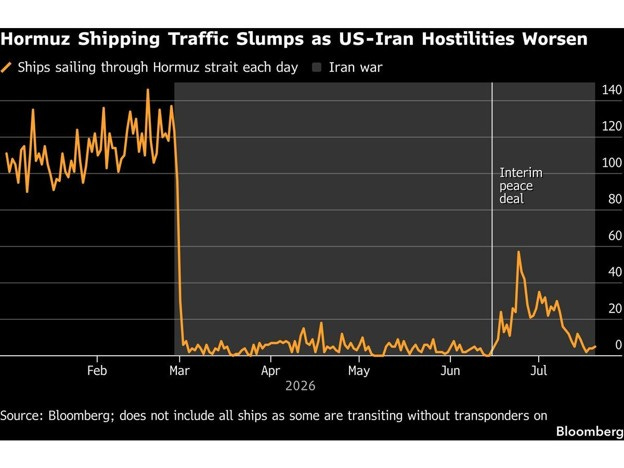
But there is another profound shift in the global energy markets, though, and that also is a boon for US energy companies. Before the War on Iran, the United States made up almost all of the growth in the LNG market. In 2025, 93% of the new liquefied natural gas coming on to the market was of US origin.
Just ten years ago, the United States’ exports of LNG were statistically zero. That’s the blue line. In 2015 Australian exports of LNG were 1.5 trillion cubic feet per year, and Qatar at about 3.8 tcf. Fast-forward 10 years, and Qatar had nudged up slightly, while US exports increased over 200 times:
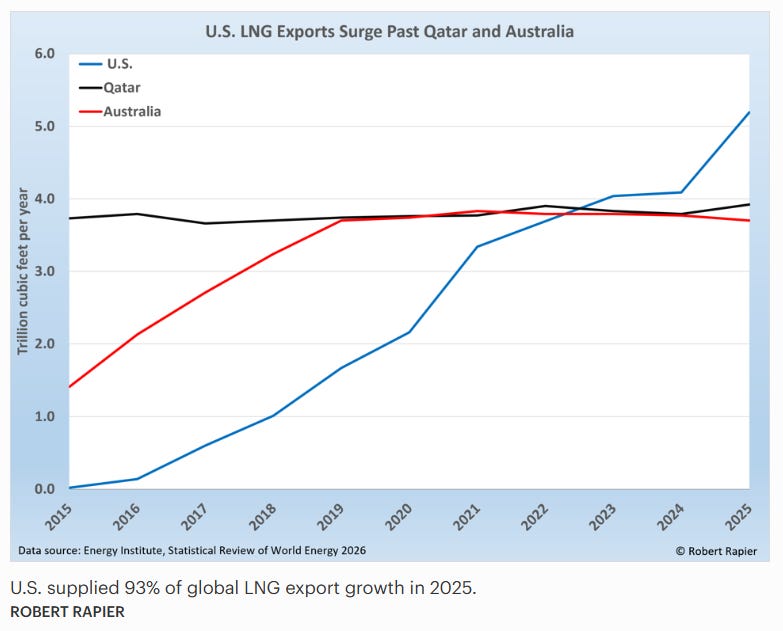
Europe was the primary export destination for over two-thirds of the American exports of LNG.
It was two transformations that made all that go—all those European imports of American LNG. New fleets of ships that carry liquefied natural gas meant that the natural gas market is no longer regional. Natural gas used to flow only by pipeline, and that meant markets that were stitched together, regionally, and different markets had different prices.
With the liquefaction process for natural gas, and the advent of giant ships that could move that around, and so today you don’t need to build a pipeline to a natural gas supplier to buy it. A ship can bring it to you.
And that was the thinking of Europeans, who switched off their purchases of Russian natural gas, that came though pipelines West. They would just buy from suppliers in the United States.

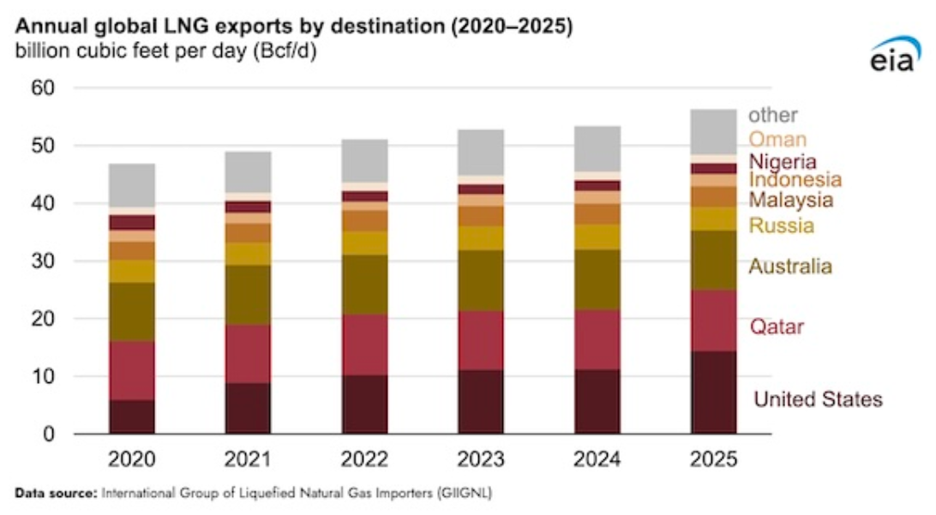
In 2025, exports of Russian LNG fell, at least those export volumes which are visible to Western analysts. But Europe meanwhile increased their imports of natural gas by 29%–by 3.8 billion cubic feet per day. Output from the United States, plus Qatar, was sufficient, barely, to keep the lights on in Europe.
But in 2026, everything is different. The business model for the American natural gas industry now centers on liquefaction and shipping—LNG buyers and traders can buy US natural gas, load it onto a ship, put it on the ocean and wait for bids to come in. The ship can go to any market. That’s a key point: most producers don’t have much spare capacity, and they cannot quickly scale up new production.
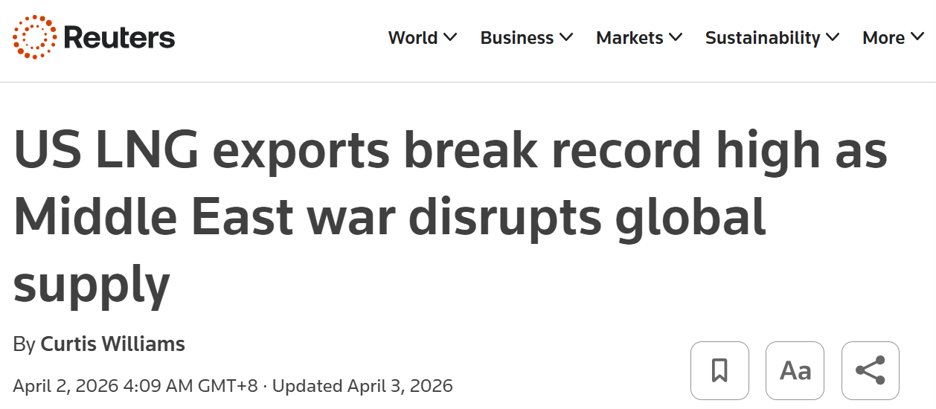
This report is dated 2 April, so after just one month of fighting in the Persian Gulf, the LNG market was already shifting. American shipments to Asia more than doubled, from February to March, even though at that time—four months ago–Europe was still the largest buyer of US LNG cargoes.
By June, countries in Asia were gobbling up whatever LNG they could get, and more ships headed this way instead. The Spot Market is for immediate delivery; spot market buyers say, I need this right now, here’s my money and my address, and Pakistan is paying the highest prices in years, to bring it over. Bangladesh is doing the same.
And that is a result of Qatar being taken out of the market, entirely. Until four months ago, Qatar was a major global supplier of LNG. Now it is Qatari exports of natural gas which are statistically at zero. Here is the chart for prices paid for LNG in Asia, and we see is a vertical spike from around $10 per million BTU to $25, that seemed to happen in a single day:
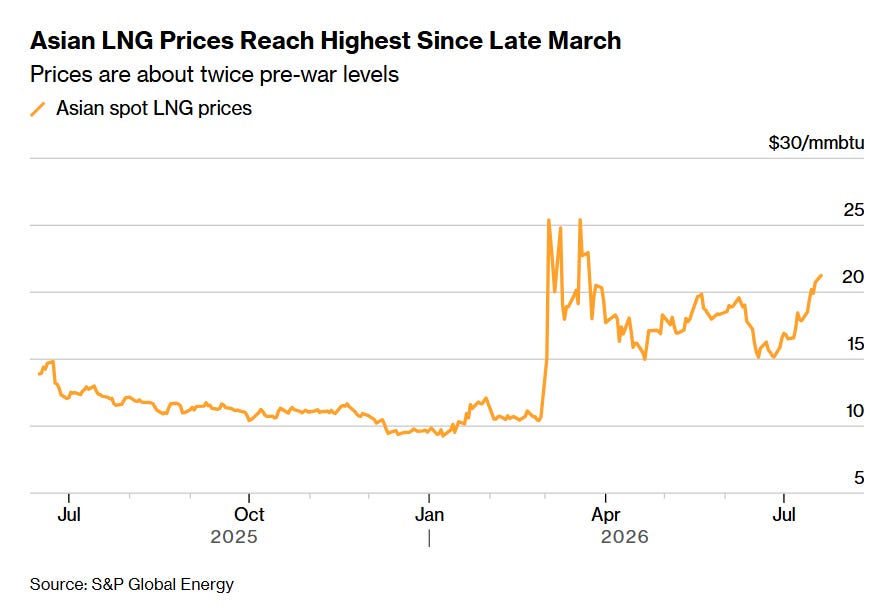
That was the day that Iranian drones and rockets took down the Ras Laffan refinery in Qatar, which said a few hours later that they were declaring force majeure on outstanding natural gas and fertilizer contracts.
Asian economies understood immediately that the only way they would get through the summer with their air conditioners on was to place emergency calls to American LNG suppliers, and to raise prices on electricity at home to reduce consumption. Long-term they want to diversify their energy needs away from everybody, and that means they are reliant in the short term on China for the renewables technology and hardware to get new solar and wind projects up and running.
For Europe, everything is falling apart at the same time. Qatari production is offline for months at least, maybe years. New and expanded Russian pipelines are sending their natural gas to China.
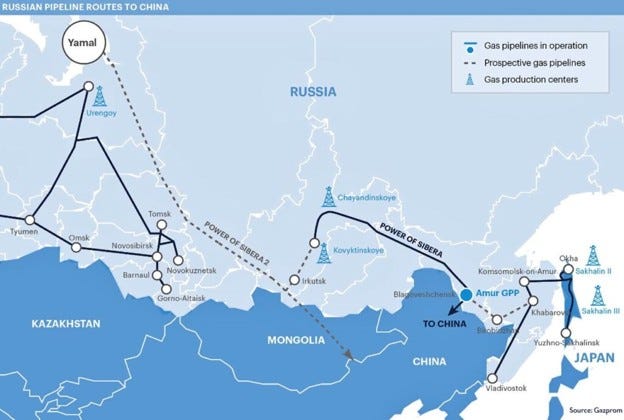
And now Asian countries are indifferent to price and are scooping up American LNG. Asian imports are at their high for the year, while European imports hit their lowest level in two years.
Prices jumped around during the so-called ceasefire, when it was hoped that Qatar would get some LNG production and exports going, but that didn’t last, and so prices shop up again. Even China was a buyer at the relatively low level during the ceasefire, but analysts now expect that they won’t be buying more at these higher prices,
Singapore, South Korea, and Japan will have no choice, however. It’s a seller’s market, and the US is a seller. Japanese imports of LNG from the United States will be almost a million tons this month, 15 times higher what it was back in February. In early February, Japan signed a new supply agreement with Qatar, which previously in 2025 had supplied 3.6 million tons of LNG to Japan. The war on Iran started in late February, and in early March the Qatari LNG industry effectively ceased to exist.
So ships full of LNG that used to go between the United States and Europe, are going to Asia instead. And that is happening at the same time Europe needs to refill their natural gas reserves, to get them through the winter. The current storage deficit is 158 terawatt hours, or the energy demand equivalent of 15 million households for a full year. That’s how short Europe is, right now. Only way out is to pay spot market prices, which are no doubt going even higher.
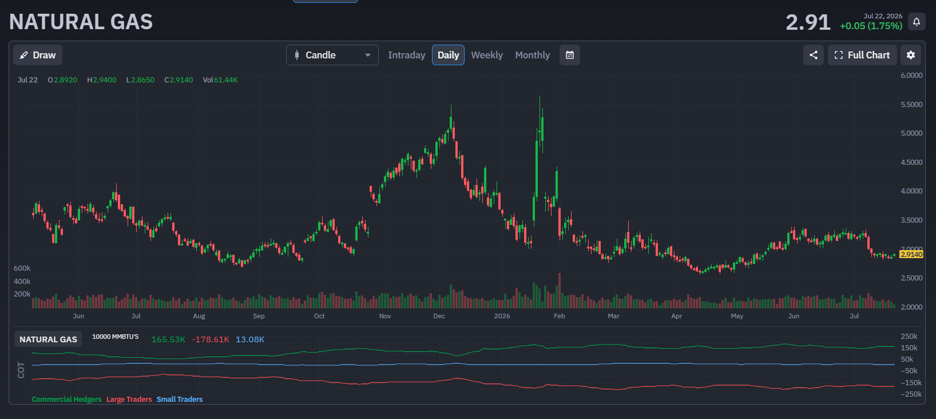
Higher for longer prices for LNG is great news for the United States. It costs energy companies about the same today as when the war started, to buy natural gas itself. Those profit margins are enormous, then—and US energy companies can scoop up that cheap supply, liquefy it, and ship it to anyone paying spot prices.
LNG will be the second-largest export industry in the US within five years.
Be Good.
Resources and links:
The U.S. Supplied 93% Of Global LNG Export Growth In 2025
https://www.forbes.com/sites/rrapier/2026/07/19/the-us-supplied-93-of-global-lng-export-growth-in-2025/
Global LNG trade volumes reached record high in 2025
https://www.hellenicshippingnews.com/global-liquefied-natural-gas-trade-volumes-reached-record-high-in-2025/
US LNG exports break record high as Middle East war disrupts global supply
https://www.reuters.com/business/energy/us-lng-exports-break-record-high-middle-east-war-disrupts-global-supply-2026-04-01/
US Natural Gas Futures
https://finviz.com/futures?p=d&t=NG
Pakistan Shells Out Record Sums for Spot LNG as Qatar Supply Falters
https://oilprice.com/Latest-Energy-News/World-News/Pakistan-Shells-Out-Record-Sums-for-Spot-LNG-as-Qatar-Supply-Falters.html
Pakistan to Buy More LNG as It Sees Longer Hormuz Conflict
https://www.bloomberg.com/news/articles/2026-07-17/pakistan-plans-to-buy-more-lng-as-it-sees-longer-hormuz-conflict?srnd=homepage-americas
Iran War Forces Cash-Strapped Asian Nations to Buy Expensive LNG
https://www.bloomberg.com/news/articles/2026-07-21/iran-war-forces-cash-strapped-asian-nations-to-buy-expensive-lng
Asia’s LNG imports recover, drawing cargoes from needy Europe
https://www.reuters.com/commentary/reuters-open-interest/asias-lng-imports-recover-drawing-cargoes-needy-europe-2026-07-13/
S&P Global Energy: LNG to become second-largest net export industry in US within 5 years
https://www.ogj.com/general-interest/economics-markets/news/55391416/sp-global-energy-lng-to-become-us-second-largest-net-export-industry-within-5-years
QatarEnergy secures long-term LNG supply deal with Japan’s Jera as demand surges
https://www.reuters.com/business/energy/qatarenergy-signs-27-year-lng-supply-agreement-with-japans-jera-2026-02-03/
Retail electric rate increases outpace inflation with prices set to rise higher
https://www.utilitydive.com/news/retail-electric-rate-increases-outpace-inflation-with-prices-set-to-rise-hi/825391/
QatarEnergy expects 3-5 years to repair LNG facilities after strikes
https://www.spglobal.com/energy/en/news-research/latest-news/electric-power/031926-qatarenergy-expects-3-5-years-to-repair-lng-facilities-after-strikes
EU agrees to permanently stop Russian gas imports and phase out Russian oil
https://ec.europa.eu/commission/presscorner/detail/en/ip/_25/_2860
EU countries give final approval to Russian gas ban
https://www.reuters.com/business/energy/eu-countries-give-final-approval-russian-gas-ban-2026-01-26/
China and Russia strengthen gas relationship but there are some caveats
https://globallnghub.com/china-and-russia-strengthen-gas-relationship-but-there-are-some-caveats.html
Inside China / Business is a reader-supported publication. To receive new posts and support my work, consider becoming a free or paid subscriber.
From Inside China / Business via This RSS Feed.