

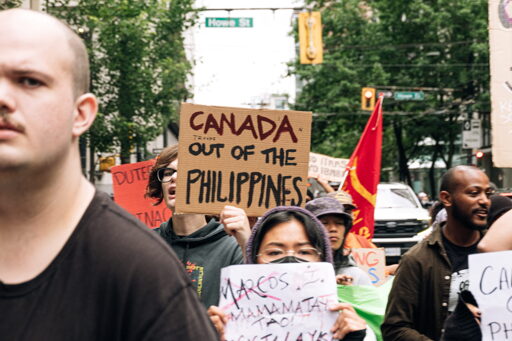
“Security, development, and economic growth for whom? For whom is this going to serve? It always goes to big business, to bureaucrats, to corrupt government officials, to the same people it always goes to. And we have to expose this, because this is not economic growth, security and development of the people. This is further putting the people in precarious, dangerous, exploitative conditions in both Canada and the Philippines.”
TORONTO – During last year’s State of the Nation Address (SONA), Ferdinand Marcos Jr. did not mention the unequal trade and military agreements with the United States. For this year’s SONA, as he ties up with another foreign power, progressives anticipate that Marcos Jr. will frame the agreements as yet another “achievement” of his administration.
Early July, Marcos Jr. met with Canadian Prime Minister Mark Carney in Vancouver and announced THE Canada-Philippines Strategic Partnership under the guise of “deepening bilateral cooperation in trade, energy, defence, and tourism.” The two governments boasted of its people-to-people relationship and claimED it will benefit economic growth. But progressives in Canada ask, who is this really for?
A priority of the bilateral partnership is concluding negotiations on a Canada-Philippines Free Trade Agreement by the end of the year. The agreement states that Canada aims to expand agricultural and forest product exports to the Philippines where landgrabbing, extractive mining, and militarization result in the killings of farmers and human rights defenders, as per the reports of various human rights watchdogs.
In an interview with Bulatlat, Alison Matthews, chairperson of the International League of Peoples’ Struggle (ILPS) in Canada, emphasized that the unequal trade agreements that Carney and Marcos Jr. signed and ongoing talks on declaration of intent only marks continued worsening human rights violations against the Filipino people.
“Canada headquarters over half of the world’s mining companies, and many of those companies operate in the country. B2 Gold, Oceanagold, and Barrick Gold, all have projects in the Philippines, with a long history of human rights violations, including having the AFP and state militia surrounding those mines, and killing land defenders, and displacing indigenous people. These projects contaminate the water and the soil, making soil unproductive for farming, and water undrinkable, so people are forced to leave,” they told Bulatlat.
“Security, development, and economic growth for whom? For whom is this going to serve? It always goes to big business, to bureaucrats, to corrupt government officials, to the same people it always goes to. And we have to expose this, because this is not economic growth, security and development of the people. This is further putting the people in precarious, dangerous, exploitative conditions in both Canada and the Philippines,” Matthews added.
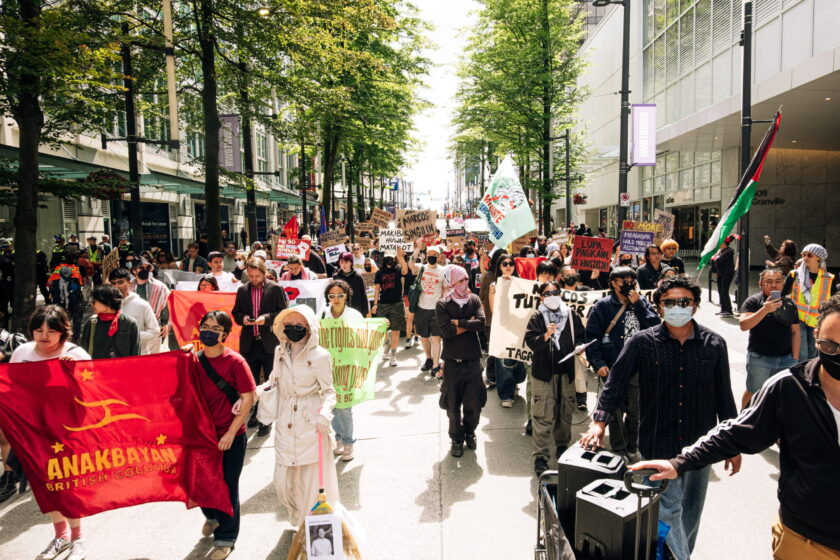
Hundreds protest during Ferdinand Marcos Jr’s visit in Vancouver Canada (Photo by BAYAN BC)
The agreement also includes a Joint Declaration of Intent on Energy and Natural Resources Cooperation. While it is still under negotiation, it signals a clear push toward increased Canadian involvement in Philippine energy and resource extraction. A Joint Declaration of Intent on Labour and Migration was also signed without amendment and wording that protects and defends migrant workers on Canada’s employer-tied temporary foreign worker system, which has left many overseas Filipino workers (OFWs) vulnerable to precarious working conditions, exploitation and abuse.
All these agreements are happening alongside the Status of Visiting Forces Agreement (SOVFA).
Matthews underscored Canada’s complicity in fascist repression and exploitation of the people in the Philippines through militarization and weapons trade deals, through the SOVFA between Canada and the Philippines.
This year marks the first year that the Canadian military participated in the Balikatan war exercises further pushing Canada’s Indo-pacific strategy, which BAYAN Canada asserts would further entrench Filipinos to “militarization and state terrorism”.
“While millions of Filipinos suffer from extreme poverty, skyrocketing prices of oil, food and basic commodities, unemployment, worsening hunger, and militarization, Marcos Jr. travels overseas to further strengthen military and economic agreements that open the Philippines to foreign plunder and intervention. These agreements are not for the benefit of the Filipino people but for enriching the ruling class and foreign corporations eager to exploit the country’s land, workforce, and natural resources,” BAYAN Canada said in a statement.
For whom?
Lourdes Dela Pena, 52, came from a family of farmers in Concepcion Tarlac. She is now working in Canada and one of the “one million strong Filipino diaspora” cited in the bilateral partnership agreements signed between Marcos Jr and Carney administrations.
Through her siblings’ hard work, Dela Pena finished college with a degree in Commerce major in Computer Science. But growing up in a farming family struggling to make ends meet pushed her to work abroad as a domestic helper and caregiver in Taiwan and Hong Kong before moving to Canada for work.
Dela Pena came to Canada under the Greenhouse Agriculture Pathway but lost her legal status after falling victim to illegal recruitment. Together with three other farm workers and Migrante Ontario, they launched the “Justice for Mushroom 4! Justice for All Migrant Workers” campaign in 2019 which aimed to fight against labor trafficking and push for policy reforms that would provide stronger protections for migrant workers and prevent further exploitation. Throughout her fight against their illegal recruiter and the loss of legal status, Dela Pena said she did not receive any kind of assistance from the Philippine Consulate. She eventually gained permanent residency on humanitarian and compassionate grounds.
For Dela Pena and her family, the recently signed agreements between Canada and the Philippines, which claim to be a strategic partnership, will not lessen her burden as a breadwinner nor address her family’s plight as farmers.
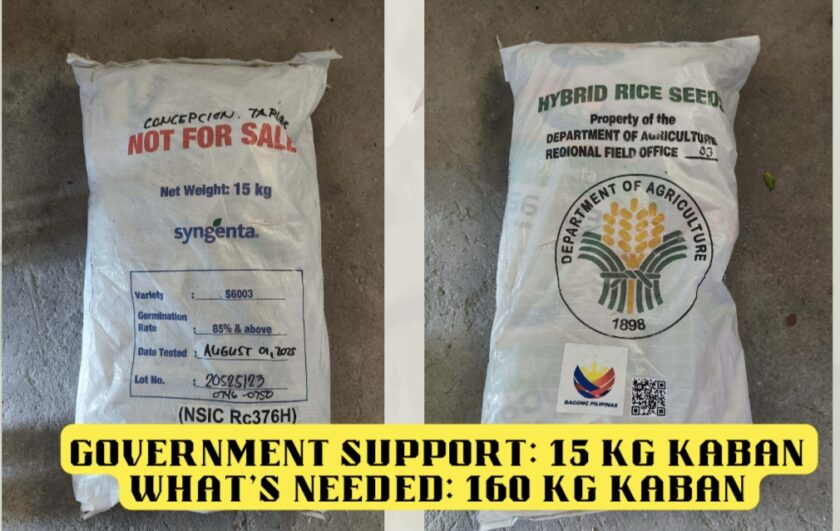
Screenshot
Her brother, who was left tending their farm in Tarlac, begins the rice farming season by preparing the land and waiting for heavy rains, which helps reduce irrigation costs. Over a four-month cycle, he plants rice, monitors the fields daily to protect seeds from birds, provides irrigation, applies fertilizer and pesticides, and continues maintenance until harvest.
After harvesting, all production expenses including seeds, fuel, fertilizer, pesticides, and irrigation are deducted from the income, leaving farmers with whatever remains after four months of work. The money they earn is highly dependent on weather conditions, as typhoons, floods, and strong winds can destroy crops just before harvest. Once the rice season ends, the family starts a new cycle growing corn, following a similar process of planting, irrigation, fertilization, and pest control.
“A farmer, without any capital, would earn nothing. Whatever you borrow, you have to pay after harvesting.” she said in Filipino
Dela Pena sends P25,000 (CA$750/US$405) monthly to support her 90-year-old mother’s food, diaper, and other basic needs. As a migrant worker, her monthly remittance is not enough as the prices of basic goods in the Philippines continue to skyrocket.
For Dela Pena, the Canada-Philippines Strategic Partnership does little to address the realities faced by migrant workers and peasant families. Instead, she expressed concern over provisions that could further open the Philippines to foreign extraction and exploitation.
“I am against the agreement between the Philippines and Canada, particularly on mining. Why would they approve of this even if millions would be affected by environmental destruction? Our farmers would become even more vulnerable to floods,” Dela Pena said.
Dela Pena said agreements that promote increased foreign access to the country’s natural resources amount to the continuous plunder of the country’s land and wealth. While the government presents these agreements as development and progress, migrant workers like Dela Pena continue to bear the brunt of worsening economic conditions, displacement, and labor exploitation, with little indication that they will see any meaningful benefit from these partnerships. (RTS, RVO)
The post Canada-Philippines ‘strategic partnership’ for whom? appeared first on Bulatlat.
From Bulatlat via This RSS Feed.