

The World Cup did not pacify the unions, students, and opponents of Milei’s government in Argentina. They continued their mobilizations against the administration’s radical neoliberal austerity plan even while the country was competing in the World Cup finals. On the other hand, the administration did take advantage of this football frenzy to quietly approve oil exploration by a foreign company and sought Senate approval to increase the amount of land that foreigners can own in Argentina.
This radical neoliberal agenda has been steadily advancing since the start of Milei’s term in December 2023. He has pushed forward an ambitious economic and political plan that, so far, has included the massive deregulation of price controls, the elimination of various subsidies, the relaxation of labor market regulations, the privatization of public enterprises, the opening of the market (through tax and customs benefits) to large international capital, and the mass layoff of thousands of government employees.
The government is defending its actions in light of the latest data showing a budget surplus and an improvement in Argentina’s credit rating: “We are creating the conditions for better employment, higher wages, and increased income for the entire population,” said José Luis Daza, deputy minister of economy.
However, Milei’s neoliberal agenda has been met with fierce resistance from various social sectors at every turn. Students, scientists, retirees, doctors, teachers, workers, women’s organizations, and others have engaged in constant mobilization to publicly express their dissatisfaction with the far-right government’s course.
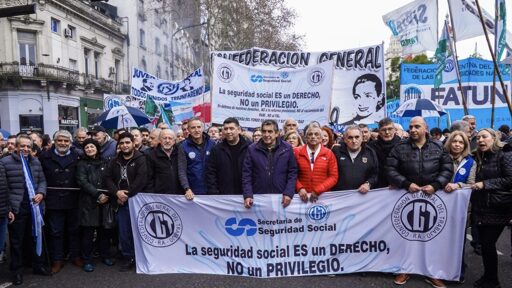
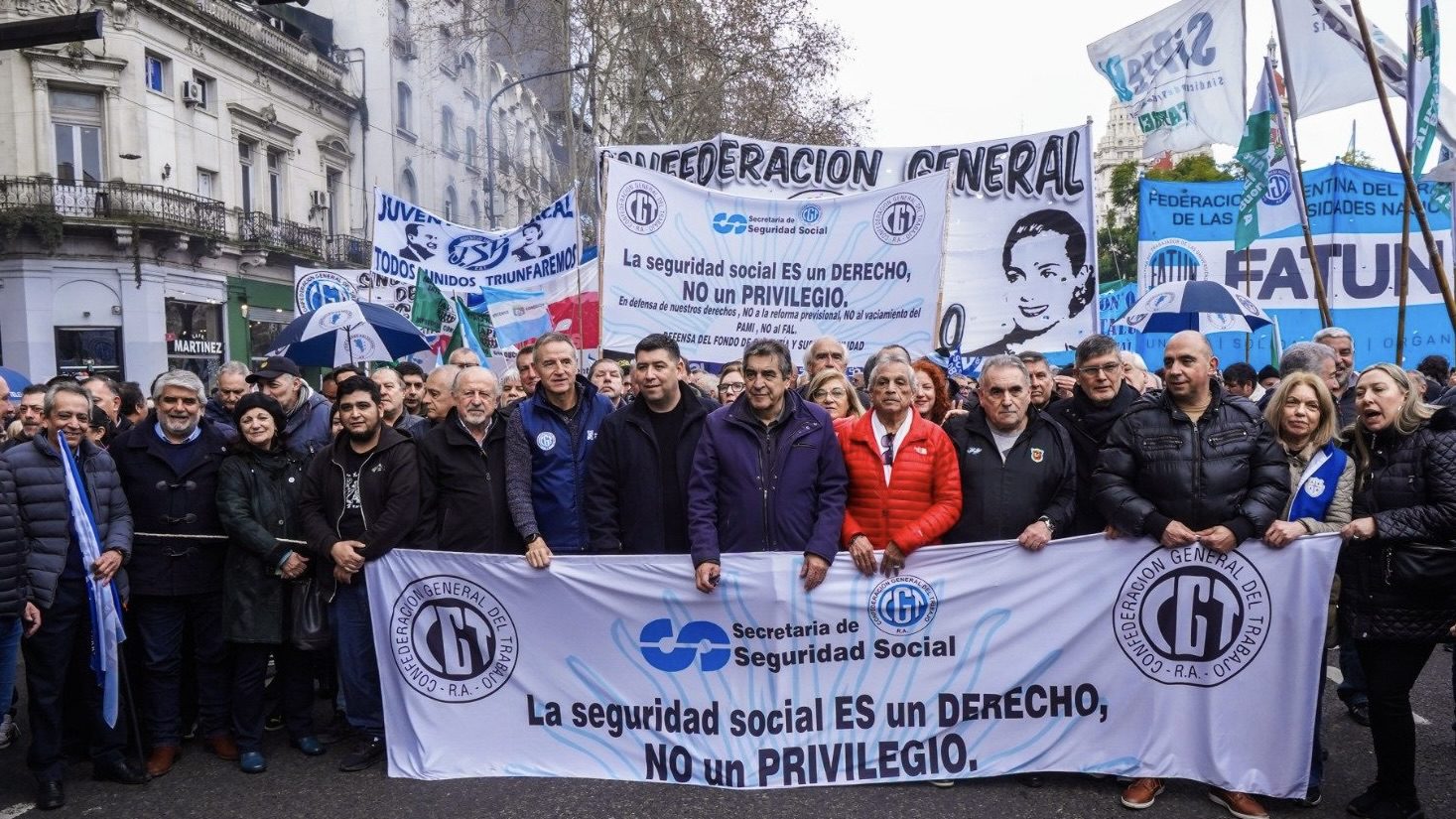
In addition to these mobilizations, as mentioned earlier, there was the march on July 22, in which thousands of people – primarily from labor unions and retirees, though left-wing political parties also participated – took to the streets of the capital, Buenos Aires, to express their rejection of the executive branch and its decisions.
Retirees have been one of the most consistent groups participating in anti-government protests (even marching every week). Following several controversial budgetary decisions, elderly people have seen a significant decline in their purchasing power, their access to medications, and, in general, their quality of life
At least half of Argentina’s retirees receive an income of about $324 per month, nearly a third of what is needed to cover the basic needs of an older adult.
Alongside retirees, the three main trade union confederations (CGT, CTA, and CTA-A) actively participated in the protest on Wednesday, standing in solidarity with the retirees and drawing attention to the labor reforms that, they claim, have been implemented against the interests of the working class.
“Today we are beginning a new phase in the working class’s struggle,” said Hugo Godoy, General Secretary of the Autonomous Argentine Workers’ Confederation (CTA-A).
In fact, another major demand of the citizens who took to the streets on July 22 was that the government not eliminate the social programs that support soup kitchens and social assistance in Argentina’s poorest neighborhoods.
In several parts of the city, clashes were reported between some protesters and the national police, who fired tear gas at several demonstrators, who responded by throwing stones.
La Federacion Nacional Territorial (FeNaT), Territorios en Lucha y diversas organizaciones territoriales y sociales movilizaron esta mañana a Puente Pueyrredón y en todo el país por continuidad del plan Volver al Trabajo.
Testimonios de Carmen Cirano del Movimiento… pic.twitter.com/kWaILHQ2MI
— CTA Autónoma (@CTAAutonoma) July 22, 2026
Thus, it appears that the cycle of protests against Milei is resuming; for his part, he has stated on countless occasions that he will not back down but will instead accelerate his ultraliberal agenda.
From BT News via This RSS Feed.