


This story originally appeared in Common Dreams on July 24, 2026. It is shared here under a Creative Commons (CC BY-NC-ND 3.0) license.
A Republican-controlled House committee passed legislation earlier this week that would prevent the US Labor Department from enacting federal standards to protect workers from extreme heat, a move that came amid sweltering heat across the country.
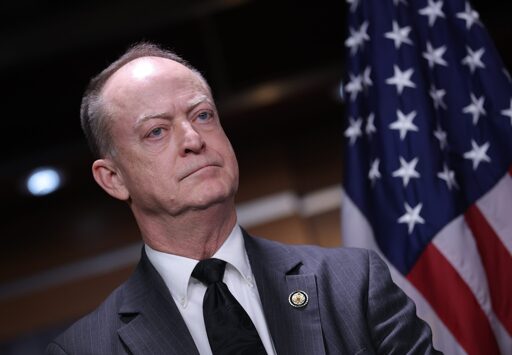
The Heat Workforce Standards Act, led by Rep. Mark Messmer (R-Ind.), passed the House Education and Workforce Committee on Tuesday in a 18-15 vote along party lines. If enacted, the legislation would bar the Occupational Safety and Health Administration (OSHA) from implementing nationwide heat protections for workers—including those proposed by the Biden administration in 2024.
The Biden Labor Department estimated that its proposed rules would protect around 36 million workers. Trump’s Labor Department has done nothing to move forward with the Biden-era proposal.
The AFL-CIO, the largest labor federation in the US, has condemned the GOP bill, noting that “extreme heat is one of the deadliest workplace hazards in America.”
“House lawmakers are considering legislation that would block OSHA from issuing or enforcing a federal heat safety standard,” the labor group said earlier this week. “That’s the wrong direction when workers’ lives are on the line.”
Ahead of Tuesday’s vote, a coalition of labor unions and advocacy groups wrote in a letter to members of Congress that the Republican legislation “would permanently remove the federal government’s authority to address a workplace hazard that is already resulting in worker fatalities.”
“The Bureau of Labor Statistics recorded 55 worker deaths from heat exposure in 2023, a number that safety researchers widely consider to be an undercount due to frequent misclassification or underreporting of heat-related illnesses and fatalities,” the coalition wrote. “More broadly, heat-related deaths in the United States have more than doubled since 1999, and extreme heat now claims more lives each year than any other weather-related hazard.”
“Workers have no control over extreme heat, and many are unable to refuse hazardous assignments without jeopardizing their livelihoods,” the groups added. “Congress should not respond to an escalating occupational hazard by permanently removing the Department of Labor’s authority to address it.”
The Groundwork Collaborative, Workshop, and Harvard Law School’s Center for Labor and a Just Economy estimated in a report published earlier this year that basic, federal workplace heat protections could save up to 1,500 lives annually. The report observed that major industry groups, including the US Chamber of Commerce, have mobilized against proposed national heat protections.
“Companies like Amazon and the United Parcel Service (UPS) that employ hundreds of thousands of workers subjected to extreme workplace temperatures make public statements about their commitments to worker safety while actively lobbying to weaken or block heat regulations,” the report noted. “As extreme heat intensifies, the cost of inaction will be measured in lives lost. The question facing policymakers is no longer whether effective protections exist, but whether they have the political will to stand up to those unscrupulous employers lobbying hard to block them.”
From The Real News Network via This RSS Feed.
Apparently this is repealing regulations that would be redundant anyway since states already have regulations in place that are specific to their local climate/industries.
https://messmer.house.gov/news/documentsingle.aspx?DocumentID=190
