

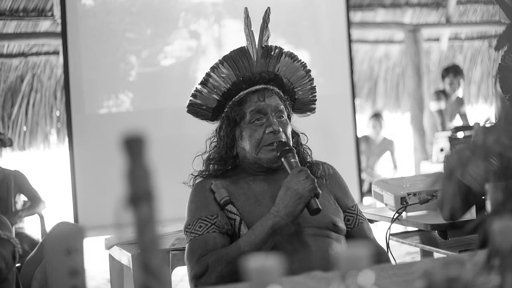
The plane sprayed the soy fields beside the forest. Residents of Khikatxi said the single-engine aircraft appeared several times during each harvest and passed over Wawi Indigenous Territory. They worried about pesticides reaching their water, gardens, animals, and homes. People reported itching and diarrhea. Crops weakened, streams grew cloudy, and some game animals seemed to smell of agricultural chemicals. For years, Khuiusi Khisêtjê watched the farms advance around his people’s land. In 2018 he made a decision. The community would rebuild its village ten kilometers deeper in the forest. Leaving a village is difficult. Houses must be rebuilt, paths cleared, gardens planted, and daily routines restored. The old place contained years of work and memory. Khuiusi Khisêtjê had already lived through several such upheavals. He knew what was lost when people were forced from their land. He also knew when it had become unsafe to remain. The move took the Khisêtjê farther from the expanding agricultural frontier. It was one more decision in a life devoted to the survival of his people. Khuiusi, who died in Goiânia on July 3rd, at about 80, belonged to a generation that saw the Khisêtjê come close to extinction. He was born when his people still lived beyond the settled frontiers of central Brazil. Their villages lay among rivers, forest, and savanna in a region that would later form part of the Xingu Indigenous Territory and the adjoining Wawi Indigenous Territory in Mato Grosso. Contact with outsiders brought disease, violence, and displacement. Epidemics killed…This article was originally published on Mongabay
From Conservation news via This RSS Feed.