

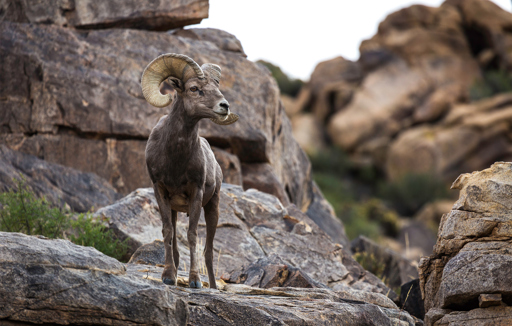
The Mojave Desert may look like a flat, brown stretch of nothing between Los Angeles and Las Vegas. But threading through its rocky mountain ranges is an intricate network of wildlife movement that has sustained desert species for thousands of years. Now, scientists and advocates say a solar project approved by the state of California threatens to sever it. In April, the California Energy Commission, the state agency that oversees energy infrastructure, voted 4-0 to approve a $700 million, 1,080-hectare (2,670-acre) solar facility proposed by New Jersey-based developer VC Renewables on federal land adjacent to the Mojave National Preserve. The preserve, spanning more than 1.6 million acres, is one of the largest in the U.S. National Park System and is located in Southern California. The project, known as Soda Mountain Solar, sits in the migration corridor that desert bighorn sheep (Ovis canadensis nelsoni) use to move between mountain ranges. This large solar array would also obstruct desert tortoise (Gopherus agassizii) habitat, which has already undergone significant loss due to climate change and land developments. The energy commission’s environmental review found the project would cause significant and unavoidable harm to wildlife. Scientists and conservation advocates say the approval threatens one of the last intact desert ecosystems in California. But the commission’s final order memo states that ecological mitigation incorporated into the solar project would reduce the impacts on desert wildlife to “less than significant” and that the commission expects the project will bring more renewable energy to the state. Scientists and…This article was originally published on Mongabay
From Conservation news via This RSS Feed.