

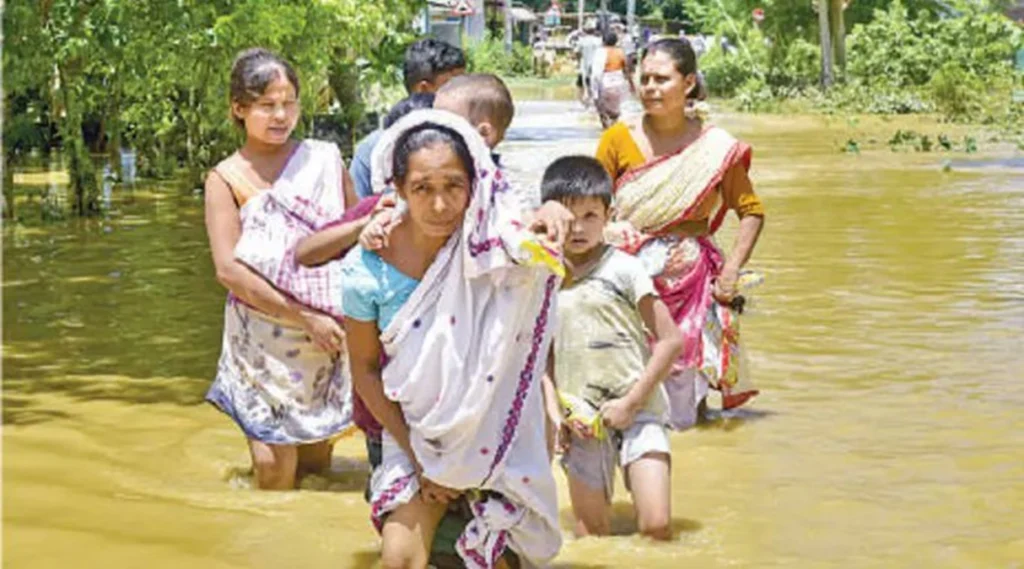
During the monsoon season from June to September, India experiences heavy rains and winds.
On Friday, television news channel Northeast Live reported that over 700,000 people were affected by the ongoing floods across India’s northeastern state of Assam as the death toll has risen to 51.
RELATED:
Chilean Storm Death Toll Rises to 13 as Catastrophic Floods Hit Northern Regions
“The death toll from the flood fury in Assam has risen to 51, with as many as six more bodies recovered from Sivasagar and Charaideo in the past 24 hours,” Norhteast Live stated, noting that 900 villages in 11 districts across the state are reeling under the floods.
The state-run broadcaster All India Radio (AIR) said the flood situation remains critical in the upper Assam districts of Sivasagar, Charaideo and Jorhat, which together account for nearly 94 percent of the affected population.
“Sivasagar is the worst-affected district, with more than 375,000 people impacted and around 300 villages inundated. More than 186,000 people are affected in Charaideo, while over 115,000 people have been affected in Jorhat,” AIR said.
Officials said 24,124 people have taken shelter in 103 relief camps, while 255 relief distribution centres have been set up for the affected. Floods are an annual occurrence in Assam during the monsoon season.
Assam Drowns in Deadly Floods.
41 dead, over 7 lakh people affected as floods swallow 11 districts. Rivers still rising.
Assam is hurting. Homes are gone, lives have been changed forever and even innocent animals have been lost.
Please keep every affected family in your… pic.twitter.com/yAt3PCkyvb— زماں (@Delhiite_) July 24, 2026
India’s annual monsoon season, which typically runs from June through September, is the country’s primary rainy period and is driven by seasonal wind patterns that carry moisture from the Indian Ocean.
The southwest monsoon supplies roughly 70% to 80% of India’s annual rainfall, making it essential for agriculture, water reservoirs, hydroelectric power generation and overall economic activity.
The timing, distribution and intensity of the rains are closely monitored because they have a direct impact on food production, rural livelihoods, and inflation.
While the monsoon is vital for replenishing rivers, groundwater and reservoirs, it also brings recurring risks. Heavy rainfall frequently triggers flash floods, river overflows, landslides, and urban flooding, particularly in low-lying areas and mountainous regions such as the Himalayas.
These events can damage homes, roads, bridges and crops, disrupt transportation and power supplies, and force the evacuation of thousands of people. States including Assam, Himachal Pradesh, Kerala, Uttarakhand and parts of Maharashtra have experienced severe monsoon-related disasters in recent years.
Climate scientists have warned that climate change is increasing the variability and intensity of rainfall across South Asia, contributing to more frequent extreme precipitation events even when seasonal rainfall totals remain close to average.
teleSUR/ JF
Source: Xinhua – WMO
From teleSUR English via This RSS Feed.