

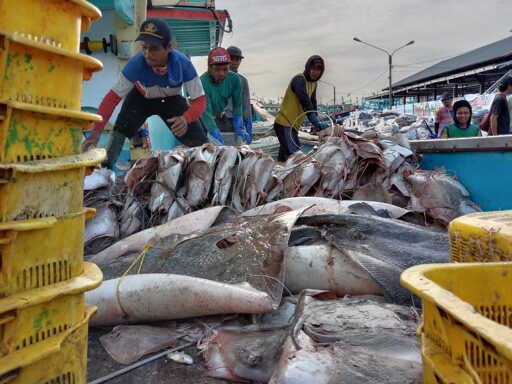
JAKARTA — Endi sat in front of the door leading to the second deck of a fishing boat at the Nizam Zachman fishing port in Jakarta. As he waited for the vessel to depart, the 42-year-old member shared his experience working at sea. “I only have a primary school education. I tried other jobs, like construction, but I couldn’t handle it. The pay was low,” he told Mongabay. On fishing boats, he said, crew members are paid according to their roles. Ordinary deckhands earn around 25,000 rupiah per day, or about $1.40, while the chief engineer gets up to four times that much. For a two-month voyage, that puts total earnings anywhere from 1.5 million to 6 million rupiah ($84-$334). Endi said that while this is still insufficient to support a family, he remains grateful to have work. This could improve in the near future. In April this year, the Indonesian government ratified the International Labour Organization’s Work in Fishing Convention of 2007 (also known as ILO 188), marking a major step toward strengthening labor protections in the fishing sector. The government now has one year to prepare for its implementation, including revising existing regulations governing the recruitment, training, certification, and management of fishing crews. Overall, the convention seeks to establish minimum standards for occupational safety and health, fair wages, decent working conditions, social security, legal protection, and adequate rest for workers in the fishing industry. Fishing crew members wait for their vessel’s scheduled departure from the Nizam Zachman fishing…This article was originally published on Mongabay
From Conservation news via This RSS Feed.