


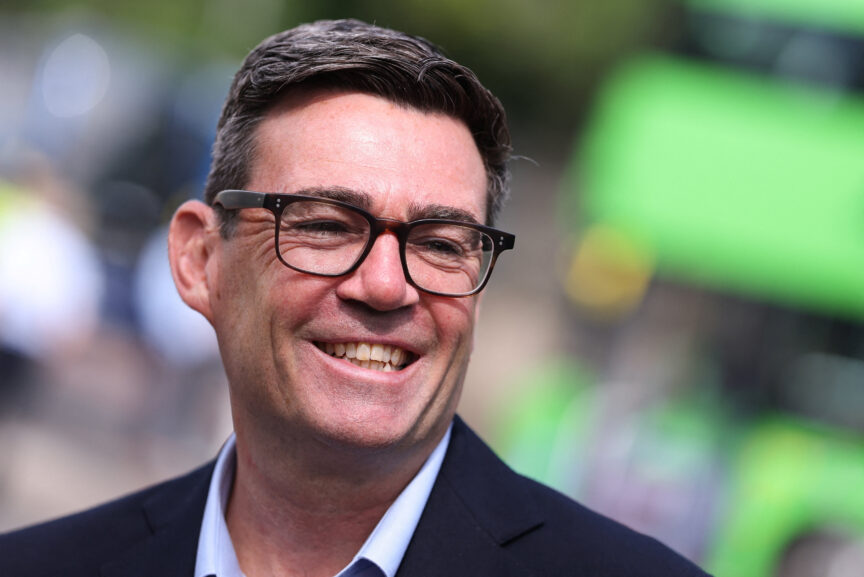
Andy Burnham’s been prime minister for nearly a week, and the post-Keir vibe shift is in full swing. Gone are the days of frowning at the camera and insisting Britain can’t have nice things; instead, we’re getting capped bus fares, VAT scrapped on household electricity bills, and a 20% cut in business rates for pubs, clubs and music venues.
Though we’re very much in the high days of the honeymoon period, nobody can argue that Burnham hasn’t learned from Starmer’s political missteps. It’s not complicated: don’t come into government talking about all the things you can’t do to improve people’s lives, otherwise they’ll vote for someone who can actually do something with the power they’ve been given. Any win, even if it’s as small as £45 a year off energy bills, should get the town-crier treatment.
But the UK’s problems are numerous, and our tolerance for prime ministers (if recent history is any indication) limited. The real tests have yet to come.
Burnham has identified one of the ex-PM’s greatest failures: politics can’t survive indefinitely on the promise that competent people will administer decline more efficiently. Indeed, Darren Jones – former Treasury minister and Starmerite ultra – has done his best this week to revive the bad vibes of the old guard, pointing out that the (now nixed) digital ID rollout that was meant to pay for the VAT cut was actually itself unfunded.
There’s little sign that Jones’ missives are being interpreted as much more than a resentful swipe at the new government. But it does set up an obstacle for the new prime minister. The Labour right are a vengeful, petty bunch; they’d happily snarl you up in negativity and backbiting if it advances their little globule within the party, even if it comes at the expense of Labour’s national popularity. Burnham’s political career has been characterised by a marked distaste for factionalism, but not everybody in the PLP feels the same way.
Other conflicts loom for the government. Burnham and Miatta Fahnbulleh, the newly promoted energy secretary and close ally of Ed Miliband, will have to decide whether to expand drilling for oil and gas in the North Sea. As I mentioned in last week’s Cortado, Miliband’s opposition to increasing our dependence on fossil fuels prompted some of Labour’s trade union backers to publicly denounce him as a “noose around the neck” of job creation, even going so far as to imply that the MP for Doncaster is anti-working class.
Fahnbulleh, for one, has changed her tune. Back when she worked for a left-ish NGO in 2023, she signed a letter which blasted new fossil fuel projects as “irresponsible and shortsighted”. But this week, she was an evangelist for “pragmatism”, and pointedly made a visit to Aberdeen. The choice in front of her is to stick to her principles, and piss off two of the country’s biggest trade unions, or allow for expanded drilling on Jackdaw and Rosebank, and thus open up space for the Greens to hammer Labour on climate change.
New relationship energy isn’t a renewable resource. By definition, it will run out. A vibe shift is both powerful and insubstantial: we all know when we’re feeling different, but that’s not necessarily a transformation in political reality. Stephen Bush in the FT has branded Burnham’s initial raft of announcements “Continuity Reevesnomics” – while you might get a few sunny headlines out of cutting VAT on electricity, it’s not actually going to make a big dent in the cost of living.
Unless or until Andy Burnham makes a big policy intervention – which would put him on a collision course with the rightwing flank of his own party – at some point, voters are going to notice that they’re not much better off than they were under Keir Starmer and Rachel Reeves.
From Novara Media via This RSS Feed.