

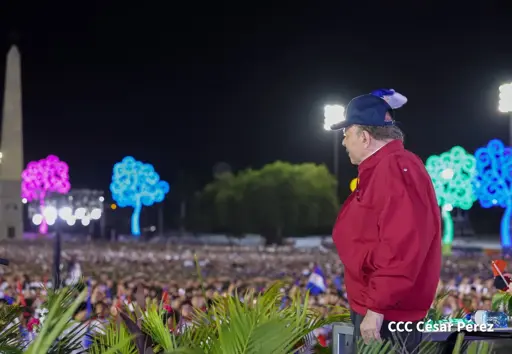
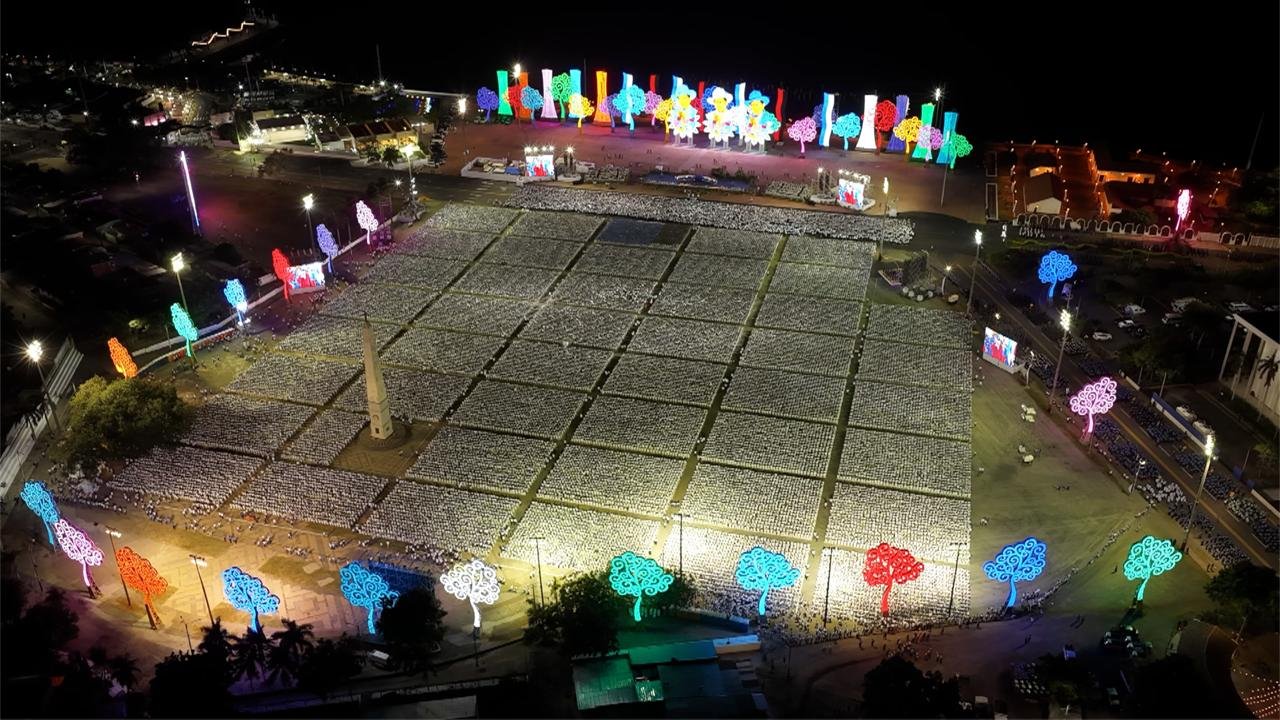
Celebration of the 47th anniversary of the triumph of the Sandinista Popular Revolution in Managua. (July 19, 2026) Photo: César Pérez
In a novel turn, the U.S. has kicked off a campaign to meddle in Nicaragua’s elections by erroneously announcing that Nicaragua will no longer hold elections.
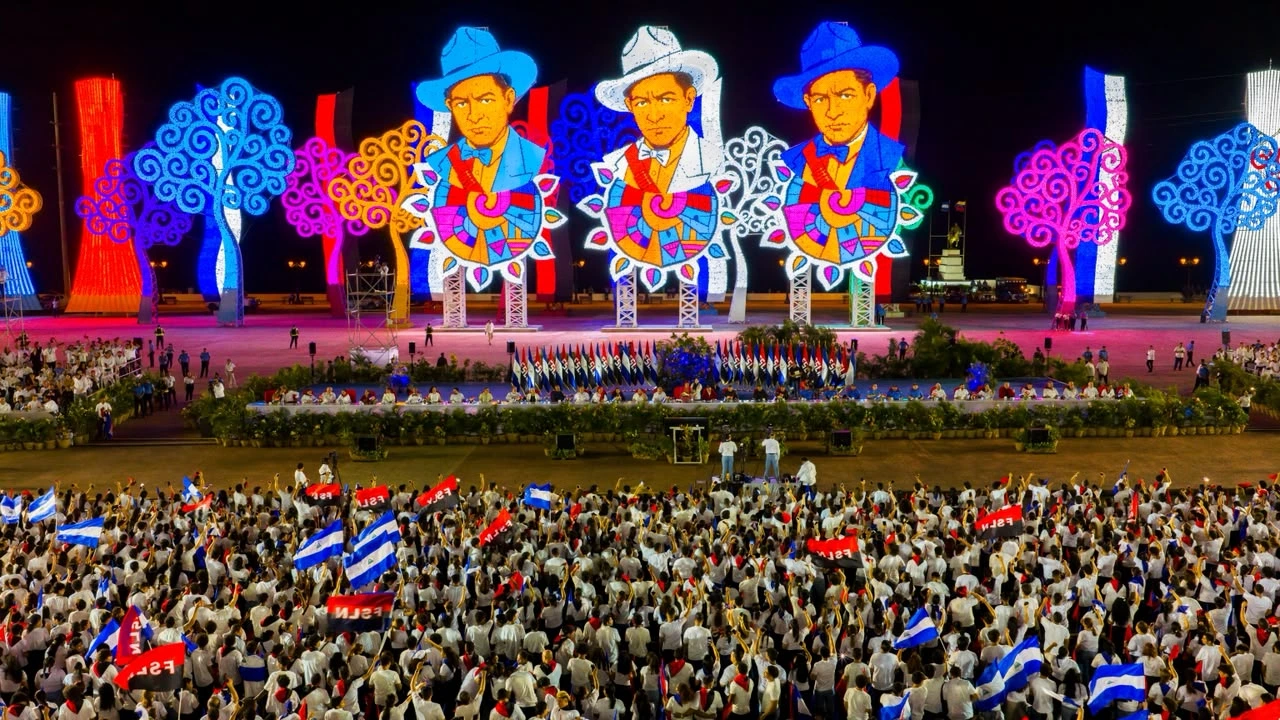
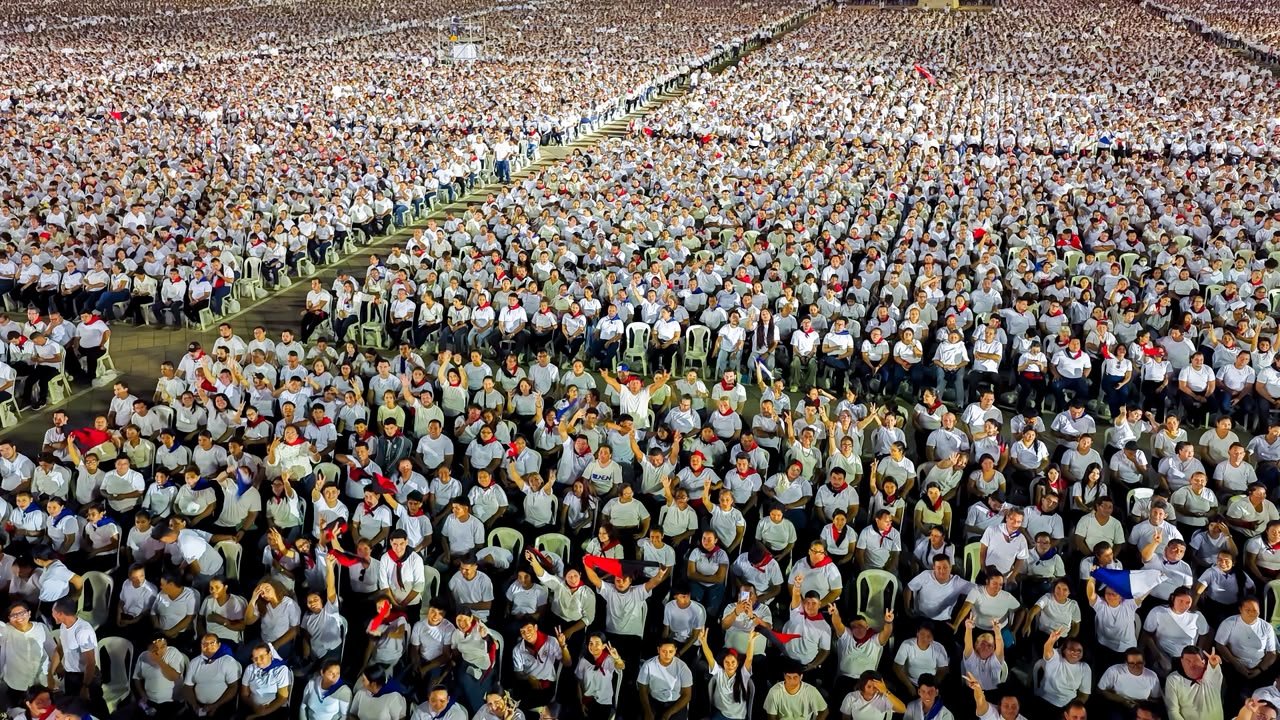
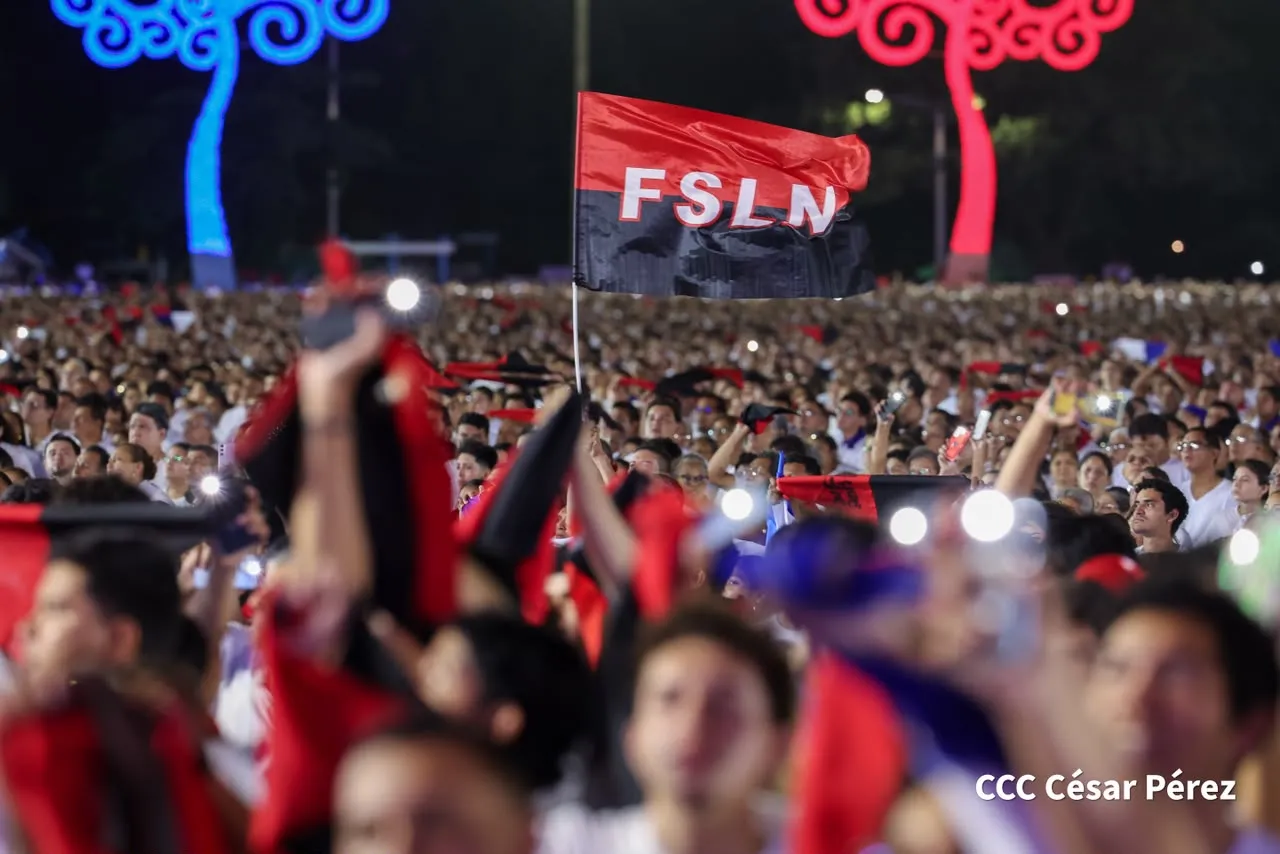
On July 19th, in a speech to 70,000 gathered in Managua’s Plaza de Fe to mark the 47th anniversary of the triumph of the Sandinista Popular Revolution, Nicaraguan co-president Daniel Ortega made reference to U.S.-backed opposition groups.
“They wish that they could have elections so that they could make money off of schools,” he said, recalling that during previous administrations, government officials charged for ostensibly free public services.
“But they can forget that. There will no longer be elections here, there will no longer be elections here for them to capture the government and trap the people,” he continued. “And we are going to work with the National Assembly and the corresponding agencies on laws to build a wall against the coup mongers so that no matter how much money the Yankees give them, they will not succeed. They will not succeed!”*1
The next morning, The New York Times chose to run the headline, “Nicaraguan Leader Says He Plans to Abolish Elections.” A version of this inaccurate headline was repeated around the world in an orchestrated manner, unusual for a country that rarely makes international news.
U.S. Secretary of State Marco Rubio pounced on the topic, releasing a statement:
“Daniel Ortega’s declaration that under his family’s dictatorship Nicaragua will never again hold elections lays bare their true authoritarian nature…The United States calls on the international community to join forces to demonstrate to the Murillo-Ortega dictatorship that it cannot expect to maintain business as usual with other nations when it is thwarting the basic tenets of our democratic hemisphere.”
As expected, this statement triggered public denunciations aimed at isolating Nicaragua from countries around the region that participate in the U.S. imperialist initiative “Shield of the Americas.”
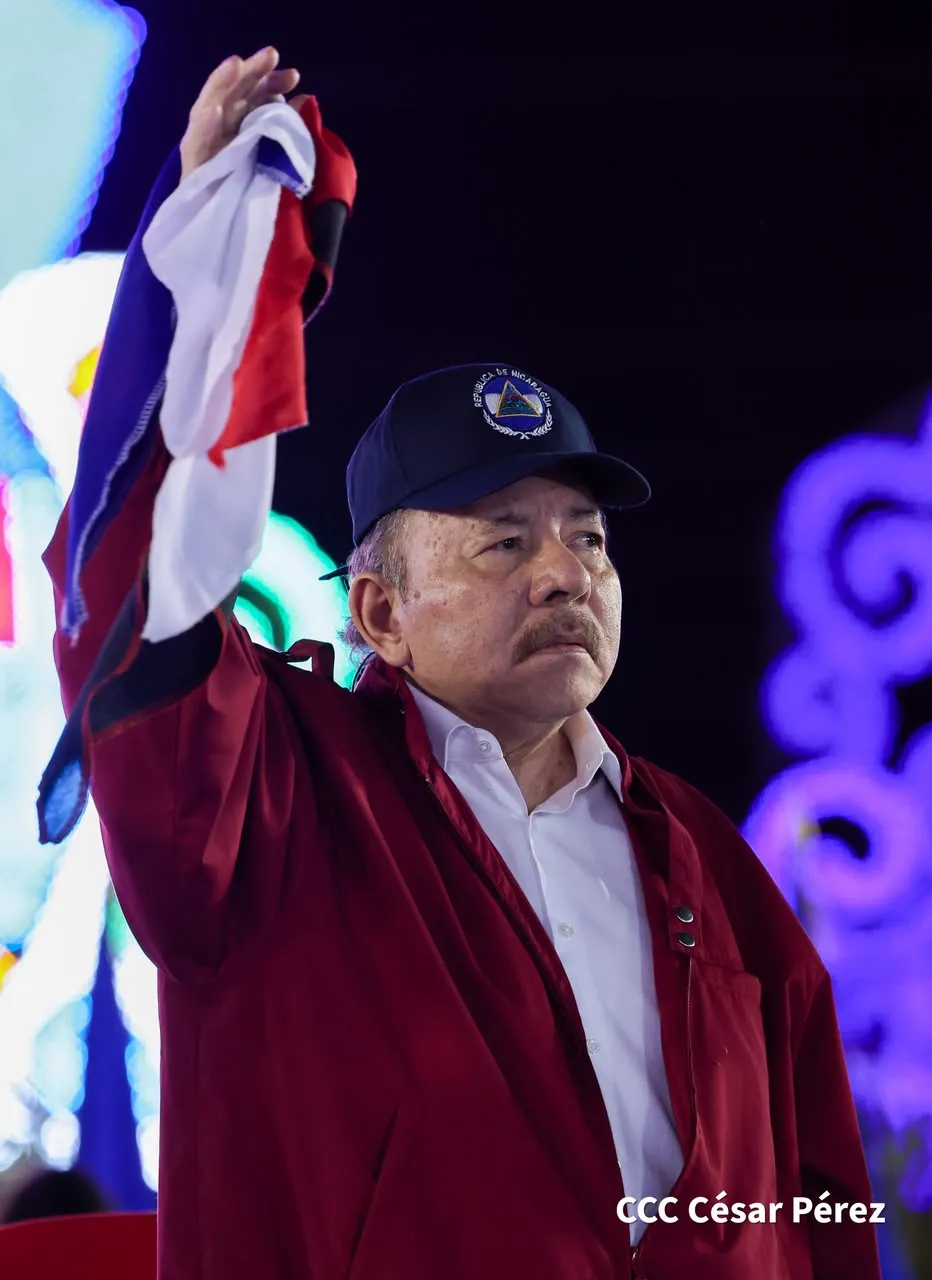
Celebration of the 47th anniversary of the triumph of the Sandinista Popular Revolution in Managua. (July 19, 2026)Photo: César Pérez
Deliberate Distortion
Jill Clark-Gollub, who holds a master’s degree in translation and interpretation and is certified to interpret in the U.S. federal courts, is puzzled by the mistranslation of Ortega’s remarks published in the New York Times and repeated elsewhere.
“This is a speaker who takes pauses and uses repetition as an oratory style,” she says. “To cut him off before he finishes the sentence, as if he were saying that there would never be any elections again, seems to me a deliberate distortion of his message. If an interpreter did this in a professional context, they would be subject to disciplinary action.”
This purposeful misinterpretation of Ortega’s meaning seems to have kickstarted the very campaign of meddling in Nicaragua’s internal affairs that Ortega was warning about in his speech. Following the media onslaught, Nicaragua’s U.S.-backed opposition apparatus appears poised to press its perceived advantage. Accordingly, it has escalated from condemnations to suggesting a color revolution with speculations of “a possible social protest where (the US) can leverage its pressure.”
A Season of Electoral Interference
This rapid intensification comes at a time of forceful U.S. pressure on Latin America. Even without mentioning the recent kidnapping of Venezuela’s president or the current stranglehold on Cuba – both of which Ortega did, in fact, mention and condemn in his speech – over the past year the U.S. has interfered in elections across the region.
In Argentina, Bolivia, Honduras, Peru and Colombia, the U.S. has explicitly tied its economic support to right wing candidates, hosted preferred candidates at the White House and imposed sanctions left-wing parties. U.S. lawmakers also mobilized conservative Colombian ex-pats, resulting in overseas votes that proved crucial in the final count.
Intervention in the Honduran elections last November has revealed a larger plot to destabilize the region: Trump pardoned former Honduran president Juan Orlando Hernández, a convicted narcotrafficker, just two days before the election. Since then, a trove of leaked audio recordings dubbed “Hondurasgate,” has revealed that Hernández is in league with Republican party officials and actively producing propaganda against progressive governments across Latin America.
A Precedent for Meddling in Nicaragua
Ortega’s remarks on election meddling were the conclusion to a speech detailing 200 years of unrelenting U.S. interference in Nicaragua. In his trademark style, Ortega’s discourse began with a history lesson including resistance to U.S. mercenary William Walker’s invasion in the 1850s; Augusto Sandino’s fight against the U.S. Marines in the 1920s, his assassination by orders from the U.S. Ambassador, and the installation of Anastasio Somoza’s U.S.-backed military dictatorship.
Blatant U.S. meddling in Nicaragua’s elections and internal affairs didn’t end when the Frente Sandinista de Liberación Nacional (FSLN) overthrew Somoza in 1979. Following the triumph of the Revolution, the U.S. organized and funded the “contra” counter revolutionary forces, resulting in 50,000 dead over 10 years; the U.S. forced Nicaraguans to choose between continued war and the U.S. candidate in 1990 elections; and ran the country de facto during 16 years of neoliberal governments.
Despite continued U.S. interventionism, the FSLN won elections in 2006 and has stayed in power since, winning three subsequent elections and garnering 76% of the vote in 2021. In fact, any legitimate opposition to the Sandinista party will have to present an exceptionally strong platform to compete with ruling party achievements over the past 19 years which include 50 new hospitals and free universal healthcare; free education, including university; 5,000 kilometers of new roads; 4-5% annual GDP growth; Nicaragua is one of the safest countries in the region. Given the quality of life for the average Nicaraguan today, it’s no wonder that recent polls show Ortega enjoying an 88.5% approval rating.
Never, never, never!
During his address on July 19th, Ortega remembered the violent coup attempt in 2018 when armed opposition groups paralyzed the country with violent roadblocks and some 270 people were killed. Investigations have shown that the U.S. government funded the violence.
Since then, Nicaragua has worked to ensure that those responsible for the violence cannot continue to undermine the country’s hard-won peace. In his speech, Ortega warned Nicaraguans that threats to the country’s security remain.
“Just because we’re not at war, don’t think we are at peace. No! They [U.S.-backed opposition] are continuously conspiring, trying to organize political parties, so that they can put up candidates and ensure those parties win the elections,” he said.
“Here is where we put an end to the idea that those parties put in power by the Yankees, put in power by Somoza supporters, will ever return to government: never, never, never!”
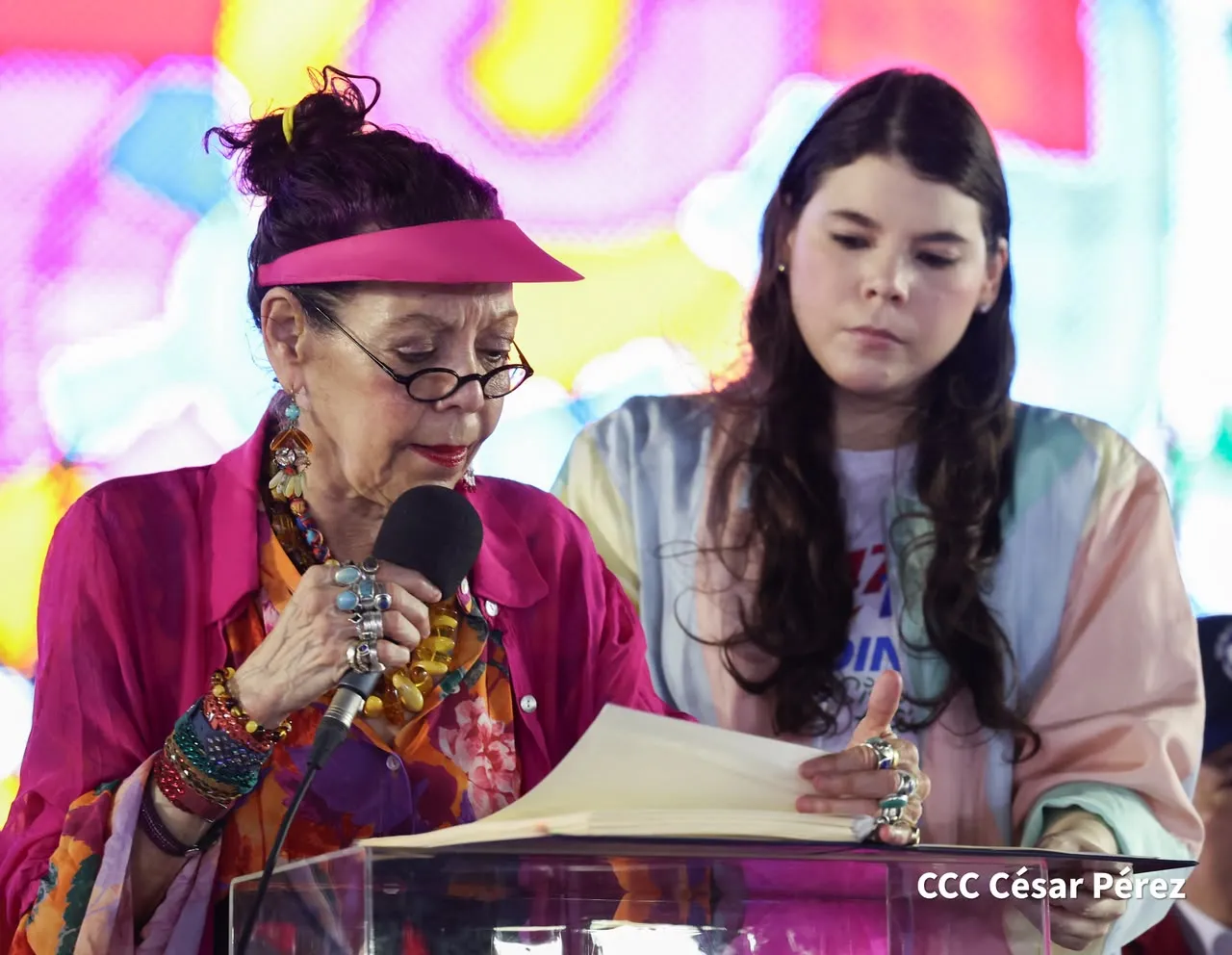
Co-president Rosario Murillo at the celebration of the 47th anniversary of the triumph of the Sandinista Popular Revolution in Managua. (July 19, 2026) Photo: César Pérez
“Elections, yes”
Despite international hype over Ortega’s mistranslated remarks, Nicaragua is moving forward with the co-president’s proposal.
“We the people of Nicaragua will decide when and how our elections will be held,” Dr. Gustavo Porras, president of Nicaragua’s National Assembly, told reporters. He confirmed that lawmakers are already working to ensure they “leave no loophole through which the terrible manipulation of the empires and their lackeys can seep in.”
Co-President Rosario Murillo also clarified that Nicaragua will hold elections.
“Elections, yes, but our own elections,” she told reporters. “And when we say ‘our own,’ we mean elections by our blessed people—designed and organized on the basis of our national sovereignty and our national dignity—to elect the best Nicaraguans.”
Becca Renk Foster is originally from Idaho, USA. For 25 years, she has lived and worked in sustainable community development in Nicaragua. She coordinates the work of Casa Benjamin Linder in Managua and is part of the Nicaragua Solidarity Coalition.
- *This translation by Jill Clark-Gollub
 ︎
︎
The post Meddling through mistranslation: U.S. interferes in Nicaragua’s elections appeared first on Kawsachun News.
From Kawsachun News via This RSS Feed.