

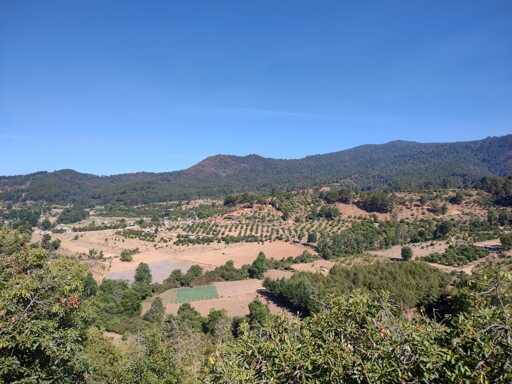
MEXICO CITY — In the heart of Mexico’s southwestern state of Michoacán, Juan Madrigal spends his free time organizing to protect the city of Uruapan’s urban ecological park, a 50-hectare (124-acre) plot of land at the edge of the Río Santa Bárbara. A state-protected area since 1995, the park’s marshlands help to purify the surrounding Cupatitzio watershed, where nine natural springs provide drinking water to approximately half a million people. According to Madrigal, the park, a habitat of the ruddy-capped nightingale-thrush (Catharus frantzii), the endangered Michoacán pocket gopher (Zygogeomys trichopus) and the endemic Pátzcuaro frog (Lithobates dunni), is a victim of neglect. “The authorities have never paid any attention to it, and it’s us citizens who’ve been speaking out,” Madrigal, who in 1993 founded Ecocentro del Río Cupatitzio, a nonprofit educational center, tells Mongabay by phone. The movement to protect the park gained momentum after it involved the ranchers that grow fruit and corn downstream, Madrigal says. “They realized the importance of us supporting each other in defending the vital sources of life,” he says. “Without trees, there is no water.” For a certain type of tree, however, the inverse occurs: Without water, there are no avocados. Defending native forests, urban or otherwise, is a small but important fight in Michoacán, where avocado orchards have replaced nearly 700,000 hectares (1.7 million acres) of tree cover, an area almost three times the size of Cape Town, between 1993 and 2023. Michoacán is the top avocado exporter in Mexico and the only…This article was originally published on Mongabay
From Conservation news via This RSS Feed.