

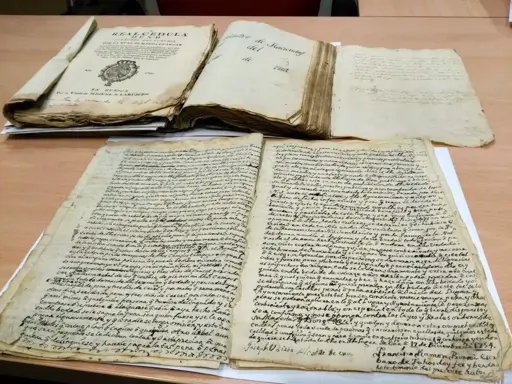
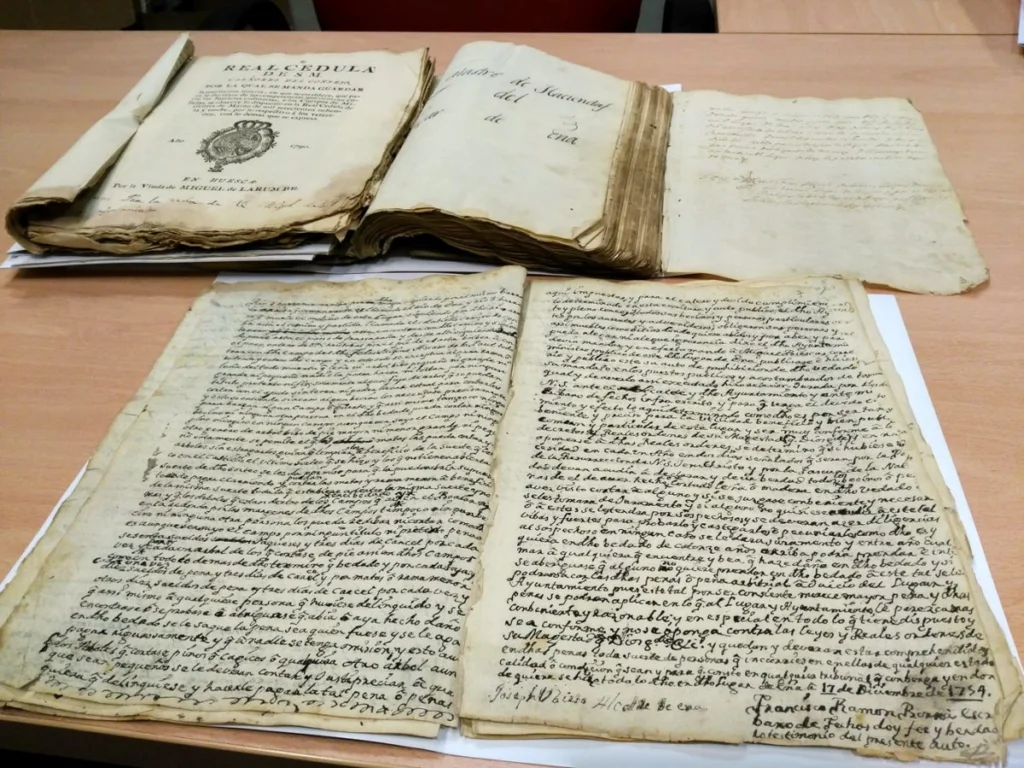
Cuba recovered historical documents stolen from the National Archives and returned from the United States.
The restituted heritage includes the 1897 Constitution of La Yaya, as well as manuscripts, letters, and documentation related to General Máximo Gómez, the first President of the Republic, Tomás Estrada Palma, the Chancellor of Dignity, Raúl Roa García, and the Commander-in-Chief, Fidel Castro Ruz.
RELATED:
The Cuban Son Becomes Intangible Cultural Heritage of Humanity
The restitution was confirmed by authorities from the archival and criminal investigation system, who emphasized the verification of authenticity prior to delivery. Yenisel Tomás Brito, lieutenant colonel and head of the Specialized Documentology Unit of the General Directorate of Criminal Investigation of the Ministry of the Interior, stated: It is the Constitution of La Yaya, which was stolen from the National Archives along with other historical documents.
The official explained that it was a lengthy process that began with the analysis of digital documents and culminated with the arrival of the originals and other previously unpublished materials.
Tomás Brito added that the materials were delivered already authenticated, including signatures, handwriting samples, and reconstruction paper. To validate the recovered materials, an exhaustive comparison of signatures was conducted using the archives of the Ministry of Foreign Affairs (Minrex) and the Office of Historical Affairs of the Council of State.
Elvira Corbelle Sanjurjo, Director General of the National Archives of the Republic of Cuba, stated: “The fact that these documents were recovered in the United States and returned to Cuba means a great deal to us,” while also highlighting the complexity of establishing authenticity in digital format.
Likewise, Martha Ferriol Marchena, Director of Document Management and Archives, affirmed that the illicit trafficking of documentary heritage is not an isolated phenomenon, but rather occurs in numerous archives worldwide, making the fight against this scourge an ongoing task.
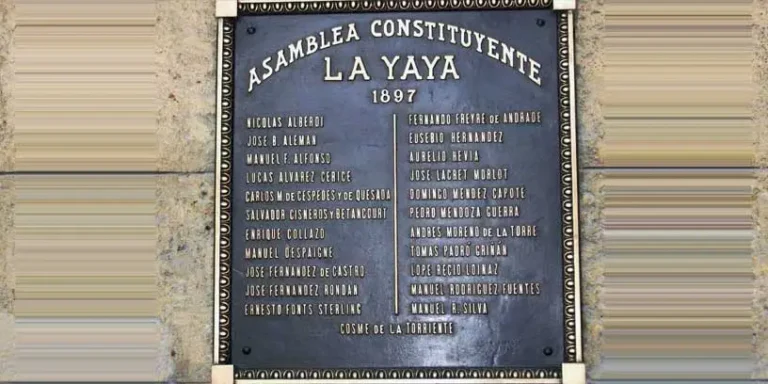
Plaque with the names of the representatives to the Constituent Assembly of La Yaya, in the former Museum of the Captains General of Havana, now the Museum of the City. (Photo: EcuRed)
The Constitution of Yaya was the fourth of the Mambí Constitutions, preceded by Guáimaro, Baraguá, and Jimaguayú. Approved on October 29, 1897, it is structured in five titles and 48 articles, ratifying the will of the Cuban people to establish a fundamental law in the midst of the insurrection.
The historian Eduardo Torres Cuevas defined it as our first Constitution structured as a Fundamental Law should be, explaining that it summarized the previous tradition to give a more complete structure to the project of a Republic, which was not recognized by the United States after its intervention.
#FromTheSouth News Bits | United States Congressman Mark Pocan denounced the effects of the economic blockade imposed by Washington on Cuba after witnessing firsthand its impact during a recent visit to Havana. pic.twitter.com/SEd2sQV4FK
— teleSUR English (@telesurenglish) July 23, 2026
From teleSUR English via This RSS Feed.