

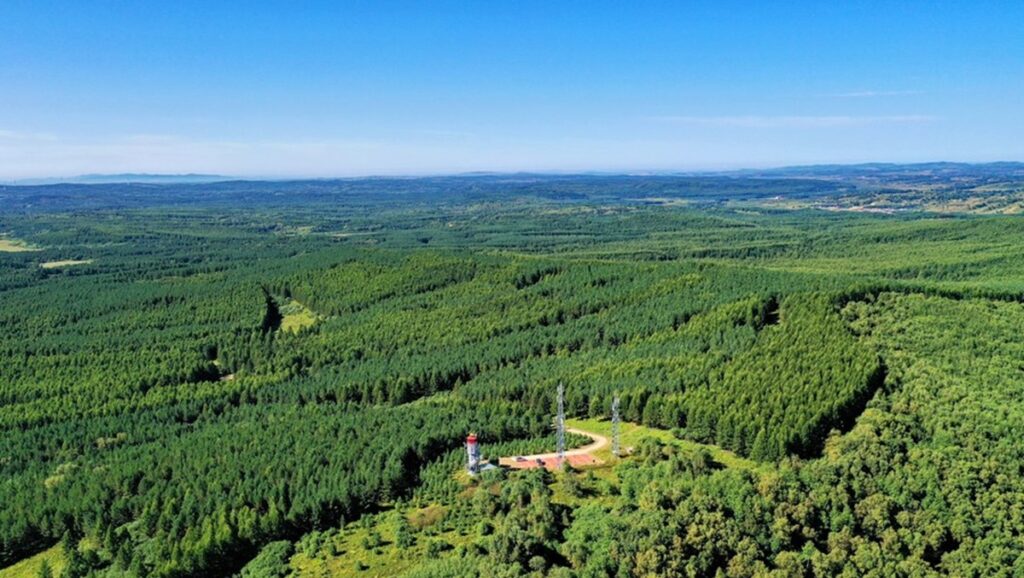
Plan includes reforestation, protection of 165 threatened species and expansion of the forestry industry.
On July 22, the Government of the Communist Party of China presented a new plan for the forestry and grassland sector that will guide the country’s environmental policies between 2026 and 2030.
RELATED:
Amazon Deforestation Soars 92% as Brazil Prepares to Host COP30
The initiative is part of China’s 15th Five-Year Plan and seeks to deepen a strategy developed over recent decades, in which ecosystem protection has become integrated into the country’s economic and social planning.
Released by the National Forestry and Grassland Administration of China together with three other government bodies, the document establishes goals to expand forest coverage, strengthen protected areas and develop an economy linked to natural resources.
Among the targets set for the next five years are raising national forest coverage to 25.8% by 2030, increasing forest reserves to 22.4 billion cubic meters, and expanding the value of the forestry and grassland industry to 14 trillion yuan (about US$2 trillion).
The new phase of environmental planning comes at a time when China seeks to combine economic growth, technological innovation and the reduction of environmental impacts. For Beijing, this strategy is associated with the concept of “ecological civilization”, incorporated into national planning as a development vision that seeks to integrate environmental protection, economic growth and improvements in people’s quality of life.
Beyond nature conservation, the forestry sector has come to be viewed as a strategic area for job creation, regional development and the creation of new production chains. The plan calls for expanding the sustainable use of natural resources and strengthening the integration between environmental protection and economic activity.
China has officially rolled out its plan for renewable energy development during the 15th Five-Year Plan period (2026-2030), the National Energy Administration (NEA) said Thursday. #XinhuaNews pic.twitter.com/54DCSrJ1e0
— China Xinhua News (@XHNews) July 23, 2026
Biodiversity and Sustainable Development
The new plan for 2026-2030 foresees accelerating ecological restoration projects, strengthening the system of protected areas, expanding the construction of national parks and improving the conservation of wetlands.
Biodiversity is another central pillar of the strategy. The document establishes protection measures for 165 threatened species of wild animals and plants.
Among the internationally recognized symbols of China’s conservation efforts are the giant panda, the snow leopard, the Siberian tiger and the Amur leopard, species whose conservation depends on protecting the natural habitats where they live.
China has also expanded its conservation network in recent decades. The country has more than 30 national parks and a network of thousands of protected natural areas, covering around 18% of the national territory. These areas encompass different ecosystems, from tropical forests in the south to high-altitude mountain regions in the west, where many threatened species live.
Beyond protecting specific species, China’s environmental policy seeks to preserve the ecosystems where they live, connecting natural areas and restoring degraded habitats. The creation of ecological corridors allows animals to move between different regions, contributing to reproduction and the conservation of populations.
Conservation also involves scientific research and ecosystem monitoring. Chinese scientists track the evolution of species and habitats to guide protection measures and assess the results of conservation actions.
In 2021, China established its first group of national parks, creating a protection system that brings together areas of major ecological importance and covers around 230,000 square kilometers.
Beyond preservation, Beijing seeks to transform forest resources into an area of economic development. The plan aims to increase self-sufficiency in timber, strengthen the forest seed industry and expand economic activities developed in forest areas.
Among these initiatives is the so-called “under-forest economy”, which combines food production, medicinal plant cultivation, ecological tourism and other activities capable of generating income while maintaining environmental conservation. The document also establishes measures to strengthen forest fire prevention and control organisms that threaten ecosystems.
Beijing has also presented China’s ecological restoration experience as a contribution to addressing global climate change, arguing that developing countries can pursue economic growth while protecting the environment.
The concept of “ecological civilization” has become one of the guiding principles of China’s development, with the proposal of transforming the relationship between the economy and nature and making ecosystem protection part of the country’s modernization process.
By setting new targets for 2030, China seeks to consolidate a path in which environmental restoration is no longer only a conservation policy, but becomes part of a broader national development strategy.
Bruno Falci
teleSUR correspondent in China
From teleSUR English via This RSS Feed.